Switzerland
Researchers identify fatal hereditary disease in Swiss lynx
Researchers at the University of Bern have identified a genetic variant behind a fatal hereditary disease in Swiss lynx. The findings highlight how the small number of animals that founded Switzerland’s reintroduced population left it vulnerable to reduced genetic diversity.
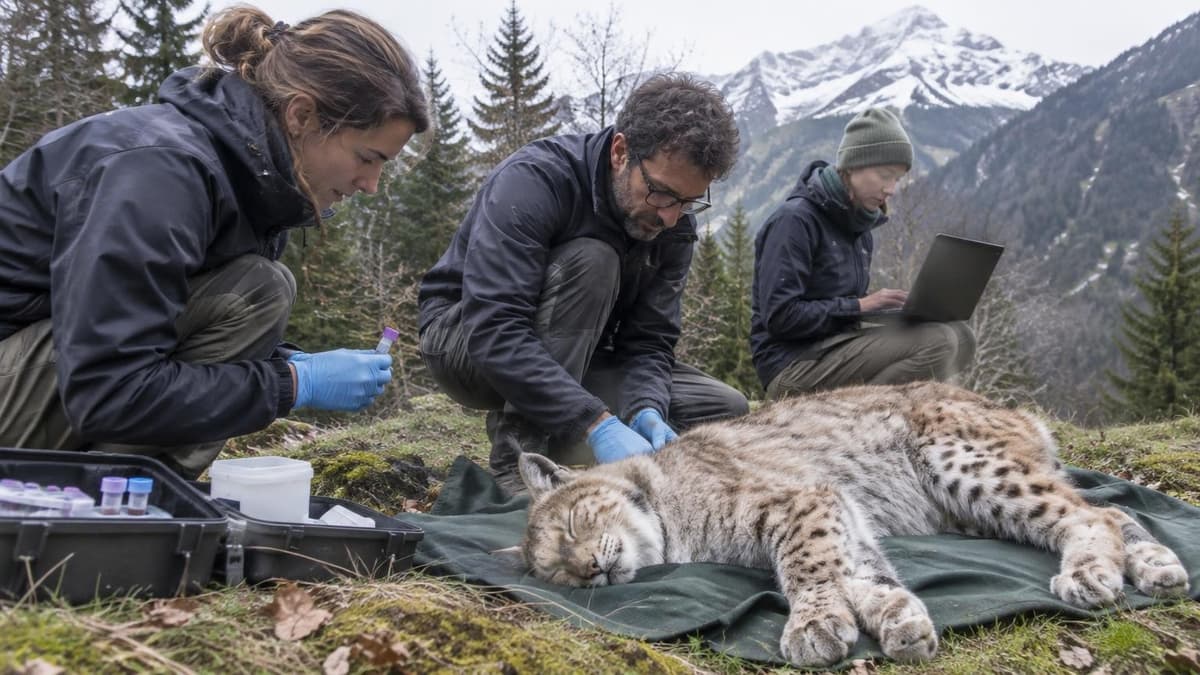
A fatal inherited condition has been traced to a genetic variant in Switzerland’s reintroduced lynx. Researchers at the University of Bern say affected young animals develop calcification in their internal organs and die before reaching adulthood. Their finding identifies the genetic cause of the disease in a wild population, a first worldwide, according to the university’s announcement reported by Keystone-SDA.
The disease appears when a lynx inherits the variant from both parents. Animals with only one copy remain healthy, but can pass the variant to their offspring. That distinction matters for a population whose history began with a small number of founders: a variant can persist among healthy carriers and emerge as disease when two carriers reproduce.
Switzerland now has one of Europe’s largest populations of reintroduced lynx and, the University of Bern says, a responsibility for conserving the species. The discovery links the health of individual animals to the genetic history of the wider population. It also gives conservationists a specific hereditary condition to consider as they work to sustain lynx populations.
Trace How the Variant Passes
The disease is recessive: an animal must inherit the variant from both parents to become ill. A lynx carrying just one copy stays healthy, Janna Niehaus, a PhD student, said, but may pass the variant to its offspring. When both parents pass on a copy, the young animal develops fatal calcification of internal organs.
That pattern helps explain how a hereditary disease can remain present without affecting every animal carrying the variant. Healthy carriers can transmit it, so the condition may appear in their young when inheritance combines in the way Niehaus described. The research team attributed the organ calcifications in young lynx to this recessive genetic abnormality.
The discovery gives conservation work a defined genetic issue to account for. It does not change the inheritance pattern: one copy leaves an animal healthy, while two copies trigger the disease. Understanding that difference is relevant to choices about the animals that contribute to future populations, alongside the broader aim of maintaining genetic diversity. The University of Bern says its findings offer an important foundation for the success of reintroductions and long-term species conservation.
Follow the Founders’ Legacy
Around 30 lynx founded the reintroduced Swiss population. The animals came from the Slovak Carpathians and were brought to Switzerland in the 1970s. The University of Bern team says that small founding group, followed by inbreeding, reduced genetic diversity and increased the risk of inbreeding in the population.
The disease discovery illustrates one consequence of that history. When a population descends from a limited number of founders, genetic variants can persist through generations. In this case, animals carrying one copy of the recessive variant remain healthy, yet can pass it on. The disease manifests when a young lynx inherits a copy from each parent.
Switzerland is now home to one of Europe’s largest populations of reintroduced lynx. The country’s role in conserving the species therefore extends beyond maintaining numbers: the genetic composition of its populations also matters. The researchers’ finding connects the founding history of Swiss lynx to a specific risk for young animals and underscores why genetic diversity is part of long-term conservation planning.
Build Genetic Diversity Into Conservation
The findings give conservationists a genetic factor to consider in future reintroductions. The University of Bern says the work can help inform the selection of genetically diverse founder animals and efforts to promote gene flow between existing populations. Both approaches address the reduced diversity associated with the small group that established Switzerland’s reintroduced lynx population.
The researchers describe their result as the first identification anywhere of the genetic cause of a fatal hereditary disease in a population of wild animals living in the wild. For Switzerland, which has one of Europe’s largest reintroduced lynx populations, the discovery adds a concrete health consideration to the country’s conservation responsibility.
The disease’s inheritance pattern makes genetic diversity especially relevant: carriers remain healthy but can pass the variant on, while young lynx inheriting it from both parents develop fatal organ calcifications. The research does not remove that risk, but it provides a basis for conservation decisions that take inherited variation into account. The University of Bern presents the work as a foundation for successful reintroductions and the long-term conservation of species.