Public Safety
Tragic Easter in the Alps: Multiple Fatalities in Series of Avalanches
A deadly Easter weekend in the Swiss Alps saw at least three people killed in separate avalanches, including a mountaineer and a snowboarder. This adds to an already above-average number of avalanche victims this winter.
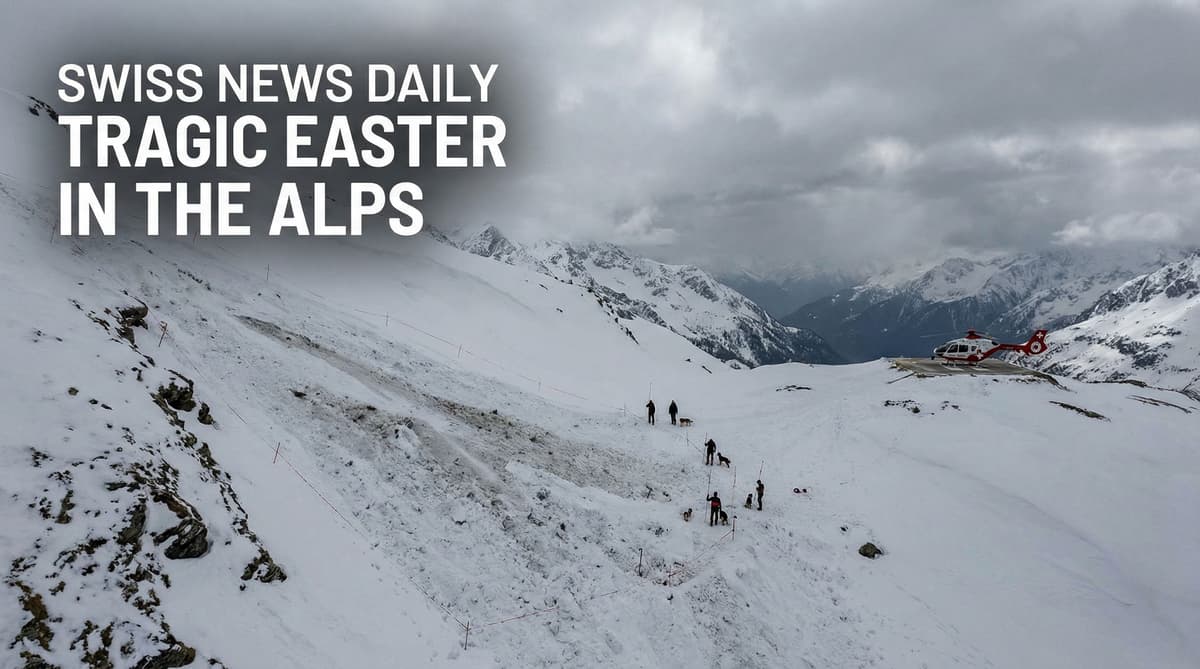
A staggering three lives were extinguished in the Swiss Alps over the Easter weekend as a series of lethal avalanches shattered the holiday peace. While thousands flocked to the mountains for spring skiing, the terrain turned treacherous, claiming a mountaineer, a snowboarder, and an off-piste skier in separate, harrowing incidents. This surge in fatalities brings the season's death toll to 15, a figure that matches historical averages but masks a much more alarming trend of instability. The Swiss mountains are currently a landscape of extremes, where the beauty of fresh powder conceals a volatile foundation that has already caught 244 people in its grip this winter. Emergency services across the cantons of Schwyz and Bern were pushed to their limits as rescue helicopters dominated the skyline, highlighting a weekend where the margin between adventure and tragedy was razor-thin.
The Mythen Tragedy: A Fight for Survival
A desperate struggle for life unfolded on the Gross Mythen on Good Friday when a mountaineer was swept over a rock face to his death. The victim and his companion were ascending the iconic peak in Central Switzerland when they realized the snow conditions were too hazardous to continue. They made the fateful decision to retreat shortly before 2:00 PM, but the mountain struck during their descent. In a miraculous display of instinct and luck, the second mountaineer managed to seize a tree as the snow slab gave way, anchoring himself against the torrent of white death. He survived the fall, but his partner was not as fortunate. The Schwyz cantonal police are still working to finalize the identity of the deceased, marking yet another grim chapter in a season defined by 'sliding snow' avalanches that strike with little warning.
Bernese Oberland Grapples with Double Fatality
Canton Bern confronted two separate tragedies as the Easter weekend progressed, claiming lives in Sangernboden and Isenfluh. A 41-year-old snowboarder was completely buried on the northeast side of the Bürgle mountain after a snow slab fractured beneath him. Despite a rapid response from Swiss Alpine Rescue and Rega helicopters, the man was recovered dead. Meanwhile, the Schwarzbirg mountain in Isenfluh became the site of another desperate rescue attempt. A 35-year-old Swiss skier was caught while freeriding off-piste. Though nearby witnesses acted with heroic speed—locating and excavating the buried man—he could not be revived. These incidents underscore the lethal reality of 'considerable' avalanche ratings, where even experienced winter sports enthusiasts find themselves at the mercy of a collapsing snowpack.
Anatomy of a Fragile Winter: The Data Behind the Danger
The numbers are undeniable: the 2025-26 winter season has been one of the most volatile in recent memory. Data from the WSL Institute for Snow and Avalanche Research (SLF) reveals that 171 avalanches involving people were recorded by the end of March—surpassing the ten-year average of 127 by nearly 35%. A staggering 244 individuals have been swept away, compared to the usual 182. The root of this crisis lies in a 'fragile snowpack' created by an early winter start followed by a dry, sunny January. This sequence transformed the base layers into a weak, sugary foundation that experts describe as a 'ticking time bomb.' When heavy snowfall finally arrived in February—dropping up to 150cm in Lower Valais—it overloaded these weak layers, leading to the maximum Danger Level 5 on February 17th. This structural instability remains the primary killer, responsible for 13 of the season's fatal accidents.