Science
University of Bern receives major diamond collection for research
The University of Bern has received more than 29,000 rough diamonds for research and teaching. The collection will help scientists investigate mineral formation and the geological history of the Earth’s interior.
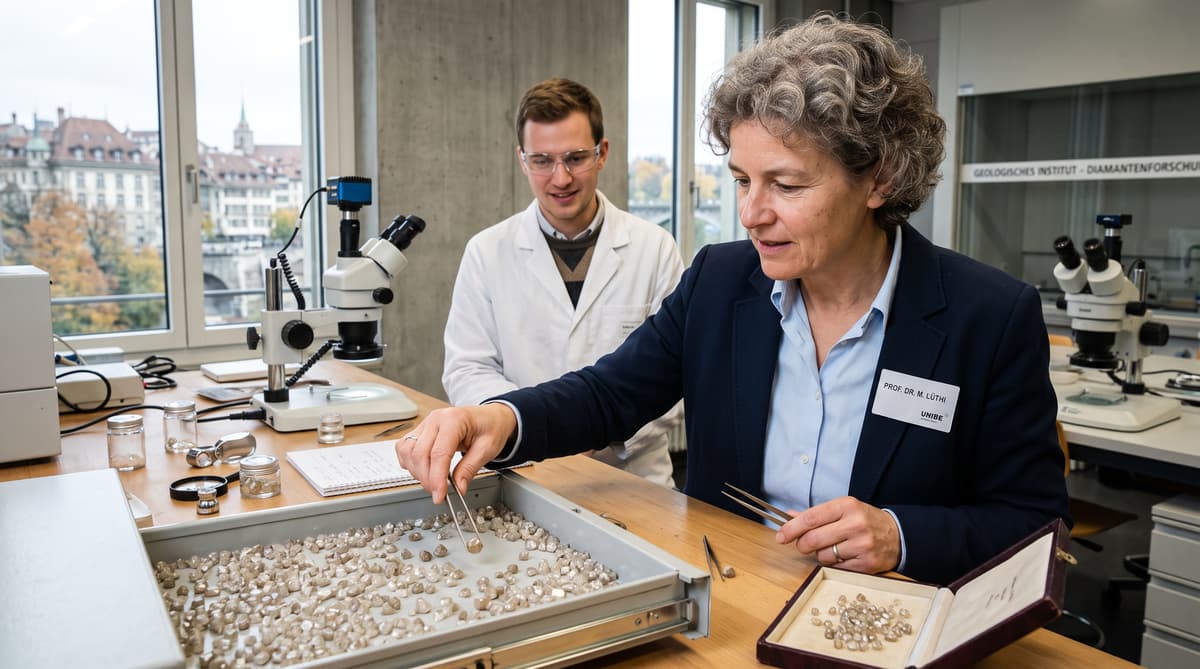
More than 29,000 rough diamonds are heading into the scientific life of the University of Bern, giving Swiss researchers access to one of the world’s largest collections assembled for research and teaching. Jeffrey W. Harris and his wife, Francesca Harris, donated the stones to the university. The collection is housed off campus and will support work on mineral formation and the geological history of the Earth’s interior.
The donation arrived with a clear distinction between commercial and scientific value. Each diamond has an average reported value of $10, or CHF 8.20, limiting the material worth of the collection. Its research value lies in the information preserved inside the crystals. The stones originate from Africa, South America, North America, Asia and Oceania, giving students and scientists access to material formed in different geological settings.
The University of Bern said the collection will help researchers identify minerals and reconstruct conditions deep beneath the Earth’s surface. The donation also strengthens Bern’s role in Earth sciences, a field where laboratory instruments and access to representative samples can determine the questions researchers are able to investigate.
Diamonds Preserve Earth’s Deep History
Diamonds can preserve evidence from billions of years of Earth history. Their durability and near chemical stability allow them to retain material from the conditions in which they formed. The oldest diamonds in the collection date back about 3.5 billion years, while the youngest are approximately 55 million years old.
Some stones contain inclusions, tiny pockets of high density liquid, molten material or minerals trapped during crystallisation. Researchers can analyse those inclusions to study pressure, temperature and chemical conditions far below the surface. Such evidence helps scientists trace how the Earth evolved and how its interior has changed over geological time.
The University of Bern describes diamonds as natural archives because the crystals can protect these inclusions from later alteration. A rough stone therefore carries information that may be invisible from its exterior. Researchers can cut, crush or analyse selected samples, while preserving the wider collection for future work and teaching.
The age range also gives students a tangible route into deep time. In Bern’s laboratories, a small mineral inclusion can connect present day measurements with events that took place before modern continents and ecosystems emerged.
Five Continents Feed Bern’s Diamond Research
Five continents are represented in the donated material. The rough diamonds came from Africa, South America, North America, Asia and Oceania before reaching the Diamond Trading Company in London. The company donated them to Harris for scientific research, and each donation is documented by an original deed of gift.
That documentation gives the collection a traceable history and allows researchers to record the provenance of individual samples. Geographic origin matters because diamonds form under different geological conditions. Comparing stones from different regions can help scientists examine variation in mineral composition and the processes that carried deep Earth material toward the surface.
The collection’s purpose also shapes how the university will use it. These are teaching and research samples, not a stockpile intended for the jewellery market. Their modest average value, $10 per diamond, makes the scientific archive accessible for controlled laboratory study while preserving a large pool of material for future projects.
The off campus storage site provides the collection with a dedicated home. From there, researchers and students can select samples for analytical work, maintain the accompanying records and build new studies around questions that have yet to be asked.