road safety
Swiss proposal reopens debate over rules for elderly drivers
A Swiss lawmaker is seeking tighter rules for elderly drivers, reopening debate over age-related medical checks and road safety. The proposal could affect licensing requirements for older motorists, though no legislative change has yet been adopted.
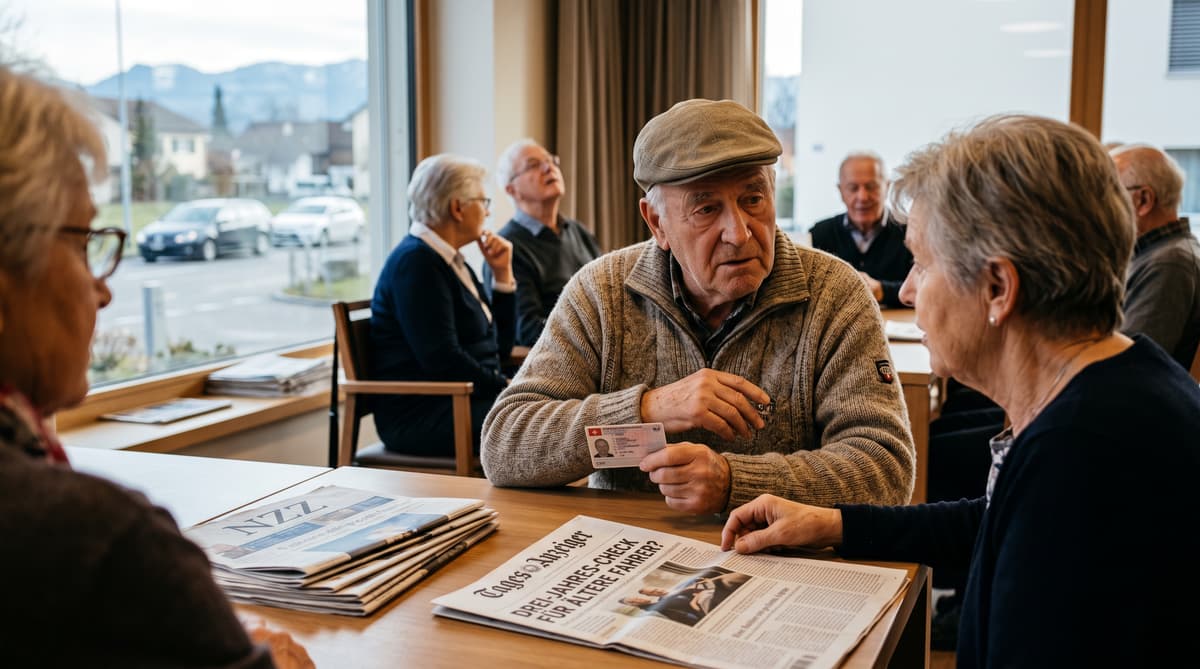
A Swiss lawmaker wants to tighten the rules for elderly motorists, bringing age-related driving checks back into the political spotlight. The proposal could affect the requirements older people must meet to keep their driving licences, although Switzerland has not adopted any legislative change.
The move touches a sensitive part of daily life. In many Swiss communities, especially outside major urban centres, a car can remain important for shopping, medical appointments, family visits and access to work. Any change to licensing rules would therefore reach beyond road administration. It could affect mobility, independence and the practical choices available to older residents.
The available report does not identify the lawmaker, specify a canton or set out the precise measures under consideration. It does establish the central issue: whether Switzerland should place greater emphasis on age-related medical checks and other safeguards for older drivers.
That distinction matters. The proposal has reopened discussion, but it has not changed the law. Older motorists remain subject to the rules currently in force while politicians, authorities and the public weigh how to address road safety without imposing requirements that lack a clear legal or medical basis.
Medical checks will shape the next phase
The proposal centres on licensing requirements and medical checks, according to the published report. Those checks sit at the intersection of personal health, public safety and the state’s authority to decide who may drive.
The source does not provide a draft bill or a timetable. It also does not state whether the lawmaker is seeking more frequent examinations, broader testing, stricter medical standards or another form of review. Those details will determine the practical impact if the idea advances through the political process.
For drivers, a new system could mean additional appointments, assessments or administrative steps. For doctors and licensing authorities, it could create more responsibility in evaluating whether a person remains fit to drive. The consequences would vary according to the final wording and the way authorities implement it.
Switzerland’s federal structure would also matter. Driving licences operate within a national legal framework, while motorists encounter cantonal offices, local roads and different transport conditions. A rule that appears uniform on paper could be experienced differently in a city, a mountain valley or a rural municipality with limited public transport.
At this stage, however, there is no confirmed measure to apply. The debate remains at the proposal stage.
Road safety evidence must lead the argument
The safety debate has no figures attached to it in the published account, leaving the political case to be developed. The report identifies road safety as the concern behind the proposal, but it provides no accident statistics, injury totals or comparison between older motorists and other age groups.
That evidence will be important if Parliament examines the issue. Lawmakers would need to establish which risks the proposed rules address and whether age alone is a reliable basis for intervention. They would also need to consider the value of medical screening, practical driving assessments and other possible safeguards.
The discussion may draw attention to conditions that can affect driving, including declining vision, slower reactions or health problems. Those issues do not apply in the same way to every person of a particular age. Any future measure would therefore face scrutiny over proportionality, consistency and the protection of individual rights.
The source names no experts, motorists’ organisations or public authorities responding to the proposal. Their views will be central to the next stage. Police, traffic safety specialists, doctors, senior citizens’ groups and mobility organisations can be expected to examine both the risks and the administrative burden.
Until detailed evidence and a concrete text emerge, claims about the proposal’s likely effect remain premature.