health
Swiss Survey Finds Little Support for a Sugar Tax
A survey commissioned by the Soft Drinks Information Group suggests that most respondents oppose a tax on sugary, salty or fatty foods, while supporting greater protection for children from advertising and a stronger state role in tackling obesity. The findings should be treated cautiously because the survey was commissioned by an industry body.
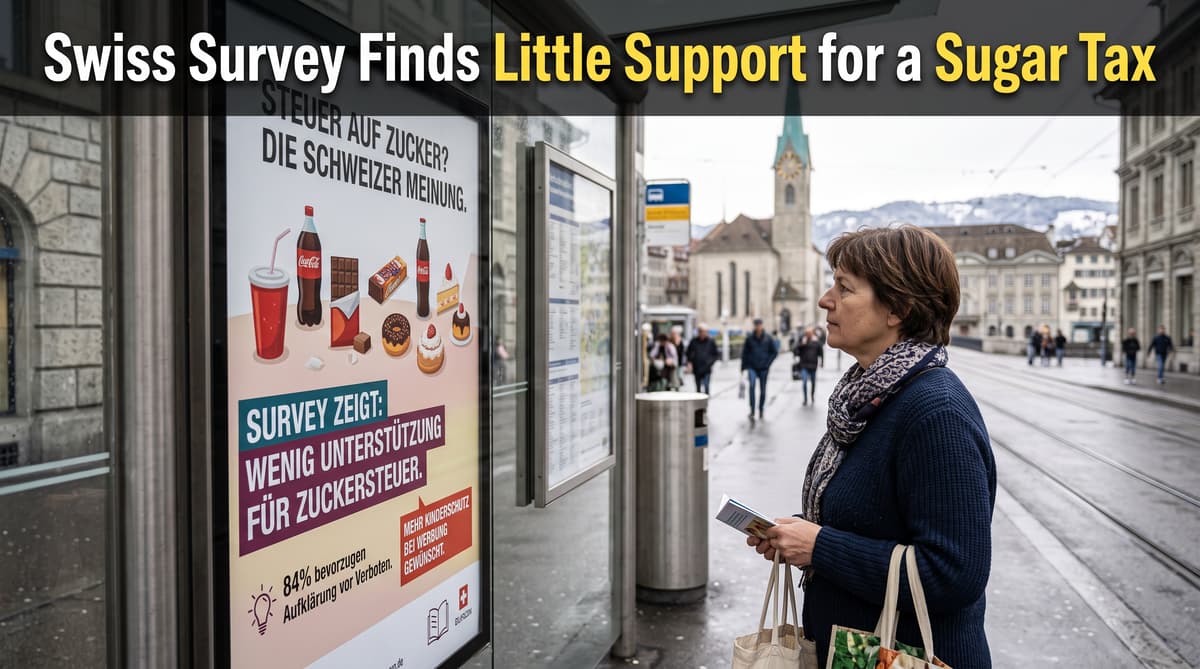
68% of respondents rejected a tax on sugary, salty or fatty foods, according to a survey commissioned by the Soft Drinks Information Group and published on September 30, 2026. The result points to limited public appetite for a fiscal measure that would raise the price of products linked to obesity and diet-related illness.
The poll, carried out by gfs.Bern between March and May among more than 1,000 people, found that respondents preferred personal responsibility and targeted prevention. Those opposing a tax cited two main concerns: poorer households would carry a heavier financial burden, and the levy might do little to change eating habits.
The figures arrive as Switzerland debates how far the state should go in shaping food choices. 76% said existing efforts to prevent obesity are insufficient, creating a clear demand for more action. That demand does not extend evenly across policy tools. Advertising restrictions for children and nutrition education attracted broad support, while taxes and age limits remained unpopular.
The source also carries an important qualification. The Soft Drinks Information Group was founded in 2013 by producers in the beverage sector and includes figures from politics and business. Its industry connection means the poll should be read as an indicator of public opinion, not as an independent verdict on the effectiveness of a sugar tax.
Taxes and Age Limits Find Little Support
Only 45% supported a tax that would finance public information campaigns, leaving the proposal short of majority backing. The result suggests that respondents remain wary of using higher prices as a route to public health, even when the revenue would be directed towards prevention.
The least popular measure in the survey was a minimum age for buying sugary foods. Just 19% supported that proposal. The figure reflects a reluctance to treat ordinary food purchases in the same way as products subject to age restrictions, although the poll does not establish why respondents rejected the idea.
The survey’s findings align with the stated preference for individual responsibility. That preference can cover several approaches, including clearer nutritional information, voluntary changes by manufacturers and education that helps families make informed choices. The poll does not test the likely impact of each option, nor does it compare public support with evidence from countries that have introduced taxes on sugar-sweetened drinks.
For Swiss policymakers, the numbers narrow the politically viable path. A broad levy would face resistance from consumers who fear regressive costs and doubt its effect on behaviour. Any proposal would need to address both concerns with evidence on household spending, product reformulation and measurable health outcomes.