health
Swiss Survey Finds Little Support for a Sugar Tax
A survey commissioned by the Soft Drinks Information Group suggests that most respondents oppose a tax on sugary, salty or fatty foods, while supporting greater protection for children from advertising and a stronger state role in tackling obesity. The findings should be treated cautiously because the survey was commissioned by an industry body.
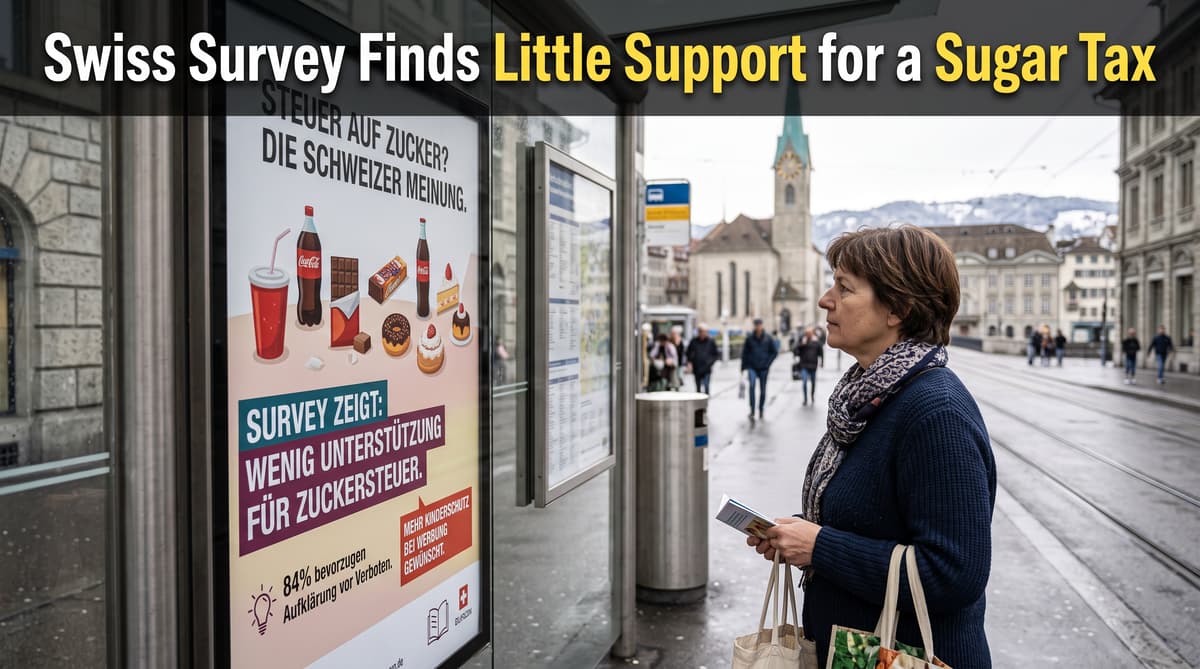
68% of respondents rejected a tax on sugary, salty or fatty foods, according to a survey commissioned by the Soft Drinks Information Group and published on September 30, 2026. The result points to limited public appetite for a fiscal measure that would raise the price of products linked to obesity and diet-related illness.
The poll, carried out by gfs.Bern between March and May among more than 1,000 people, found that respondents preferred personal responsibility and targeted prevention. Those opposing a tax cited two main concerns: poorer households would carry a heavier financial burden, and the levy might do little to change eating habits.
The figures arrive as Switzerland debates how far the state should go in shaping food choices. 76% said existing efforts to prevent obesity are insufficient, creating a clear demand for more action. That demand does not extend evenly across policy tools. Advertising restrictions for children and nutrition education attracted broad support, while taxes and age limits remained unpopular.
The source also carries an important qualification. The Soft Drinks Information Group was founded in 2013 by producers in the beverage sector and includes figures from politics and business. Its industry connection means the poll should be read as an indicator of public opinion, not as an independent verdict on the effectiveness of a sugar tax.
Taxes and Age Limits Find Little Support
Only 45% supported a tax that would finance public information campaigns, leaving the proposal short of majority backing. The result suggests that respondents remain wary of using higher prices as a route to public health, even when the revenue would be directed towards prevention.
The least popular measure in the survey was a minimum age for buying sugary foods. Just 19% supported that proposal. The figure reflects a reluctance to treat ordinary food purchases in the same way as products subject to age restrictions, although the poll does not establish why respondents rejected the idea.
The survey’s findings align with the stated preference for individual responsibility. That preference can cover several approaches, including clearer nutritional information, voluntary changes by manufacturers and education that helps families make informed choices. The poll does not test the likely impact of each option, nor does it compare public support with evidence from countries that have introduced taxes on sugar-sweetened drinks.
For Swiss policymakers, the numbers narrow the politically viable path. A broad levy would face resistance from consumers who fear regressive costs and doubt its effect on behaviour. Any proposal would need to address both concerns with evidence on household spending, product reformulation and measurable health outcomes.
Schools and Prevention Win Broad Backing
90% backed prevention programmes for at-risk groups, making targeted intervention the strongest area of support identified in the poll. Respondents also supported cooperation between the state and businesses, a model that could place schools, health services, employers and food companies in the same prevention framework.
Education received nearly as much backing. 89% favoured compulsory teaching of nutritional principles in schools. In Switzerland, where education is largely organised at cantonal level, putting that preference into practice would require coordination across different school systems and curricula. The survey does not specify which age groups, subjects or teaching methods respondents had in mind.
These results show where public support may be easier to build. Prevention aimed at people considered at risk can appear more proportionate than measures applied to every consumer. School lessons can also shift the focus from restricting purchases to building knowledge, although education alone cannot determine what food families can afford or what products are widely marketed.
The findings leave room for a broader state role. Respondents clearly wanted stronger action, but the preferred route involved programmes, education and cooperation rather than a general tax. That distinction will matter as federal and cantonal authorities assess future obesity policies.
Public Backs Stronger Protection From Food Ads
82% supported a ban on advertising for sugary, salty or fatty foods aimed at children under 13, placing child protection well above support for purchase restrictions. The result gives policymakers a clear signal that marketing aimed at younger audiences is more politically acceptable to regulate than the products themselves.
The proposed restriction would target advertising, not the sale of the food. That difference helps explain the gap between support for the child-focused measure and the 19% backing for a minimum purchase age for sugary foods. Respondents appear more willing to limit commercial influence on children than to prevent children from buying specific products through an age rule.
The survey says food manufacturers are working with the Swiss government on a voluntary action plan. The details of that plan are not provided in the source, so its scope, enforcement and timetable remain unclear. Voluntary agreements can allow companies to change marketing practices quickly, but their impact depends on transparent commitments and independent monitoring.
A child advertising ban would also raise practical questions. Regulators would need to define which foods fall within the restriction, how digital marketing is covered and how cross-border platforms are monitored. The poll measures public support for the principle, not the design of an enforceable rule.
Switzerland Weighs Its Next Obesity Measures
Three quarters of respondents said Switzerland’s current obesity measures are insufficient, even as most rejected a new tax. That combination gives the debate a practical direction: public support exists for additional action, but policymakers will need to select measures that command trust and demonstrate results.
The survey offers strong backing for prevention programmes, nutrition teaching and limits on advertising to children. It offers much weaker backing for taxes, information levies and minimum purchase ages. Those preferences may shape the government’s cooperation with food manufacturers as it develops a voluntary action plan.
The industry sponsorship remains central to interpreting the results. The Soft Drinks Information Group represents producers and commissioned the 13th edition of the survey. The poll therefore cannot settle the wider question of whether a sugar tax would reduce consumption, encourage reformulation or place a disproportionate cost on low-income households. Those claims require independent research and transparent modelling.
Switzerland’s next steps will likely involve a mix of federal policy, cantonal education measures and industry commitments. The public figures show which measures can attract broad backing. They do not remove the need to test whether those measures change diets, reduce childhood exposure to marketing or improve health outcomes over time.