Railways
Swiss rail travel reaches a third consecutive annual record
Swiss rail travel reached a third consecutive annual record in 2025, with passengers covering almost 24 billion passenger-kilometres. The rise reflects a sustained recovery in public transport use after the pandemic and growing reliance on rail for domestic travel.
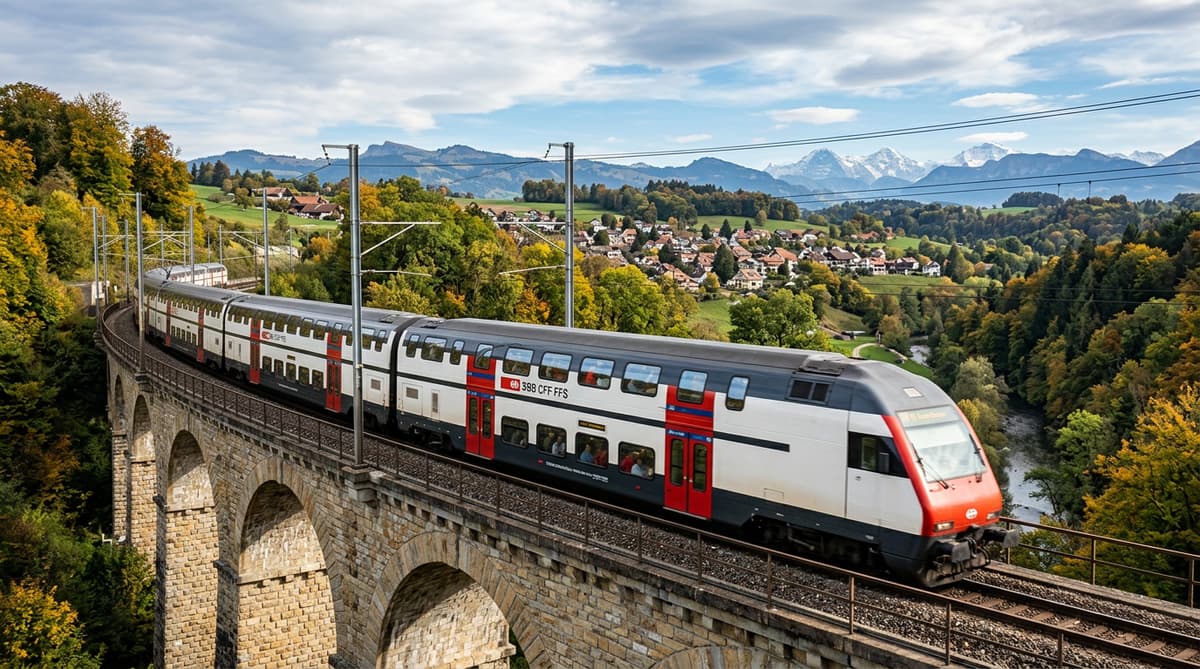
Swiss passengers travelled almost 24 billion passenger-kilometres in 2025, according to federal public transport statistics, setting a third consecutive annual record. The figure represents the distance covered by passengers, rather than the kilometres operated by trains. It shows how strongly rail use has recovered since the sharp fall during the Covid-19 pandemic.
The increase also reached everyday travel. Passengers made 675 million rail journeys, a rise of 4% in one year. Total passenger-kilometres increased by 3%, which means the growth came primarily from more journeys, with the average trip length rising by about 1%.
That pattern matters for Switzerland’s transport system. More passengers are using existing links for commuting, regional travel and longer journeys across the country. The figures cover public transport activity nationwide and place rail at the centre of a broader mobility network that includes trams, buses, cable cars, funiculars and passenger ships.
The record arrives as Swiss authorities pursue policies that encourage public transport and seek to limit transport emissions. The data show a clear shift in use. They do not, by themselves, explain which routes gained the most passengers or how much additional service operators provided.
Passengers outpace population growth
Rail journeys grew four times faster than Switzerland’s population in 2025. The population increased by almost 1%, reaching 9.1 million, while the number of rail trips rose by 4%.
That comparison points to a larger change than demographic growth alone. More residents are choosing or needing public transport, and existing passengers are travelling more often. The passenger-kilometre increase was slightly lower than the rise in journeys because average trip distance advanced by only about 1%.
The pattern suggests that frequent, shorter trips made a substantial contribution to the record. A commuter making additional weekly journeys affects the national total just as directly as a visitor crossing several cantons, although the official figures provided do not identify the purpose of each trip. They also do not break the result down by canton, route or operator.
Switzerland’s dense rail network gives passengers alternatives to private cars on many corridors. Urban trams and buses connect to mainline stations, while regional trains link smaller communities to employment and education centres. The federal statistics combine these modes in their wider public transport coverage, but the passenger-kilometre total is not complete for every form of transport.
The strongest confirmed signal is therefore frequency. Switzerland added passengers faster than it added people.