Swiss Post
Why the EU’s parcel tax may not stop Chinese online retailers
A new EU charge on small parcels from outside the bloc is already affecting Swiss Post’s cross-border volumes, but its director doubts it will curb Chinese online retailers.
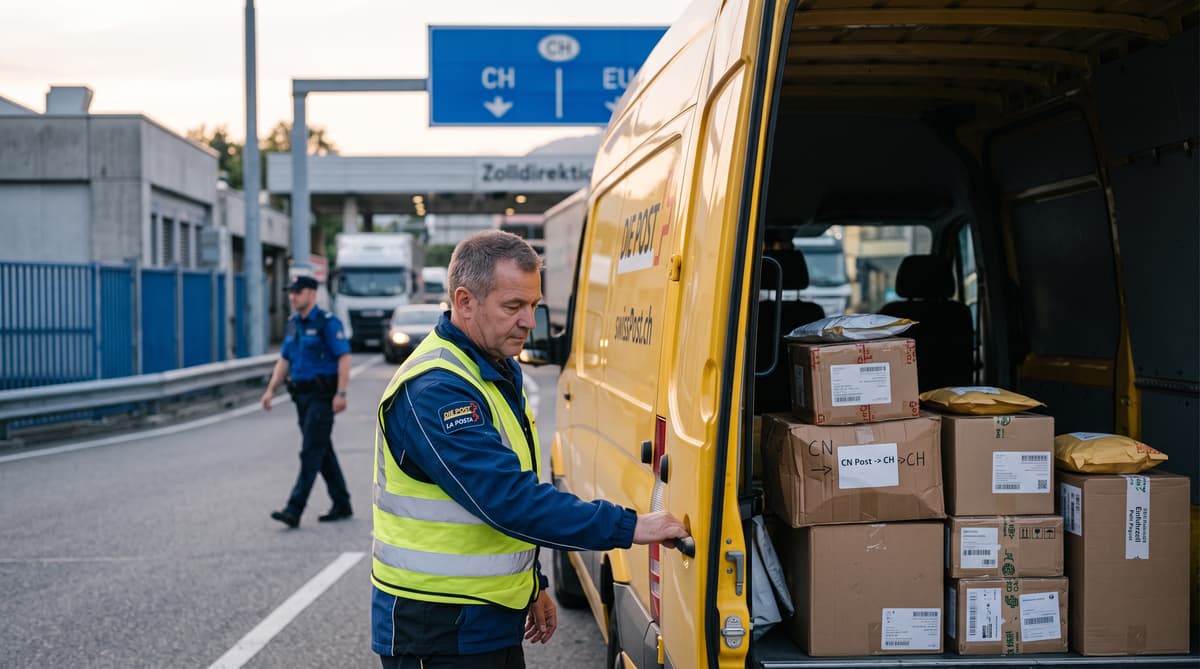
Swiss Post says EU-bound parcel volumes have dropped by a double-digit percentage since July. The decline followed the European Union’s introduction of a flat-rate customs duty on small consignments arriving from outside the bloc, a measure aimed at the flood of low-cost online orders associated with platforms such as Temu, Shein and AliExpress.
The change reaches beyond EU consumers. Swiss Post handles parcels moving through a tightly connected European delivery network, and its director, Pascal Grieder, told Schweiz am Wochenende that the new charge has had a knock-on effect on the company’s cross-border volumes. Switzerland was not the target of the EU decision, yet Swiss exporters and postal operators still face its consequences.
The immediate shock may ease. Grieder said the situation should gradually return to normal, pointing to the United States, where a similar measure initially caused an even larger disruption. For Swiss shoppers, the policy matters because sellers may pass the extra cost into product prices, while businesses sending goods to EU customers must adjust their customs and fulfilment arrangements.
The EU’s strategy also faces a practical challenge. Online retailers can change where they store goods and how they distribute them, potentially reducing the effect of a charge applied at the border.
Decode the New Customs Charge
The EU has charged €3 per item on small parcels from third countries since July 2026. Sellers or importers are responsible for the duty in principle, although some retailers are raising prices to recover the cost from consumers.
The charge applies to each item originating outside the EU. That distinction matters for low-value online orders, where a modest customs bill can represent a large share of the purchase price. A basket of inexpensive goods can therefore become more costly if a retailer treats each item as a separate taxable unit or passes the duty through at checkout.
The measure forms part of a broader European effort to respond to the rapid growth of cheap parcels entering the bloc. It also changes the administrative burden for platforms and importers. From November 1, the EU will add an administrative fee on imports from third countries. Platforms including Shein, Temu and AliExpress will be responsible for paying that fee.
For consumers in Switzerland, the direct legal effect is limited because Switzerland is outside the EU customs union. The commercial effect is harder to isolate. Swiss residents buy from European and global platforms, Swiss companies ship to EU customers, and Swiss Post operates across the same regional logistics market. Pricing, delivery times and customs paperwork can all shift as retailers recalculate their routes.
Track the Parcels Behind the Policy
Swiss Post now handles 100 million more parcels each year than it did a decade ago. The company’s annual volume includes 60 million parcels from major European providers, 20 million from small businesses and 20 million from China.
That mix shows why a change aimed at Asian e-commerce can affect a Swiss operator even when Switzerland is not directly covered by the EU decision. Chinese-origin parcels make up a growing part of the network. Their share of Swiss Post’s total volume has increased from 6% to 11% over ten years, according to Grieder.
The figures also place the current EU decline in context. A double-digit percentage drop in EU-bound shipments is significant for cross-border operations, but it follows a period of sustained expansion in parcel traffic. Postal networks must manage sorting capacity, customs processing and delivery routes while demand moves between retailers, countries and fulfilment centres.
Small Swiss businesses are exposed from another direction. A company selling products to customers in France, Germany or Italy must account for the EU’s import rules, fees and delivery requirements. Larger platforms can redesign distribution systems more quickly. Smaller exporters may need to absorb additional administrative work or revise their delivery offers, even when the goods themselves have not changed.