vocational training
WorldSkills success highlights the strengths of Switzerland’s vocational system
Switzerland’s vocational team finished third at WorldSkills and was the best-performing European delegation. The article should explain what the result says about the Swiss dual-education system, which trades performed best and the challenges facing vocational training in a changing economy.
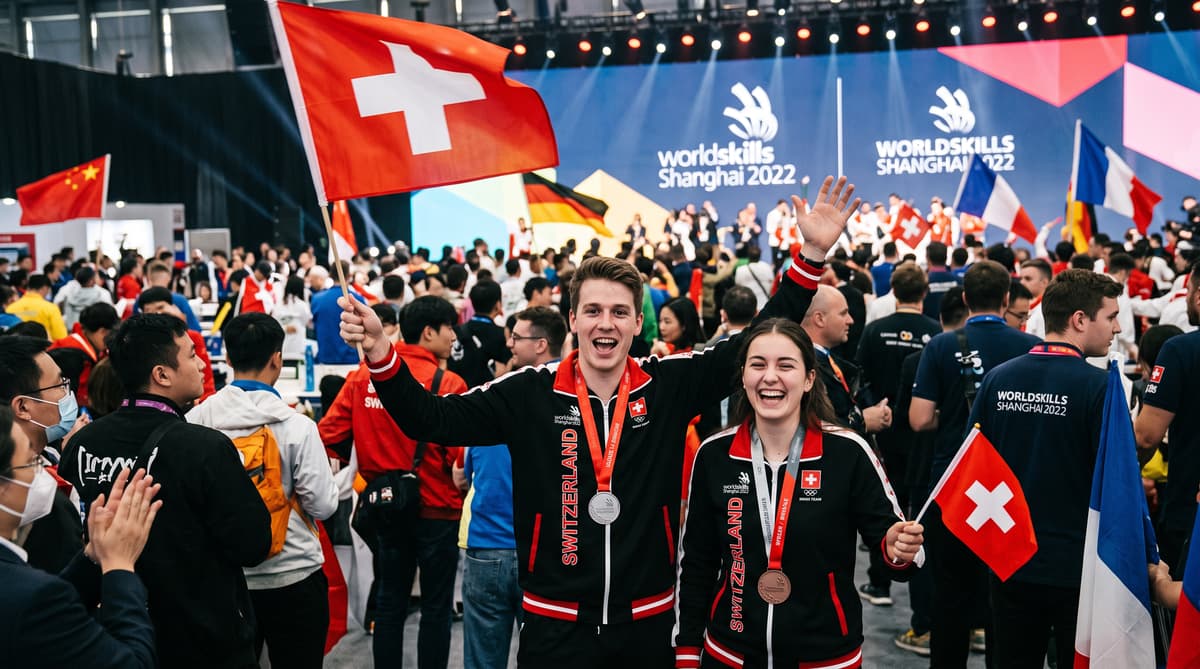
Switzerland takes the WorldSkills stage
Switzerland’s 12 medals in Shanghai put its apprenticeship model on a global stage. The 42-member team finished third at WorldSkills, behind China and South Korea, and ranked as the strongest European delegation. The result came after six days of competition, from 22 to 27 September 2026, involving about 1,400 young competitors from nearly 70 countries and regions.
The Swiss haul included four gold medals, two silvers and six bronzes. A further 23 competitors received medals of excellence, recognising performances that reached a high standard without making the podium. Switzerland’s ranking reflects the average medal points scored by each national team, according to the WorldSkills results table.
The result carries weight beyond the medal ceremony. Switzerland has just over 9 million residents, while China has about 1.4 billion and South Korea around 52 million. Population does not determine technical performance, yet the comparison shows the depth of talent produced by a small country with a highly organised vocational system.
Swiss winners represented a broad spread of work. Hotel reception, plumbing and heating, heavy-vehicle technology, digitalisation and cyber security all produced world champions. Their success gives employers, schools and policymakers a concrete international benchmark for the skills Switzerland is developing.
From plumbing to cyber security
Four Swiss world titles span hospitality, infrastructure, transport and advanced digital industry. Fina Niebergall won gold in hotel reception, bringing customer service and operational judgement into the medal tally. Sandro Amrhein took the heavy-vehicle technology title, while Matthias Steiner won in plumbing and heating. Ian Hofer and Cyrill Koller jointly won Industry 4.0, a discipline focused on digitalisation and cyber security.
That range matters because it places practical competence beside newer technological demands. A Swiss vocational route can lead to work with physical systems, public-facing services, large vehicles or connected industrial equipment. The WorldSkills categories show how employers increasingly need people who can combine precision with diagnosis, communication and digital fluency.
The competition also rewards performance under pressure. Each competitor qualified through national or regional contests before reaching Shanghai. WorldSkills began in Madrid in 1950, when apprentices from Spain and Portugal competed against the backdrop of post-war labour shortages. Its 48th edition now covers 64 skills, from joinery and plumbing to cyber security.
Switzerland’s medal list therefore reflects more than traditional craft pride. It records a training system that continues to place manual expertise, service standards and industrial technology in the same national conversation.