politics
Swiss coalition submits referendum against new nuclear plants
A coalition has submitted more than 131,800 signatures for a referendum opposing new nuclear power stations, potentially setting up a nationwide vote in 2027.
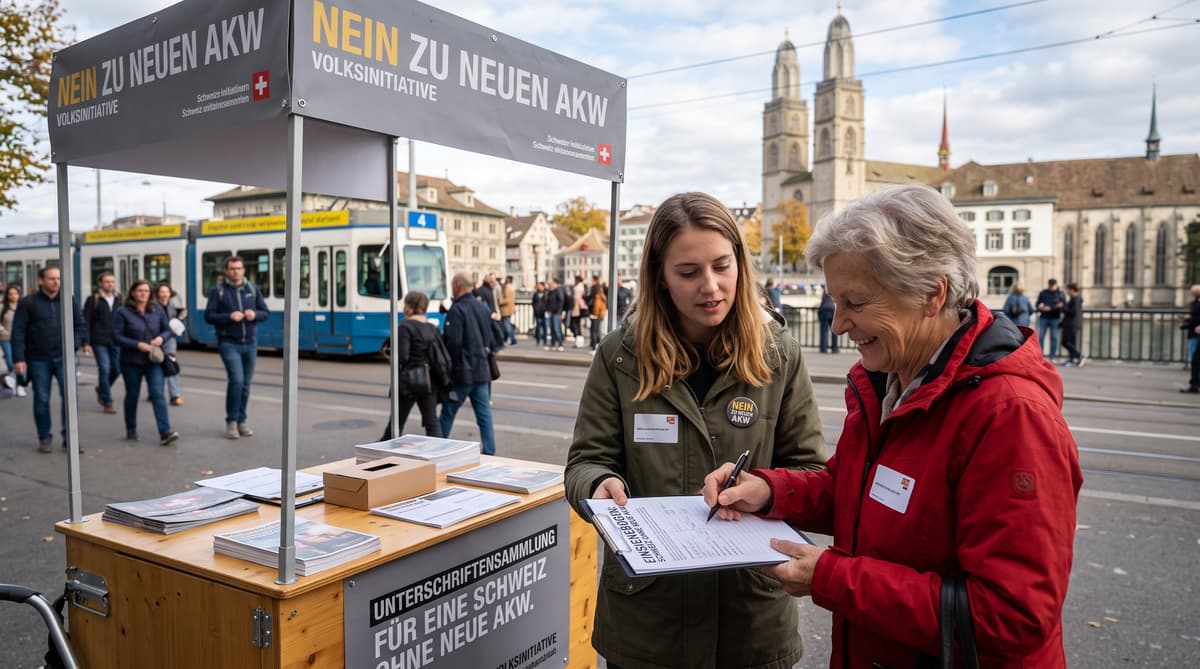
More than 125,000 signatures in three months have forced Switzerland toward a nationwide vote on whether it should allow new nuclear power stations. The campaign opposing the government and parliament’s proposal announced the result on September 20, 2026, after collecting support for a referendum against the planned policy change.
The vote will decide whether Switzerland can reverse its ban on constructing new nuclear plants. Parliament approved the government’s indirect counter-proposal to the “Stop the Blackout”, also known as “Electricity for All at All Times”, popular initiative during the June 2026 summer session. The proposal does not build a reactor. It would remove the legal barrier preventing future projects from being developed.
That distinction leaves Switzerland facing a decision about the direction of its energy policy rather than an immediate construction timetable. A successful referendum campaign has now moved the dispute from parliament into the national political arena. Voters will weigh the promise of additional low carbon electricity against concerns over cost, safety, uranium imports and the long lead times associated with nuclear infrastructure.
Parliament Seeks to Lift the Ban
Parliament’s June 2026 decision would lift the ban on new nuclear power stations. The measure emerged as an indirect counter-proposal to the “Stop the Blackout” popular initiative, which calls for electricity to be available at all times. The government and parliament argue that Switzerland should retain the option of nuclear generation as it plans for future electricity demand.
The source does not specify a construction project, reactor design, budget or start date. Any future plant would therefore remain subject to additional political, regulatory, financial and technical decisions. The referendum concerns the legal permission to pursue new facilities.
Supporters of the parliamentary approach see nuclear power as part of a broader effort to secure reliable electricity while reducing emissions. Switzerland already operates nuclear facilities, and a separate Swissinfo analysis published in July examined the argument for keeping existing plants running. The current campaign, however, focuses on whether the country should reopen the door to new construction.
The referendum gives voters the final say on that change. Its outcome will shape the boundaries of Switzerland’s energy strategy for years, even before any reactor proposal reaches the planning stage.
Coalition Defends the Renewable Course
The opposition coalition spans major parties and around 30 environmental organisations. The Greens, Social Democrats and Green Liberals have joined the campaign, as have members of the Centre Party. WWF, Greenpeace, Pro Natura and Swissolar are among the organisations backing the referendum.
The coalition says voters have already established a renewable energy course through three nationwide decisions. It points to the adoption of the Energy Strategy 2050 in 2017, the Climate Protection Act in 2023 and the Electricity Act in 2024. Campaigners argue that lifting the nuclear construction ban would disregard those choices and redirect attention away from domestic renewable generation.
In its statement, the coalition said Switzerland is increasingly meeting its energy needs through locally produced solar, wind and hydropower. It also described nuclear technology as costly and dangerous, while warning that uranium imports could increase dependence on foreign suppliers, particularly Russia.
Those claims will sit at the centre of the referendum campaign. The opposing sides are preparing to argue over the reliability, price, emissions profile and strategic risks of different power sources. The final ballot debate will test whether voters see the renewable path as sufficient on its own or want nuclear power kept available as an additional option.
Energy Security Drives the Debate
The referendum campaign turns energy security into a direct vote on risk and cost. The parliamentary proposal was presented in the context of ensuring electricity availability, while opponents say new nuclear plants would impose financial and safety burdens that Switzerland should not accept.
The “No to New Nuclear Power Stations” coalition has used the signature result to claim that public opinion rejects a return to nuclear power. Its statement links future nuclear generation to uranium imports and says the technology could deepen reliance on foreign supply chains. The coalition also argues that locally produced solar, wind and hydropower are expanding.
The government and parliament have taken a different policy position by seeking to remove the prohibition on new plants. The source does not provide a cost estimate for possible reactors or a forecast for electricity demand, so the referendum debate will develop around competing policy arguments rather than a defined project budget.
Swiss voters will eventually decide whether the country preserves the ban or permits the federal authorities and private operators to examine new nuclear facilities. Existing plants form part of the wider energy discussion, but the ballot described here concerns new construction. That legal question will determine how much room nuclear power has in Switzerland’s next energy strategy.
Voters Will Set the Next Energy Course
The ballot will set the legal direction of Swiss nuclear policy for the coming years. A rejection would preserve the ban on new nuclear power stations and reinforce the political emphasis on solar, wind and hydropower. Approval would reopen the possibility of new plants, although it would not authorise construction by itself.
The result will also frame future arguments about existing nuclear facilities. Swissinfo reported in July that the government and parliament wanted the ban lifted, while examining the wider question of how the country should manage its current plants. The referendum adds a public decision to that debate and gives voters control over whether new nuclear capacity can enter the planning system.
The campaign will draw on Switzerland’s recent record of energy votes, the country’s federal political system and concerns about imported fuels. Parties and civil society groups will seek to define what reliable, affordable and locally produced electricity should mean in practice.
No voting date is provided in the source material. Until the authorities announce the timetable, the decisive fact is the signature threshold achieved by the opposition campaign. Switzerland is now set for a national test of whether its energy transition should exclude new nuclear power permanently or leave the option open.