Lucerne
Lucerne coach traffic drops after parking charges
Lucerne says coach traffic has fallen sharply since parking charges were introduced, reducing pressure on the city centre and leading officials to abandon plans for stricter controls for now.
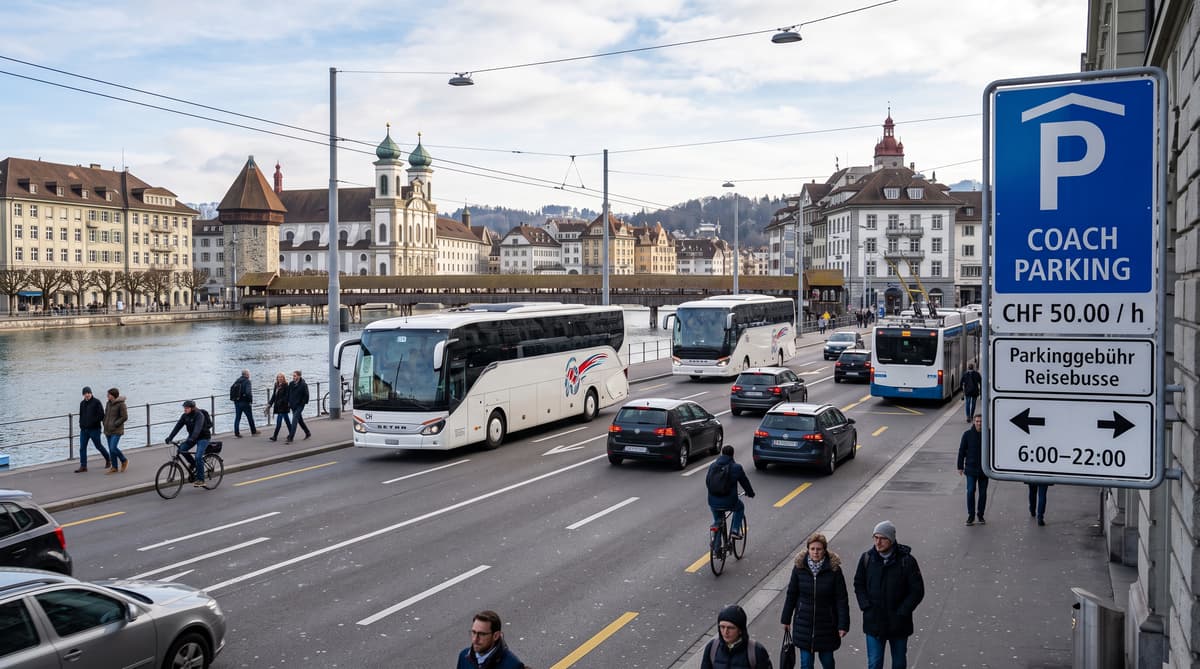
Coach traffic at Schwanenplatz has fallen by two-thirds since 2024, giving Lucerne officials a clear reason to pause further restrictions on tourist buses entering the city centre.
The decline follows the introduction of a CHF 100 stopping charge in April 2025. The measure targeted coaches bringing day visitors to the lakeside city, where crowded streets and concentrated tourist flows had become a persistent concern for residents and local authorities.
The City of Lucerne said on September 11 that coach activity had continued to weaken through 2026. At Löwenplatz, another central stopping point, the number of coach stops has fallen by half compared with 2024. The city has no comparable figures for Kasernenplatz, although it said the square is used infrequently and has little effect on the overall picture.
The figures matter beyond traffic management. Lucerne depends heavily on tourism, yet its historic centre has limited road space and attracts visitors to the same compact area around Chapel Bridge, the lakefront and the old town. Fewer central coach stops reduce congestion at the points where large groups arrive and depart.
Fifteen months after the charge began, the City Council said it had reached a “positive conclusion”. It had already decided in November 2025 not to tighten the rules further.
A CHF 100 Charge Changes the Pattern
Lucerne issued 21,760 paid stopping permits in 2025, producing CHF 1.2 million in net revenue for the city.
Each permit cost CHF 100, a price that quickly altered the pattern of coach arrivals. In the first year after the charge took effect, the number of coaches at Schwanenplatz dropped by 56%, according to the city. The latest comparison, measured against 2024, shows an even larger reduction of roughly two-thirds.
Bookings have continued to soften in 2026. The city’s online platform recorded 9,165 permits during the first six months. Spring normally brings fewer coach arrivals, so officials expected some seasonal weakness. They also recorded a decline during the peak period. Between April and June, the number of stops fell by 25% compared with the same months of 2025.
The daily peak also moved lower. Last year, the platform recorded 160 bookings in one day. In 2026, the highest figure reached 130. That difference suggests the charge has affected high-volume arrival days as well as the annual total.
The figures do not show that coaches have disappeared from Lucerne. They show that operators are adjusting where and when they stop, with the central paid locations carrying less of the load.
Operators Shift Toward Free Parking
Free parking at Inseliquai recorded a 2% increase in coach traffic, showing where some of the pressure has shifted as central stopping points lose business.
Around 60 coaches stop at Inseliquai each day, according to Lucerne. The site offers operators a way to avoid the CHF 100 charge applied at paid locations. Its modest increase contrasts with the steep falls at Schwanenplatz and Löwenplatz, although the city has not described the shift as a one-for-one replacement.
The redistribution matters because Lucerne’s traffic strategy depends on more than the number of coaches entering the municipality. Where groups unload affects pedestrian movement, public transport, local businesses and the experience of residents moving through the centre. Moving some arrivals away from the most congested squares can reduce pressure even when tourism remains strong.
The city also reported isolated cases of coaches stopping illegally at bus stops operated by Verkehrsbetriebe Luzern. Authorities have installed no-stopping signs at those locations. The signs give Lucerne police a clearer basis to issue fines for unauthorised stops.
Kasernenplatz remains a minor factor in the overall statistics because coaches use it relatively infrequently. Together, the figures point to a more dispersed coach network, with operators weighing cost, convenience and access to the city’s main attractions.
The Council Pauses Further Restrictions
Lucerne will hold off on stricter coach rules while the decline continues, leaving the parking charge as the city’s main intervention for now.
The decision comes as the number of overnight stays in Lucerne has risen. City officials say tourist flows have nevertheless become more evenly distributed across the centre since the fee was introduced. That distinction is important for a destination that wants to retain visitors while reducing the concentration of large groups at a few high pressure locations.
Lucerne has debated coach management for years. In 2019, the city was already reviewing its tourism strategy after complaints about traffic and other effects of heavy visitor numbers. The 2025 charge represented a more targeted response, linking access to the busiest stopping points with a direct fee.
The current data gives the council room to monitor results before imposing additional limits. Officials will still need to watch Inseliquai, public transport stops and the busiest summer days. A fall in central stops does not automatically eliminate congestion, particularly if operators cluster at free facilities or use unauthorised locations.
For other Swiss destinations facing similar pressures, Lucerne offers a measurable example of demand management. The city has collected revenue, reduced coach activity at key squares and avoided immediate escalation. Its next challenge will be maintaining that balance as tourism patterns change in 2026 and beyond.