labour
Swiss Uber drivers say algorithmic work is no longer paying enough
Uber drivers in Switzerland say falling fares, intense competition and opaque algorithms have pushed earnings down, with some reporting barely CHF70 after a full day’s work.
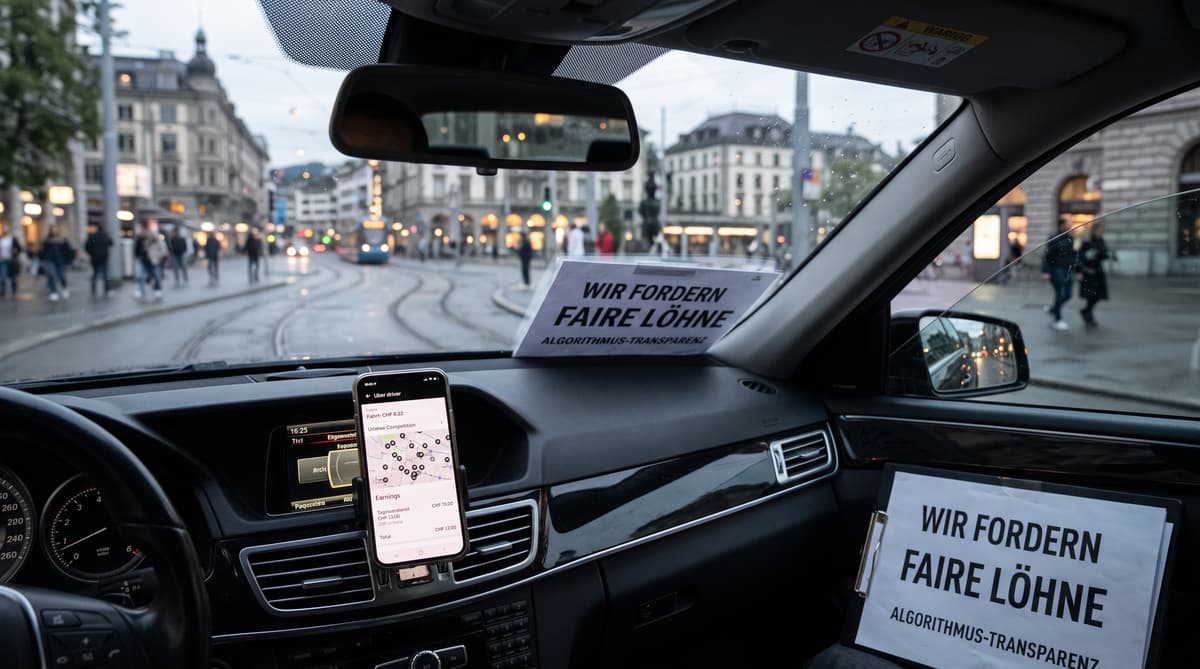
CHF70 for nine hours is the figure driving a wider dispute over app-based work in Switzerland. Cem Kurun, a 30-year-old Uber driver in canton Zurich, says his income has collapsed since he began driving in 2019. He once earned around CHF1,200 while working roughly 30 hours a week. Today, he says, he makes just over CHF300. On the day he spoke to Swissinfo, nine hours behind the wheel produced CHF70.
Kurun links the decline to lower fares, a crowded private transport market and the arrival of Bolt in Zurich in 2024. The Covid pandemic also changed demand and intensified competition, he says. Drivers absorb fuel, vehicle, insurance and waiting-time costs while competing for rides through platforms that control access to passengers.
The pressure reaches beyond one driver’s monthly budget. Kurun says some colleagues depend on social assistance and questions how anyone could support a family on current returns. His account has placed algorithmic management and the legal status of platform drivers back in the spotlight, as Swiss authorities and courts continue to examine whether these workers are genuinely independent.
Expose the rules behind the app
Kurun says the app leaves drivers little practical room to set their own prices. Uber’s system allows drivers to choose a fare in theory. In practice, Kurun says passengers stop requesting rides when he sets his price just 10 centimes above Uber’s price per kilometre. That makes nominal flexibility difficult to use in a market where drivers need a steady stream of bookings.
He also suspects the platform penalises drivers who reject too many trips. He describes map areas that appear to promise stronger earnings, then disappear by the time a driver reaches them. These features are difficult for drivers to test because the platform does not reveal how its matching, pricing and incentive systems operate in detail.
Uber rejects the suggestion that drivers face penalties for refusing work. The company says drivers can accept or reject trips without punishment. It also says acceptance and cancellation rates do not determine how drivers are matched with passengers or how personalised fares are set. The dispute therefore turns on more than the rate paid for a single journey. It concerns whether drivers can make informed choices when the rules governing access to work remain largely inside a private platform.
Challenge Uber’s employment model
Unia says Uber’s control over drivers is incompatible with self-employment. Philipp Zimmermann, a spokesperson for Switzerland’s largest trade union, argues that drivers lack genuine freedom of choice because they must follow conditions imposed through the platform. In the union’s view, that control should carry consequences under employment law.
The classification matters financially. If drivers are employees, they may be entitled to wages, reimbursement of work-related expenses and employer contributions to social security. If they are treated as independent contractors, those costs remain with the driver, even when the platform determines which work is available and on what terms.
Swiss courts have already dealt with the issue in several cantonal and federal proceedings. The cases cited by Swissinfo include rulings that drivers using Uber’s services should be considered employees. In 2018, the State Secretariat for Economic Affairs, known as SECO, also indicated that Uber drivers should be classified as employees. The legal disputes have continued because the platform model separates the company, the driver and, in some cases, intermediary operating structures. That arrangement has made responsibility for pay and social protection a contested issue across Switzerland.
Set the rules for platform work
The dispute is moving from individual earnings to the future rules of platform work in Switzerland. Drivers such as Kurun are asking authorities for stronger rights and protection while their income depends on decisions they cannot see or independently verify. Their complaints cover fares, ride allocation, competition and the costs of remaining on the road for a full day.
Zurich offers a clear view of the pressure. Uber has operated there alongside established taxi and private transport providers, while Bolt added another platform in 2024. More apps can give passengers greater choice, but they also divide demand among drivers. When fares fall, drivers have limited ways to recover the difference because they carry the cost of idle time and vehicle operation themselves.
The outcome will affect more than Uber drivers. Swiss policymakers face questions about transparency, social insurance and the meaning of independence when software controls access to paid work. Uber maintains that drivers retain the ability to reject trips and that key performance rates do not shape matching or personalised fares. For drivers, the practical test is whether that formal freedom produces sustainable earnings after a day on the road.