education
Swiss primary-school population set to shrink as university numbers rise
The number of primary-school pupils in Switzerland is expected to fall by 8% by 2035 after peaking around 2027 or 2028, according to federal projections. University enrolment, by contrast, is forecast to grow by more than 20% over the same period.
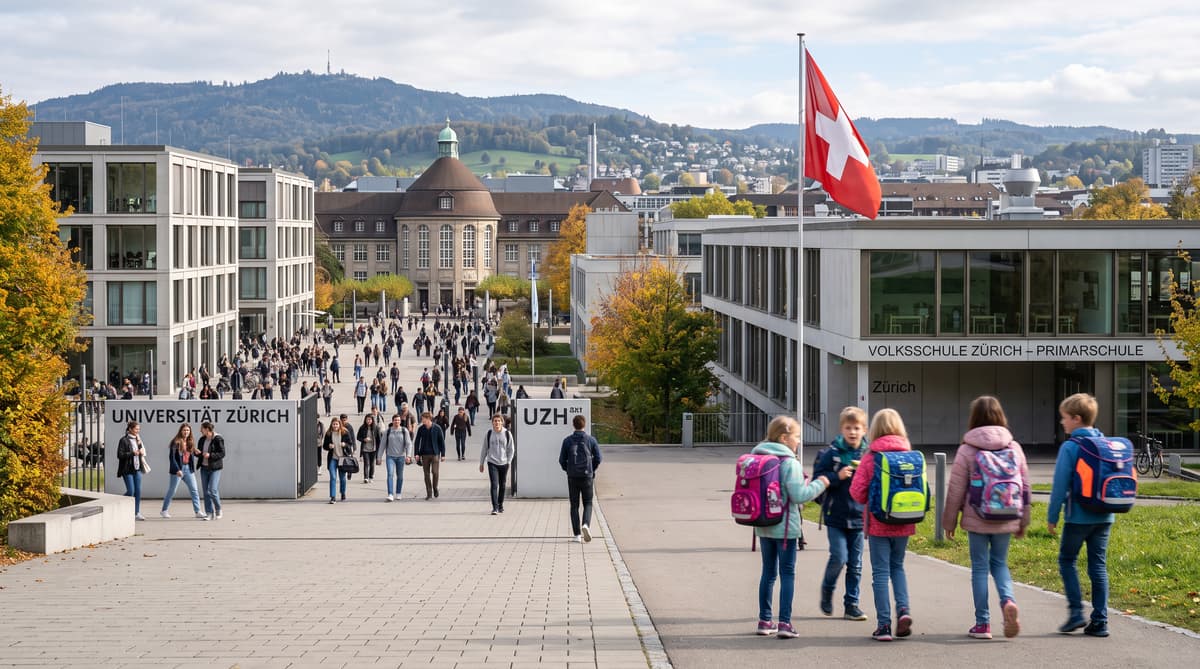
Primary school numbers will peak within two years, then enter a sustained decline. The Federal Statistical Office expects the number of pupils in Swiss primary schools to reach its high point in 2027 or 2028. By 2035, enrolment is forecast to be 8% lower than at that peak.
The projection follows a clear demographic signal. Birth rates have fallen since 2022, reducing the number of children who will enter compulsory schooling in the years ahead. Primary enrolment had risen sharply in recent years, placing pressure on classrooms, teachers and school infrastructure in many municipalities. The coming shift will gradually change those planning decisions.
The effect will take time to move through the education system. At lower secondary level, the Federal Statistical Office expects numbers to continue growing for longer, with a decline beginning from 2033. That lag reflects the years children spend moving through primary education before reaching the next stage.
The forecasts cover Switzerland as a whole and come with uncertainty. The FSO specifically points to future birth rates and immigration as factors that could alter the outcome. Municipalities and cantons therefore face a moving planning target as they decide where to build, recruit and allocate education funding.
Universities prepare for a larger cohort
Higher education is moving in the opposite direction, with 305,000 students projected by 2035. The Federal Statistical Office expects enrolment at universities, universities of applied sciences and teacher training colleges to reach that total at Bachelor’s and Master’s level. Compared with 2026, the figure represents growth of 21% over nine years.
The FSO identifies two main drivers: population growth and an increase in international students. The forecast includes Switzerland’s broad higher education landscape, from traditional universities to applied sciences institutions and teacher training colleges. It points to sustained demand for places well after the primary school population begins to shrink.
That growth will shape campuses, housing markets and transport networks in university towns. It will also influence the need for lecturers, laboratories, student services and placements. Switzerland’s universities of applied sciences and its dual vocational system remain important routes into professional careers, while universities continue to attract students from abroad.
The numbers also carry a labour market concern. The University Graduates Survey, conducted by the FSO in August, found that unemployment among graduates rose noticeably between 2023 and 2025. Teacher training colleges were the exception. More enrolment will therefore increase the importance of how institutions connect qualifications with jobs.
Vocational routes continue to grow
Vocational and general education will also expand as cohorts move through the system. The Federal Statistical Office forecasts a 10% increase in basic vocational training and a 12% rise in general education programmes by 2035. Higher vocational education is expected to grow by 17%, reaching 41,300 students at higher technical colleges.
Those projections matter in a country where education pathways remain closely tied to regional labour markets. Many young people enter apprenticeships after compulsory schooling, while others continue through general education or progress into higher vocational qualifications. The expected growth across these routes suggests that the demographic shift will not reduce demand evenly across the system.
Lower secondary education is expected to record moderate growth before its own decline begins from 2033. That timing gives cantons and schools several years to manage changes in pupil numbers, apprenticeship demand and transitions into upper secondary education.
Switzerland’s education structure also allows students to change direction. A young person can begin with an apprenticeship and later pursue higher vocational education or a degree at a university of applied sciences. The forecast therefore describes a redistribution of demand across age groups and qualifications, rather than a single national contraction.
Cantons plan for diverging demand
Cantons must plan for two different education pressures at the same time. Primary schools will eventually need fewer places, while universities and advanced training institutions prepare for larger student populations. The transition will unfold over several years, with lower secondary enrolment still expected to grow until the early 2030s.
School buildings, staffing and budgets are among the areas most directly affected. A municipality facing falling numbers may have to reconsider expansion plans or the use of existing classrooms. University cities will face a different set of demands, including accommodation, public transport and capacity for teaching and research. Immigration could change the scale of both pressures, which is why the FSO has qualified its scenarios.
The labour market adds another layer. Graduate unemployment increased between 2023 and 2025, even as higher education enrolment continued to rise. The exception was teacher training colleges, a result that may matter as Switzerland assesses future staffing needs in schools.
The next decade will test how effectively Switzerland links demographic forecasts to education policy. The figures provide a national direction, while implementation will depend on cantonal decisions, local population trends and the ability of institutions to respond as each cohort moves through the system.