gender equality
Switzerland falls ten places in global gender equality ranking
Switzerland has fallen ten places to 27th in the World Economic Forum’s global gender-gap index. The article would examine the country’s decline, its performance in political representation and economic participation, and why progress on gender equality is slowing despite Switzerland’s wealth.
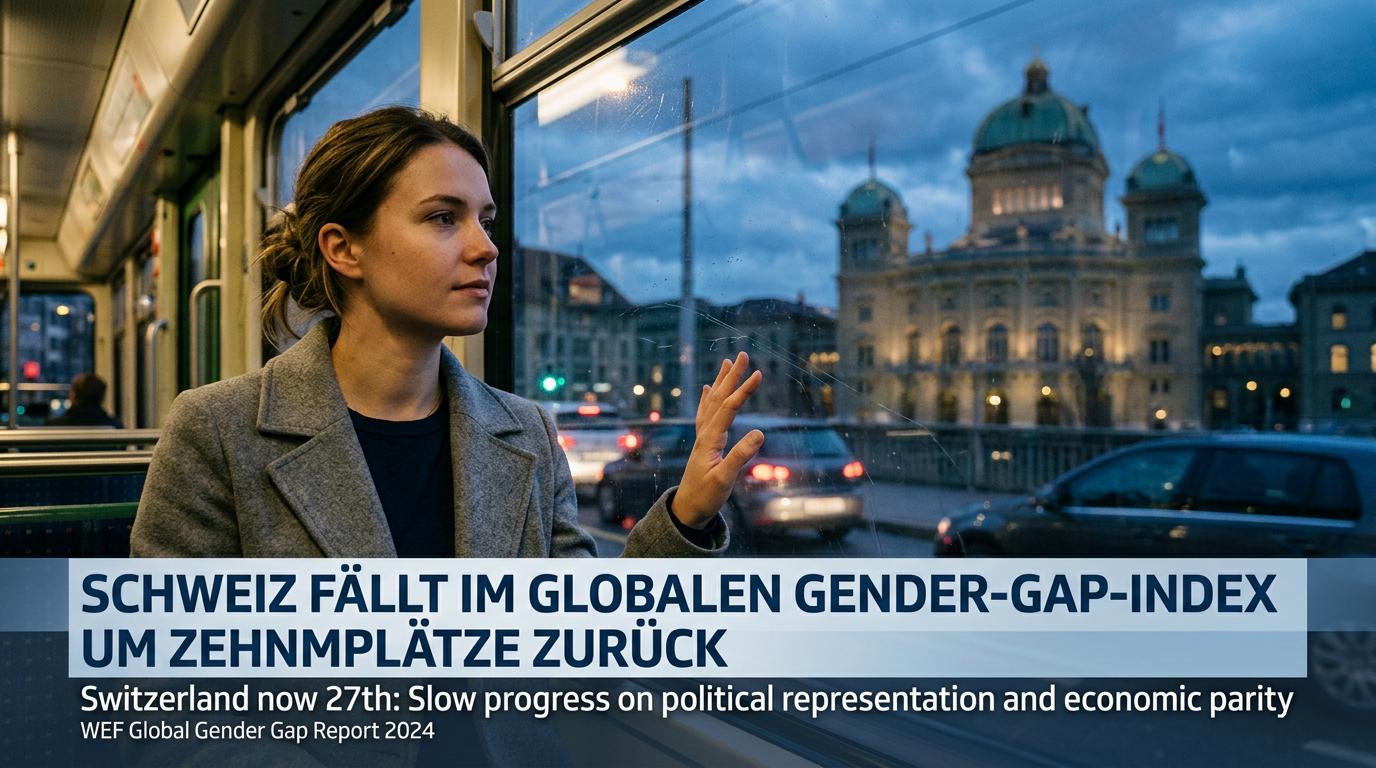
Switzerland Slips as Global Rivals Move Ahead
Switzerland has dropped 10 places to 27th in the World Economic Forum’s gender-gap index, a setback for a country that has not appeared in the ranking’s top 10 since 2021. The 2026 assessment covers 145 countries and places Switzerland behind the Nordic leaders, with Iceland retaining first place, followed by Finland and Norway. Namibia has moved into fourth position.
The result lands in a country that often associates prosperity with social progress. Switzerland has a highly educated workforce, a strong economy and a long record of institutional stability. The index, however, measures how women and men share opportunities and power. Wealth alone does not guarantee equal access to senior jobs, political influence or emerging industries.
The World Economic Forum said the global gap has narrowed by nearly 70%, with progress of 0.4 percentage points over the latest period. That improvement remains far too slow to change the overall timetable. At the current rate, the organisation estimates that the global gender gap will take 120 years to close.
For Switzerland, the fall in rank is a warning about momentum. A country can remain affluent while other nations advance faster on representation and participation.
Political Power Still Escapes Too Many Women
Switzerland’s 27th-place ranking reflects a wider problem in political representation: women remain underrepresented where decisions carry the greatest weight. The World Economic Forum reported that the proportion of countries led by women has fallen back to the level recorded 10 years ago. Fewer than 10% of ministerial portfolios considered influential are held by women worldwide.
That measure matters beyond the headline count of women in public office. Cabinet portfolios that shape finance, foreign affairs, defence, technology and economic policy determine which priorities receive money, legislation and administrative attention. A government may include women while still concentrating the most influential responsibilities elsewhere.
Switzerland’s federal system adds layers to the picture. Power is distributed between the Federal Council, Parliament, cantonal governments and local authorities. The source material does not provide a cantonal breakdown for this year’s index, so the national ranking cannot be used to identify which canton has improved or fallen back. It does show that Switzerland’s overall position has weakened relative to other countries.
The country’s political institutions will face scrutiny over whether women gain access to the top decision-making roles, and whether those roles carry substantive authority. The latest ranking measures an international comparison, not a single election. Its decline points to a pattern that cannot be explained by one vote or one government.
Swiss Workplaces Struggle to Share the Top Floor
Fewer than 20% of chief executives are women, according to figures cited by the World Economic Forum. That statistic helps explain why economic participation remains central to the gender-gap debate, even in one of the world’s wealthiest economies.
Executive representation is only one measure, but it signals who reaches the point where major hiring, investment and workplace decisions are made. When women remain rare in the top tier, advancement can narrow further down the organisation, particularly in sectors that feed directly into senior management. The source does not identify the Swiss industries or companies responsible for the decline, so the national ranking should not be reduced to a list of corporate offenders.
The index also highlights the relationship between employment and influence. A strong labour market can coexist with unequal access to leadership, pay and strategic authority. Switzerland’s result raises questions about whether existing workplace practices are producing enough promotion into the highest ranks, and whether employers are adapting quickly enough to changing family and career patterns.
The ranking does not provide a diagnosis of every Swiss workplace. It does offer a comparable signal: other countries are closing gaps faster. For Swiss companies, the pressure comes from both domestic expectations and international competition for skilled workers and leaders.
AI Engineering Keeps a Gender Gap in View
Women make up fewer than one in five engineers working on artificial intelligence, placing technology among the clearest pressure points in the new assessment. AI is becoming one of the most important forces shaping work, research and public policy. The people who design these systems influence the data they use, the risks they identify and the problems they choose to solve.
A workforce that lacks women can narrow the range of experience represented in technical decisions. The WEF figure is global, and the source does not provide a separate Swiss percentage. It therefore cannot establish how Swiss universities, technology companies or public research institutions compare with the international average. It does show why gender equality is increasingly linked to technological competitiveness.
The shortage also has a long pipeline. Engineering participation begins well before the first senior job, through education, recruitment, mentoring and access to high-value projects. By the time companies appoint chief executives, many inequalities have already accumulated across careers.
Switzerland has strong universities, research institutions and technology firms. Its ranking makes the question of access more urgent: who enters these fields, who remains in them, and who gets to direct the next generation of digital systems? The published figures point to the gap. They do not yet explain which intervention would close it fastest.
Switzerland Needs a Faster Course Correction
The global gender gap has closed by nearly 70%, yet annual progress is only 0.4 percentage points. That pace leaves Switzerland facing a long-term competitiveness issue as much as a question of fairness. Countries that improve access to political authority, executive jobs and technical careers will draw on a broader pool of talent and experience.
The comparison with Iceland, Finland and Norway gives the ranking its political edge. These countries remain ahead of Switzerland in the 2026 index, while Namibia has entered the top five. The index does not establish that one policy explains their performance, and it does not offer a detailed prescription for Switzerland. Still, the rankings show that national outcomes are not fixed.
Switzerland’s decline also comes with a clear information limit. The published report excerpt gives national and global figures, but it does not break down the Swiss result by canton, sector, income or age. More detailed data will be needed to identify where the fall occurred and which groups are most affected.
The immediate task for Swiss policymakers, employers and educational institutions is measurement followed by action. Tracking women’s access to influential portfolios, executive posts and AI engineering roles would show whether progress is broad or concentrated. The next index will reveal whether Switzerland has reversed the slide or allowed the gap to widen further.