Switzerland
Swiss government proposes extending Alpine rail freight subsidies to 2035
The Federal Council wants to extend operating subsidies for unaccompanied combined rail freight across the Alps until 2035, proposing payments of about CHF59 million a year from 2027 to 2030. Rail’s share of transalpine freight fell to 68.6% in 2025, marking its fourth consecutive year of losses to road transport.
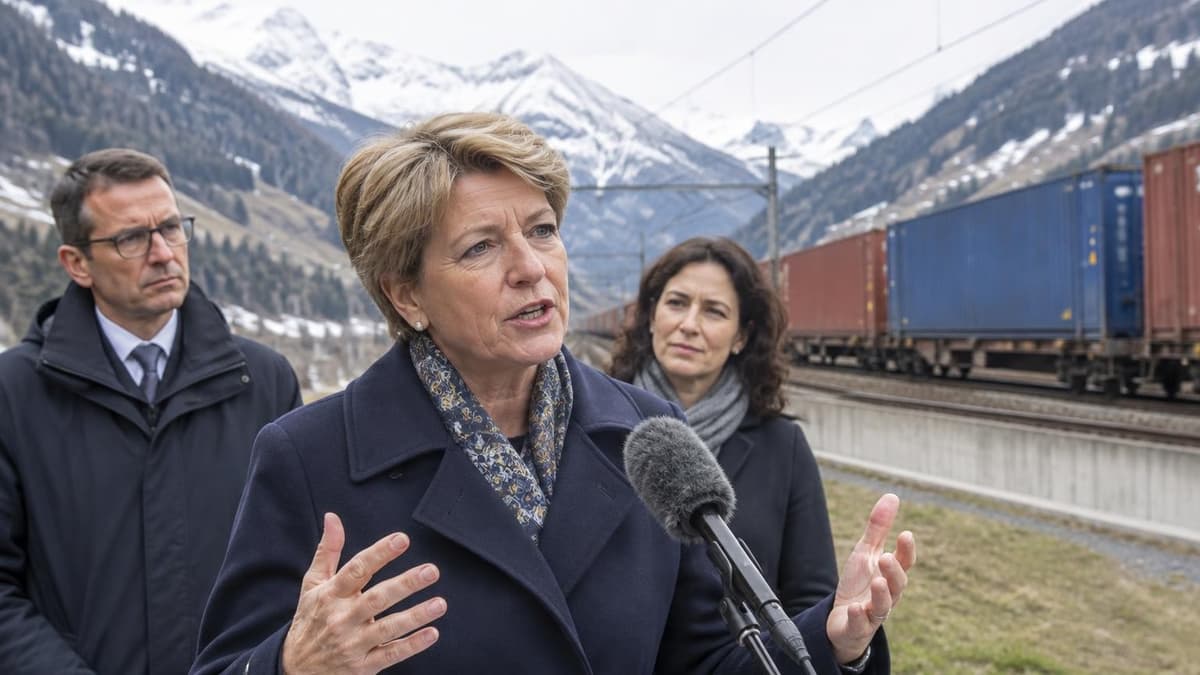
The Federal Council wants to keep federal support flowing to Alpine rail freight through 2035. On Wednesday, November 18, 2026, it submitted the extension proposal to Parliament, seeking to continue operating subsidies for unaccompanied combined transport, known as TCNA. The payments were due to end in 2030.
The government says support is needed to stabilise rail freight across the Alps and continue shifting goods traffic from road to rail. Its proposal comes as rail’s share of transalpine freight has fallen for four years in a row. The planned extension would take the programme beyond its current deadline, with the Federal Council aiming for it to come into force as early as 2027.
The proposal sets out funding through 2035, with higher annual payments at the start and reductions after 2030. Parliament must consider the government’s plan.
Rail loses ground to road
Rail accounted for 68.6% of transalpine freight in 2025. That figure marks its fourth consecutive year of losing market share to road transport, according to the Federal Council’s announcement. The proposed subsidies are intended to support and stabilise rail freight as the government pursues a continued shift of goods traffic across the Alps from road to rail.
The measure covers unaccompanied combined transport, where the Federal Council says operating subsidies help support the rail movement of freight across the Alpine routes. The 2025 share gives the policy debate a clear measure of the challenge: rail still carried more than two-thirds of transalpine freight, yet its share has declined year after year.
The government has asked Parliament to extend the subsidy scheme beyond its planned 2030 end date. Its proposal would keep support in place until 2035.
Funding starts in 2027
The proposal sets annual payments at about CHF 59 million from 2027 to 2030. After 2030, the Federal Council plans to reduce the subsidies gradually. Across the full period to 2035, the government says federal support would total CHF 486 million.
The funding schedule gives the extension two distinct phases: four years at the proposed annual level, followed by a gradual reduction. The government has not presented the extension as a permanent subsidy. It is asking to continue the operating support beyond the current 2030 deadline, while tapering payments in the later years.
The Federal Council wants the scheme to start quickly, as early as 2027. That timing would place the first proposed payments next year, subject to Parliament’s consideration of the plan. The stated aim is to stabilise Alpine rail freight and sustain the shift from road transport.
Parliament weighs the next step
Parliament will decide whether the subsidy programme continues beyond 2030. The Federal Council has submitted its proposal and says it wants the extension to take effect as early as next year. The plan would maintain operating support for unaccompanied combined transport until 2035, with annual payments reduced gradually after 2030.
The case for extending the scheme comes as rail’s share of transalpine freight stands at 68.6%, after four consecutive years of losses to road transport. The government frames the payments as a way to support and stabilise Alpine rail freight while continuing the shift of goods traffic from road to rail.
If Parliament approves the proposal, the federal government would provide CHF 486 million in total through 2035. The first proposed phase, from 2027 to 2030, would bring annual payments of about CHF 59 million.