politics
Switzerland Appoints Special US Envoy Amid Trade Crisis
Switzerland names Ambassador Gabriel Lüchinger as special envoy to handle escalating US trade tensions and tariff issues.
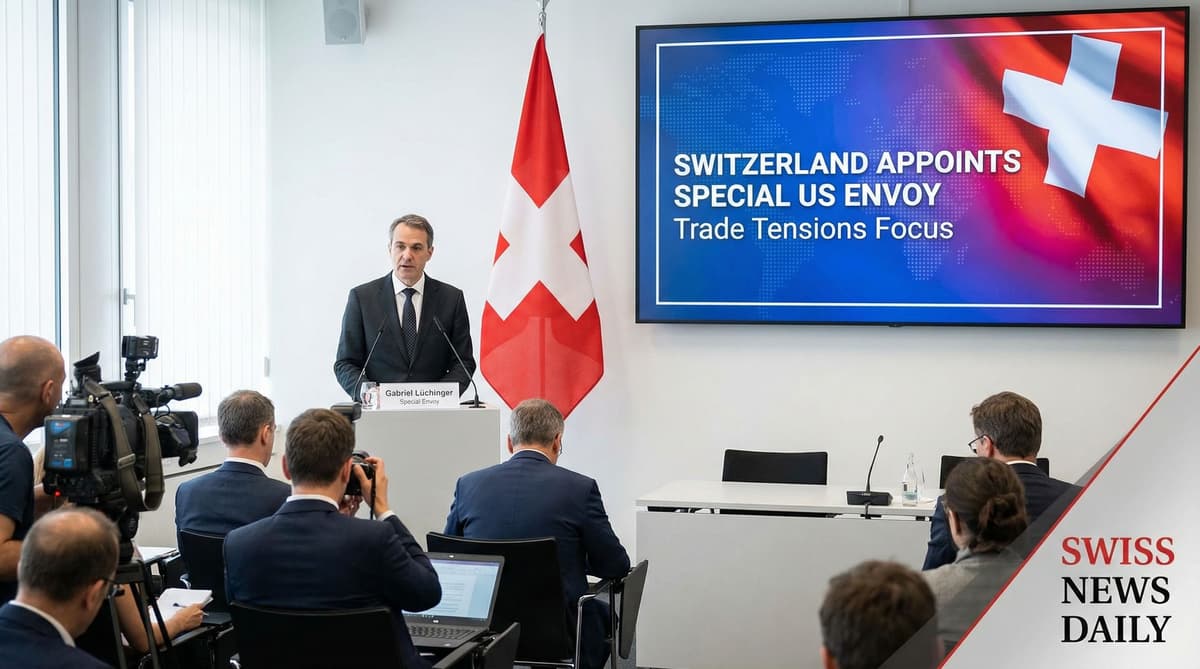
Switzerland is no longer watching from the sidelines. In a decisive move to protect national interests, the Federal Council has officially appointed Ambassador Gabriel Lüchinger as the special envoy to the United States. This is not standard diplomacy; this is crisis management. Announced on Wednesday following a critical meeting in Neuchâtel, Lüchinger’s appointment signals a dramatic shift in Bern’s strategy as it grapples with an escalating trade war initiated by US President Donald Trump.
The government's message is clear: passive observation is over. By creating this temporary but high-powered role, Switzerland is establishing a direct, focused channel to Washington. Lüchinger, currently the heavyweight head of the International Security Division at the foreign ministry, is tasked with navigating the treacherous waters of international security and trade. The Federal Council is deploying its best assets to ensure Switzerland doesn't become collateral damage in Trump's economic crossfire.
The 31% Threat: A Tariff Shockwave
A staggering 31%. That is the figure that sent shockwaves through the Swiss economy last week. These punitive import tariffs on Swiss goods, imposed by the Trump administration, represented an existential threat to Swiss exporters before being "apparently suspended." This volatility highlights the extreme precariousness of the current economic landscape. Switzerland is confronting a partner that is willing to weaponize trade policy overnight.
While the tariffs have been paused, the threat looms large. The appointment of a special envoy is a direct response to this instability. The Swiss government recognizes that a 31% levy is not just a tax; it is a barrier that could cripple key industries. The situation remains fluid, and the "suspension" offers only a fragile reprieve. Bern is now racing against time to convert this temporary pause into a permanent solution before the economic hammer falls again.
Presidential Hotline: Keller-Sutter Intervenes
Diplomacy has reached the highest level. Swiss President Karin Keller-Sutter has engaged directly with Donald Trump via telephone, a high-stakes conversation that appears to have yielded immediate results. Following their discussion, Trump suspended the higher tariffs that threatened to suffocate Swiss trade. This proves that personal engagement at the executive level is critical in the current geopolitical climate.
Keller-Sutter did not just listen; she conveyed Switzerland’s position with authority while proposing ways to address US concerns. Writing on the X platform, she expressed optimism about working out solutions in the "very near future." However, the details of this potential agreement remain shrouded in mystery. The two presidents have agreed to continue talks, but the pressure is immense. Switzerland has bought time, but the deal is far from sealed.
Mobilizing the Machine: Cassis Takes Command
This is an all-hands-on-deck operation. Beyond the individual appointment of Lüchinger, the Federal Council has activated a sweeping project organization to manage relations with the US, led by Foreign Minister Ignazio Cassis. This is not a minor committee; it is a cross-departmental war room designed to unify Switzerland's diplomatic, economic, and financial response.
Running until the end of the year, this initiative underscores the severity of the situation. The government is breaking down silos to ensure that every department—from finance to foreign affairs—is pulling in the same direction. With Cassis at the helm, Switzerland is attempting to present a monolithic front to Washington. The era of fragmented diplomacy is over; Switzerland is mobilizing its entire federal apparatus to secure its economic future against unpredictable US policy.