Switzerland
Swiss study finds electric machinery sharply cuts construction-site emissions
A study by Lucerne University of Applied Sciences and Arts found that an urban construction site using electric machinery produced around 87% less operating CO₂ than a comparable diesel-powered site. Researchers tested electric equipment at pilot sites in Zurich, Basel and Lucerne.
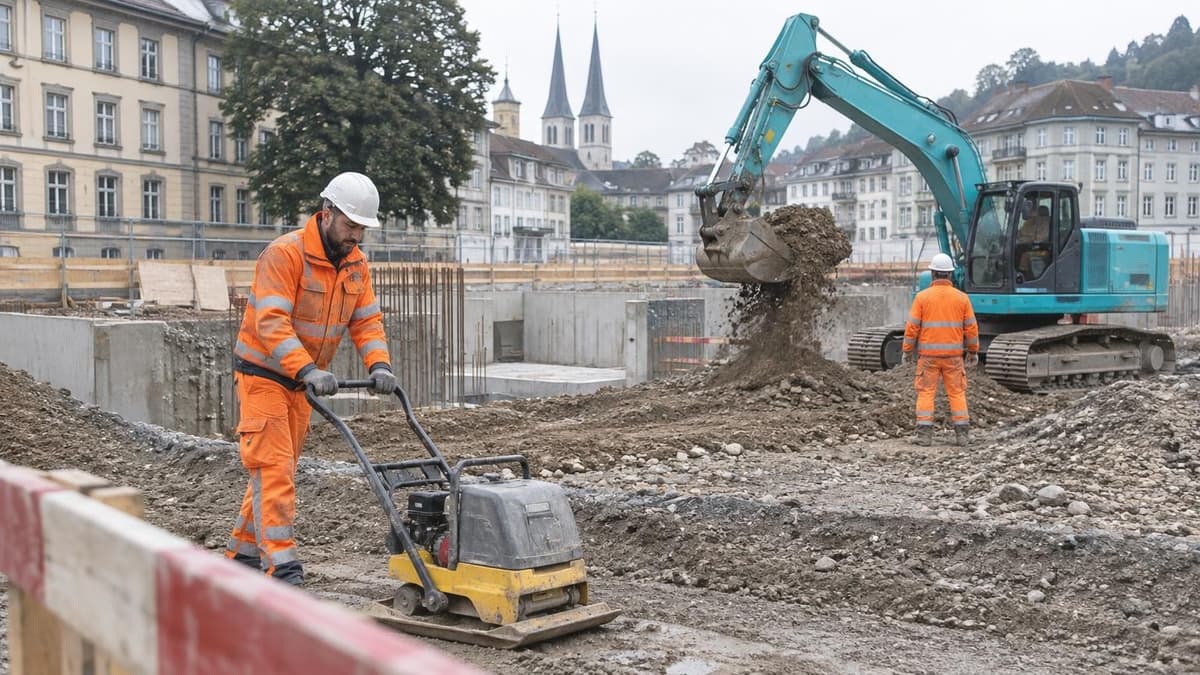
An electric construction site in Basel produced around 87% less operating CO₂ than a comparable diesel site. The figures came from two identical recycling collection points, one powered by diesel engines and the other by electricity. The electric site emitted 490 kilograms of CO₂ during operation, while the diesel site emitted 3,855 kilograms.
The comparison is part of a study by the Lucerne University of Applied Sciences and Arts (HSLU) into electrifying urban construction sites. Researchers also tested electric machinery and vehicles at pilot projects in Zurich, Basel and Lucerne. The projects covered both building construction and civil engineering.
The Basel result gives a direct comparison of operating emissions at matched sites. HSLU also reported a substantial reduction in Lucerne, where emissions fell by around 83% during a bus-stop refurbishment. Together, the pilot findings show how electric equipment performed across different urban construction projects.
Track the Three-City Trial
HSLU tracked urban construction electrification over two years, with pilot work in three Swiss cities. In 2025, the research team used as many electric machines and vehicles as possible at sites in Zurich, Basel and Lucerne. The projects included building construction as well as civil engineering, giving the study examples from more than one type of worksite.
The Basel comparison focused on two identical recycling collection points. One operated with diesel engines; the other used electricity. That setup yielded the study’s clearest side-by-side emissions figures: 3,855 kg of CO₂ at the diesel site and 490 kg at the electric site.
Across the pilots, the researchers examined how construction sites in cities could be electrified. The results reported for Basel and Lucerne both showed lower operating emissions with electric machinery. The study’s scope included machines and vehicles used at the projects, while its examples ranged from recycling infrastructure to work on a public transport stop.
Cut Emissions at Lucerne Station
Lucerne’s bus-stop refurbishment cut calculated CO₂ emissions by around 83%. The work made a stop barrier-free for rail replacement buses and took place directly in front of Lucerne station. HSLU’s study counted the project among its urban construction pilots, alongside sites in Zurich and Basel.
The Lucerne figure is close to the reduction reported for the Basel comparison, where the electric recycling collection point emitted around 87% less CO₂ during operation than its diesel-powered counterpart. The projects involved different kinds of work, but both reported substantial reductions when electric machinery was used.
The bus-stop project also connects construction activity with everyday transport infrastructure. Its location at the station and its purpose for rail replacement buses made it a public-facing civil engineering job. HSLU’s findings place the emissions reduction within that specific refurbishment, rather than treating it as a general figure for every construction project.
Put Operating Emissions in Focus
The Swiss pilots recorded lower operating emissions at both the Basel and Lucerne projects. Basel’s electric site emitted 490 kg of CO₂, compared with 3,855 kg at the diesel site. In Lucerne, calculations for the bus-stop refurbishment showed a reduction of around 83%. The results offer two concrete examples from urban construction and civil engineering.
HSLU’s work involved pilot sites in three cities and included both building construction and civil engineering. The study tested as many electric machines and vehicles as possible at those sites in 2025, as part of a two-year investigation into electrifying construction work in cities.
For Swiss municipalities and construction teams, the findings put operating emissions on the table as a measurable outcome of equipment choices. The reported reductions come from specific pilot projects, including a matched diesel-electric comparison in Basel and a station-area refurbishment in Lucerne. Those cases show the scale of reductions recorded in the study’s urban settings.