Donald Trump
Swiss trade official says gifts to Trump were meant for the American people
Switzerland’s top trade official says luxury gifts presented by Swiss business leaders to Donald Trump during tariff negotiations were intended for the American people, not the president personally. The Rolex table clock and engraved gold ingot were valued at about CHF100,000 and registered with the White House.
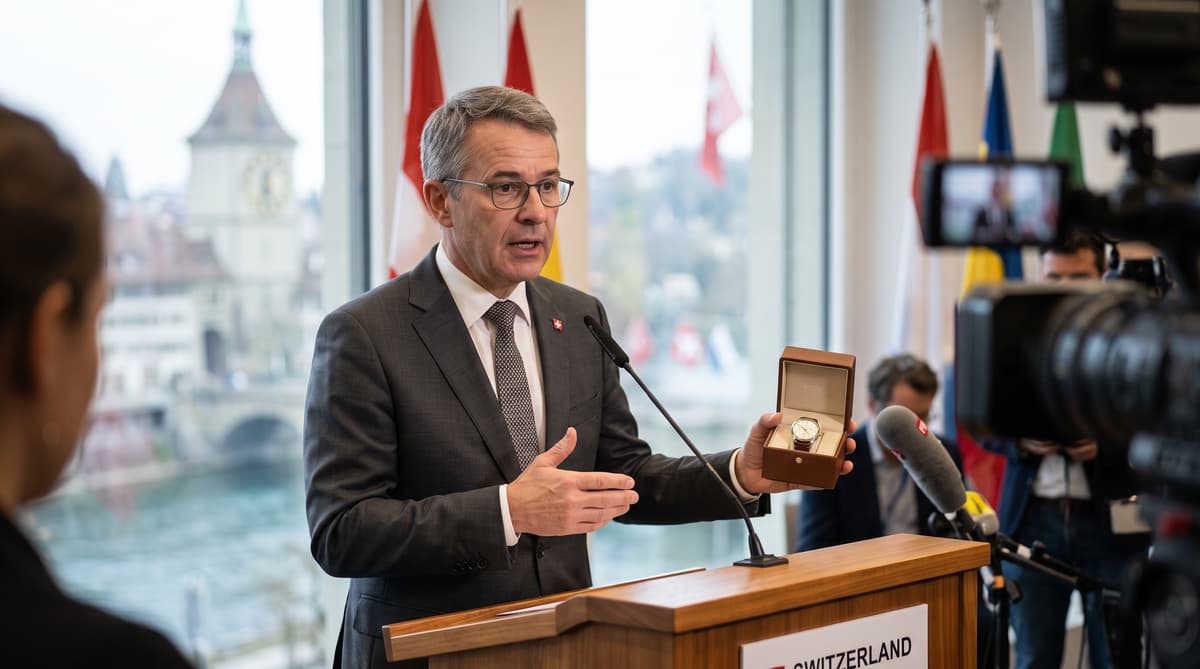
A CHF100,000 gift package has become part of Switzerland's continuing argument over how to deal with Washington. Swiss business leaders presented US President Donald Trump with a Rolex table clock and an engraved gold ingot during a November 2025 visit focused on tariffs. Helene Budliger Artieda, director of the Swiss Secretariat for Economic Affairs, said the items were intended for the American people and not for Trump personally.\n\nSpeaking to Bloomberg TV on the sidelines of an economic forum in New Delhi, the outgoing State Secretary described the trip as a private sector initiative. She said the gifts had been registered with the White House and could eventually be placed in a presidential library.\n\nThe episode continues to attract attention because it combined high value, direct access to the US president and negotiations over Swiss exports. The delegation included Partners Group co-founder Alfred Gantner, Rolex chief executive Jean-Frédéric Dufour and Richemont chairman Johann Rupert. Their meeting took place during a period of intense uncertainty for Swiss companies selling into the US market.\n\nBudliger Artieda said the participants were serious businesspeople who had checked the legal position before travelling. Her comments come as Swiss authorities face a parliamentary review of how the tariff dispute was handled.
Track the Legal Trail
The White House registration is central to the Swiss explanation. Budliger Artieda said the gifts were “duly registered” and, if the process proceeds as expected, will end up in a presidential library. That would place the items in an institutional collection rather than in Trump’s private possession.\n\nThe statement addresses one of the immediate concerns raised in Switzerland: whether an expensive gift to a foreign official could create legal or ethical problems. Budliger Artieda said she was convinced that the transaction complied with the law. She did not announce a separate federal investigation or provide details of the legal checks carried out by the business delegation.\n\nThe Swiss Criminal Code and the rules governing gifts to public officials have already drawn public attention. Swissinfo examined the bribery question in December 2025, after the White House visit became known. The issue remains politically sensitive because the gifts were delivered while business leaders were seeking relief from US tariffs.\n\nThe delegation came from the private sector, according to SECO. The federal administration's role and its handling of the wider tariff mission are now due to receive scrutiny from the House of Representatives Control Committee. A report is expected by the end of 2026.
Measure the Tariff Relief
The tariff rate applied to Swiss exports fell from 39% to 15% after the November 2025 agreement. That reduction has given Bern and Swiss industry a more stable basis for trade with the United States, although the two governments have not completed a legally binding agreement.\n\nBudliger Artieda said the United States had complied with the arrangement since the reduction was announced. For companies operating across sectors such as pharmaceuticals, machinery, watches and luxury goods, the lower rate reduces the immediate cost of entering the US market. The source does not attribute the tariff change to the gifts or to any individual meeting.\n\nThe negotiations followed Trump's announcement of so-called “Liberation Day” customs tariffs in April 2025. The move triggered uncertainty across Swiss export industries and pushed business leaders to seek direct discussions in Washington. The delegation's presence at the White House reflected the scale of concern among companies whose competitiveness depends on predictable access to the American market.\n\nBudliger Artieda said Switzerland is now seeking certainty and “calmer waters” in its trade relationship with Washington. She warned that continued volatility makes conditions difficult for Swiss exporters. The reduced tariff offers relief, while the absence of a final binding agreement leaves room for further negotiations.
Follow the Business Delegation
Three prominent business figures helped give the White House visit a distinctly Swiss corporate profile. Alfred Gantner, co-founder of private markets investment firm Partners Group, joined Rolex chief executive Jean-Frédéric Dufour and Richemont chairman Johann Rupert in the delegation. Their participation underlined the direct involvement of major companies in the effort to address US trade barriers.\n\nFor Switzerland, business diplomacy often carries particular weight. The country relies heavily on international markets, while its largest companies operate through global supply chains and depend on rules that remain consistent across borders. A tariff negotiation can therefore affect investment decisions, production planning and the price of Swiss goods in the United States.\n\nThe gifts have complicated the public discussion by bringing a question of protocol into an economic mission. Budliger Artieda has insisted that the initiative came from the private sector and that the participants had taken legal advice. Her comments offer a defence of the delegation's conduct, while leaving the political debate over access, influence and transparency unresolved.\n\nThe parliamentary Control Committee's examination will provide the next formal test of the government's handling of the episode. Its findings should clarify how federal officials interacted with the business delegation and how the tariff negotiations were managed.
Secure the Next Trade Deal
Switzerland's trade relationship with the United States remains unsettled despite the 24 percentage point tariff reduction. Budliger Artieda, who has tendered her resignation and is due to leave office at the end of March 2027, said talks on a legally binding agreement are still under way.\n\nHer assessment is cautious. The current arrangement has brought lower duties and, according to SECO, US compliance since November 2025. Swiss exporters still want rules that will survive political shifts in Washington and provide a dependable framework for long-term contracts. That concern extends beyond the companies represented at the White House. It affects workers, suppliers and smaller firms connected to export industries across the country.\n\nThe gift controversy will continue alongside those negotiations. White House registration and a possible future display in a presidential library support the Swiss claim that the items were public gifts. The Control Committee's review will examine the conduct of federal authorities, while the legal debate over valuable gifts to foreign officials remains part of the wider public record.\n\nFor Bern, the immediate priority is stability. Lower tariffs have eased pressure, but only a completed agreement can give Swiss exporters the certainty the outgoing SECO chief says they need.