Switzerland
Swiss churches publish ethical guidelines for artificial intelligence
Five Swiss Christian churches and organisations have published ten ethical guidelines for dealing with artificial intelligence. Their principles focus on human dignity, wellbeing and the social consequences of AI.
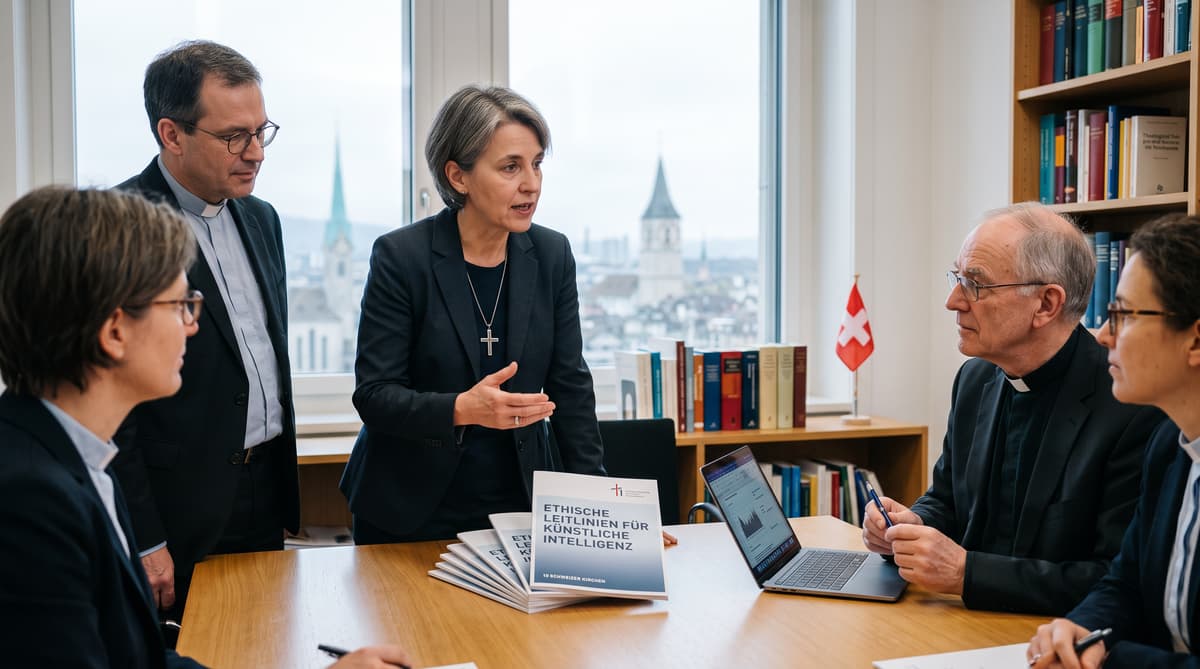
Five Swiss Christian bodies have put a shared framework around one of technology’s fastest-moving forces. On October 12, 2026, they published 10 ethical guidelines for artificial intelligence under the title “Humanity in the Digital Age”. The principles call on churches, congregations and affiliated organisations to judge AI by its effects on human wellbeing.
The signatories bring together institutions that rarely issue joint technology guidance: the Evangelical Reformed Church of Switzerland, the Swiss Bishops’ Conference, Freikirchen.ch, the Christian Catholic Church of Switzerland and the Swiss Evangelical Alliance. Their statement links a Christian understanding of the human person to practical decisions about AI tools.
That gives the document a direct institutional audience. Churches increasingly use digital systems for communication, administration, education and pastoral work, while AI is changing how people learn, work and interact. The guidelines offer a basis for deciding when these tools support those activities and when they risk undermining trust or human judgement.
Rita Famos, president of the Evangelical Reformed Church of Switzerland, welcomed the joint intervention. She said the five organisations’ willingness to speak together was encouraging, placing a broad cross-section of Swiss Christianity behind the principles.
Put human wellbeing before machine capability
The guidelines put human wellbeing ahead of technological possibility. The churches say AI should be assessed according to whether it benefits people, rather than adopted simply because a tool is available. That principle places dignity and social consequences alongside efficiency in decisions about automated systems.
The joint statement connects the Christian view of humanity with the specific challenges created by AI. It recognises that these systems affect everyday relationships and institutions, from the way information circulates to how organisations communicate with the public. The document therefore speaks to more than software procurement. It addresses the standards that should shape decisions made by church offices, congregations and Christian organisations.
One principle states that “truth requires scrutiny and transparency”. That language points to a practical duty: people should examine AI-generated material and make its use visible where that matters. The source does not provide a detailed checklist for every application, but it makes clear that unexamined output cannot automatically carry the authority of a person or institution.
For Swiss religious organisations, the emphasis also creates a common vocabulary across linguistic, denominational and organisational boundaries. The framework does not replace technical safeguards or public regulation. It adds an ethical test for institutions deciding how AI should enter their work.
Connect theology to everyday AI decisions
Charles Morerod says the document is designed to connect theology with daily practice. As president of the Swiss Bishops’ Conference, Morerod described the guidelines as a way to bring theological questions into contact with the practical use of AI tools.
That connection matters because churches face decisions that cannot be settled by performance metrics alone. An AI system may draft a message quickly, sort information or answer routine questions, yet its use can also affect privacy, accountability and the relationship between an institution and the people it serves. The churches’ framework asks those responsible for AI to consider the human consequences alongside the technical benefits.
The guidance applies to the five signatories and their wider networks, including church institutions, congregations and organisations. The source does not identify individual tools or announce a timetable for implementation. Its immediate contribution is a shared set of principles that can inform those choices as AI becomes more common in Swiss workplaces and public life.
The approach also keeps theological reflection tied to concrete responsibility. For Morerod, the question is how institutions can use new systems without losing sight of the people who depend on their judgement, care and communication.
Make inclusion the test of progress
Frank Bangerter places inclusion at the centre of the churches’ technology agenda. The Bishop of the Christian Catholic Church of Switzerland warned that AI should not mainly strengthen the position of people who already hold power.
“Technological progress is only good if it serves everyone,” Bangerter said. His comment gives the guidelines a social dimension that reaches beyond church administration. It points to the possibility that access to advanced tools, control over data and influence over automated decisions could become concentrated among powerful institutions or groups.
The joint principles therefore focus attention on people who might otherwise be left behind. The source does not specify which groups the churches have in mind or propose a separate Swiss policy programme. It does, however, make equal benefit a stated test for technological progress. That standard can shape how church organisations evaluate AI services, communicate their use and consider the people affected by them.
The message also reflects Switzerland’s plural Christian landscape. Reformed, Catholic, Christian Catholic and evangelical organisations have signed the same broad statement, giving the call for inclusive technology a common institutional platform. The next step will be translating that principle into decisions about budgets, training, oversight and access.
Turn shared principles into visible practice
The Swiss initiative arrives amid a wider push for international AI safeguards. In May 2026, Pope Leo XIV called for strict international guidelines in his first encyclical, “Magnifica Humanitas”, a document of more than 100 pages. He warned about risks to human coexistence while also recognising potential benefits from the technology.
The Swiss churches’ statement places that global debate in a national and institutional setting. Rather than presenting a technical regulation package, the five organisations have issued principles for their own communities and for the decisions made by church bodies. The focus on dignity, wellbeing, scrutiny, transparency and social consequences gives local organisations a framework for discussing AI in terms familiar to their members.
The document will matter most in application. Congregations and church offices will need to decide how openly they identify AI-generated material, who reviews its output and how they protect the role of human responsibility. Those questions extend beyond religious organisations as schools, charities, employers and public institutions across Switzerland adopt similar tools.
The October statement establishes a shared starting point. Its influence will depend on whether the five signatories turn the 10 principles into training, internal rules and visible practices that people can evaluate.