Switzerland
Swiss Army trains to protect critical infrastructure
Around 2,000 Swiss troops are taking part in an exercise to protect critical infrastructure, including the Gösgen nuclear power station and fuel depots. The training, conducted with civilian security partners, runs until next Tuesday.
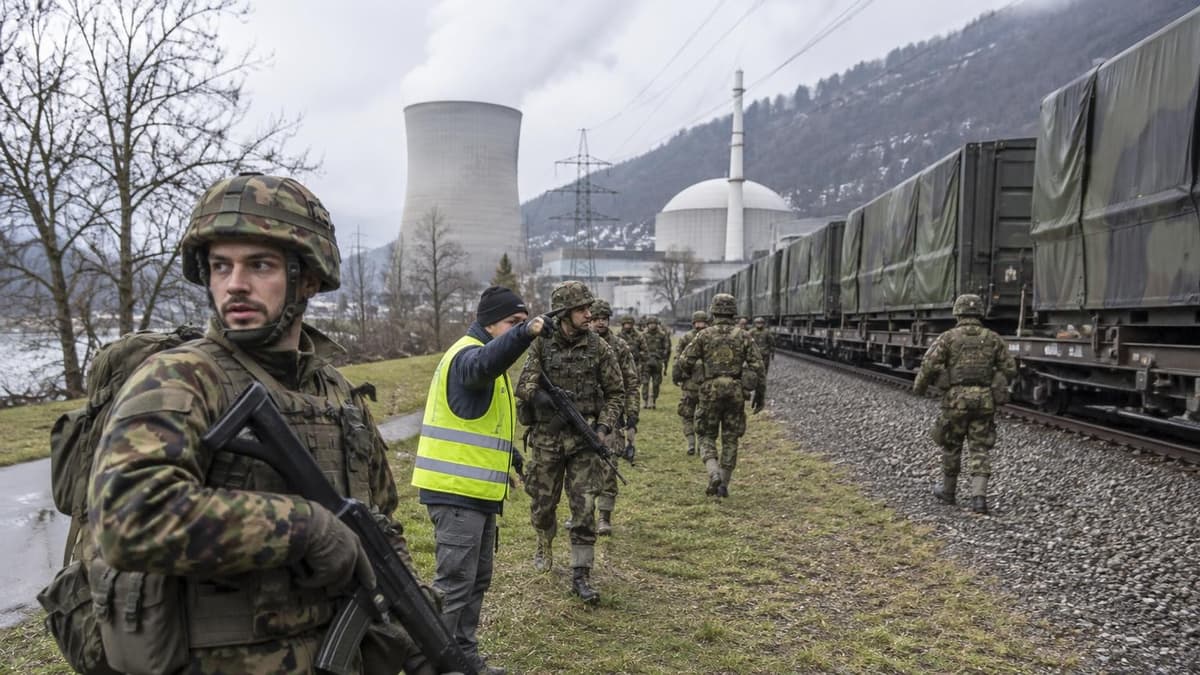
Around 2,000 troops are training to guard sites that keep Switzerland running. The Swiss Armed Forces began a multi-day exercise in north-western Switzerland focused on protecting critical infrastructure, including the Gösgen nuclear power station in Solothurn and fuel depots. The manoeuvre runs until next Tuesday and brings military units together with civilian security partners.
The exercise is built around a tense security situation just below the threshold of war. In the scenario, civilian security forces request military support. That places coordination between the Army and police at the centre of the training, alongside the movement of units into operational areas and their ability to remain deployed.
For the Army, the exercise tests how different parts of its system work together under pressure. Its stated aim is to use the findings to develop training and procedures further. The activity also gives civilian and military partners a chance to practise their roles at sensitive sites.
Coordinate Around Sensitive Sites
Gösgen and fuel depots are among the sites at the heart of the training. The nuclear power station stands in canton Solothurn, while the exercise also covers fuel storage facilities. These locations make the manoeuvre a practical test of how military units and police can coordinate around infrastructure the country depends on.
Three battalions from Territorial Division 4 are participating, alongside other Army units. Their staff have moved beyond their usual area of operations in eastern Switzerland to train in the north-west. Aargau and Solothurn cantonal police are working with them during the exercise.
The cross-cantonal deployment puts the division in a setting where local police and military forces must work together. The Army says units are practising cooperation with police, movement into operational areas, coordination between troops, self-protection and the ability to sustain operations. The training continues through next Tuesday, allowing those tasks to be exercised over several days rather than in a single, isolated drill.
Rehearse the Civil-Military Response
The scenario puts civilian security forces in the lead on a request for military support. It imagines a tense situation just below the threshold of war, then asks Army units to deploy and work alongside police. Training covers how troops coordinate with one another, reach operational areas and protect themselves while maintaining their capacity to operate.
Those tasks connect the exercise’s site protection focus with the broader challenge of organising a response across institutions. Territorial Division 4 is working with the police forces of Aargau and Solothurn, whose cantons host the north-western training area. The Army’s stated purpose is to test parts of its overall system and feed the results into further training and procedures.
Swiss infrastructure faces risks across different domains. Swissinfo has reported on concerns about malicious attacks on power, telecommunications and transport. The current exercise focuses on physical protection and civil-military cooperation, rehearsing how support can be organised when civilian authorities seek Army assistance.
Put Exercise Lessons to Work
The exercise gives Territorial Division 4 a chance to test procedures outside its normal operating area. The division’s military area of responsibility covers Zurich, Glarus, Schaffhausen, Appenzell Ausserrhoden, Appenzell Innerrhoden, St Gallen and Thurgau. It acts as a military partner to those cantons, but this manoeuvre takes its staff into north-western Switzerland to train with Aargau and Solothurn police.
That change of setting places the division’s troops in a different regional partnership while they practise the defence mandate. The Army says the exercise findings will inform the further development of training and procedures. Its focus includes troop coordination, deployment, police cooperation, self-protection and sustained operational capability.
The manoeuvre is due to continue until next Tuesday. Its results are intended to shape how the Army prepares for future operations to protect critical infrastructure, with lessons drawn from the work of military units and their civilian security partners.