Nestlé
Russia takes control of two Nestlé subsidiaries
Russia has placed two Nestlé subsidiaries under the management of a Russian company, restricting the Swiss food giant’s control while leaving ownership formally unchanged. Report on the move, Nestlé’s exposure to Russia and the wider risks for Swiss companies operating there.
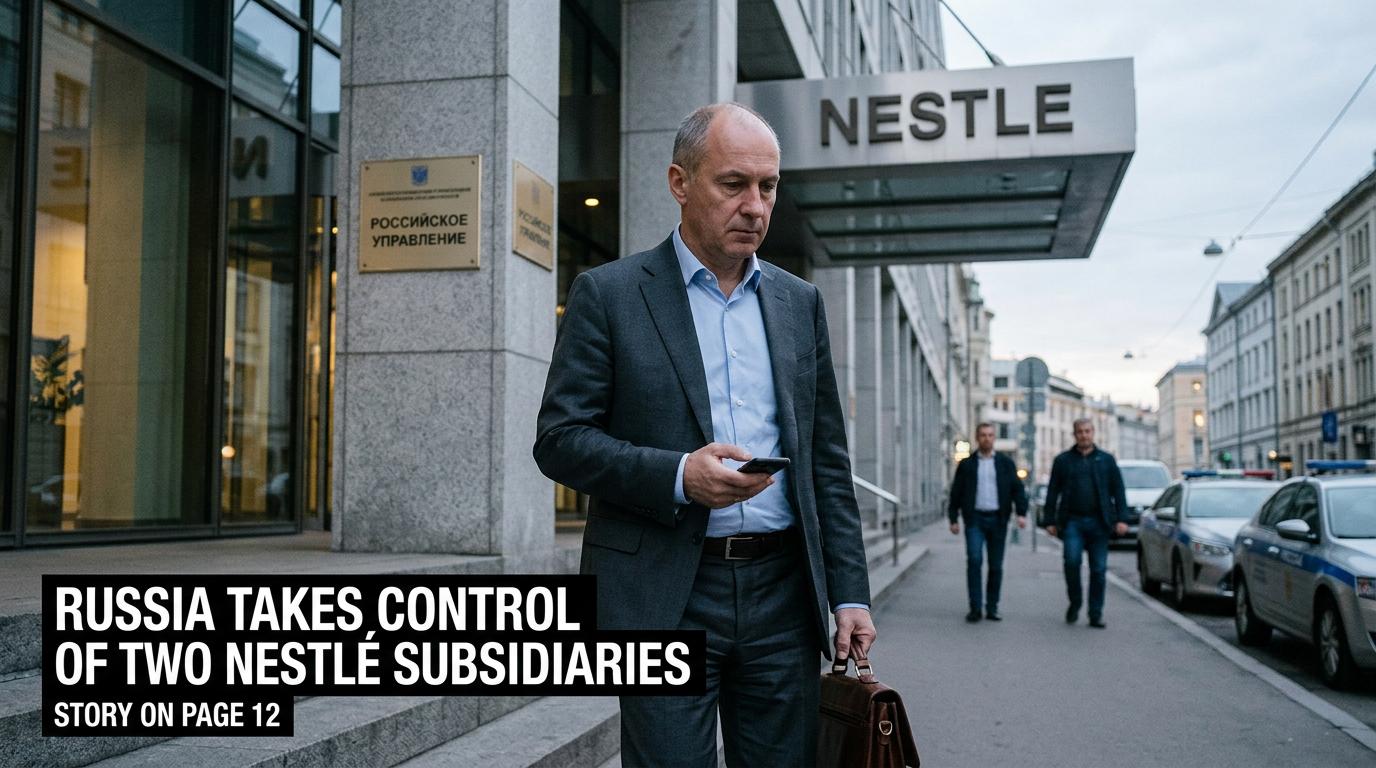
Putin shifts control of Nestlé’s Russian units
Two Nestlé subsidiaries have been placed under Russian management, bringing the Swiss food group into a system that has steadily tightened state control over foreign-owned assets. A decree signed by President Vladimir Putin on Thursday, September 17, 2026, transferred management of Nestlé Russia and Nestlé Kuban to the Russian company LEV Management. The same order applies to subsidiaries of French supermarket group Auchan.
The decree leaves legal ownership formally unchanged. Operational control has shifted, however, and Nestlé cannot currently make decisions about the affected holdings. The arrangement gives a Russian-appointed manager influence over assets, personnel and commercial activity while the Swiss parent company remains exposed to the consequences.
Nestlé has not said how the decree will affect production, distribution or its other Russian operations. When contacted by the AWP news agency, a company spokesperson was initially unable to provide details on the exact consequences.
The move follows an August request from Russian company KS Logistika, which urged Putin to place five Nestlé subsidiaries under external administration. Nestlé said at the time that Russian authorities had not contacted it. The latest decree shows how quickly a commercial dispute or local pressure can become a presidential decision.
Nestlé keeps factories, loses room to manoeuvre
Russia represents around 2% of Nestlé’s group turnover, a limited share at global scale but a substantial operating footprint on the ground. The company runs six production sites in the country, making coffee, confectionery, baby food and pet food for the local market. Those factories connect Nestlé to Russian employees, suppliers, retailers and consumers even as political control over foreign companies expands.
Nestlé continued operating after Russia’s full-scale invasion of Ukraine in February 2022. The group argued that it wanted to maintain supplies of essential food products, a position that drew criticism in Switzerland and elsewhere. The company has also said that a withdrawal from Russia was not on the cards.
The new administration order puts that policy under pressure. Nestlé may retain ownership on paper while losing the practical ability to direct its subsidiaries. The distinction matters for corporate reporting, supply decisions and any future sale. It also creates uncertainty over whether the group can protect trademarks, transfer profits or determine the use of production capacity.
For Swiss observers, the case highlights the exposure created by keeping local operations in a market where political authorities can intervene directly. Food products may have been treated differently from sectors targeted by sanctions, yet the company’s operating rationale has not shielded its assets from state action.
Other exits set a costly precedent
Russia’s external-administration system has already cost other European companies billions. French food group Danone lost control of its Russian operations in 2023 and sold them in 2024 for around €180 million. The transaction left Danone with a total loss of €1.2 billion.
Danish brewer Carlsberg faced a similar intervention in 2023. It completed its withdrawal through a management buyout worth $320 million at the end of 2024. Dutch brewer Heineken sold its Russian subsidiary for the symbolic price of one euro and recorded a €300 million loss.
These cases establish the commercial risks facing Nestlé. A company can retain formal ownership while authorities control the business, then face a forced sale on terms set by the Russian side. The longer an asset remains under external administration, the harder it may become for the parent company to preserve value, oversee cash flows or negotiate an exit.
The consequences extend beyond food and beverages. Swiss pharmaceutical exports to Russia have remained relatively stable despite the war, according to a separate Swissinfo report. That trade illustrates the complex line Swiss companies are drawing between humanitarian supply, commercial presence and political risk. The Nestlé decree adds another warning for businesses that continue operating in Russia while relying on legal ownership as a safeguard.
Swiss businesses face a harder calculation
The decree widens the risks for Swiss companies that still operate in Russia. Nestlé now has to determine whether the measure affects only the two named subsidiaries or signals further action against its remaining Russian interests. The August request covered five Nestlé subsidiaries, while the presidential order announced so far concerns Nestlé Russia and Nestlé Kuban.
The immediate priorities will include establishing who controls bank accounts, contracts, staffing and production decisions. Nestlé will also need to assess the impact on consolidated accounts and disclose whether it can exercise meaningful control over the businesses. The company has not announced a withdrawal, and its public response to the decree remains limited.
For Switzerland, the episode carries significance beyond one multinational. Swiss groups with factories, distributors or sales networks in Russia must account for a legal environment in which ownership can remain intact while management rights disappear. Sanctions compliance, supply continuity and the ability to repatriate earnings all become harder to plan.
Nestlé’s next steps will show whether the company seeks negotiations, legal remedies, a managed exit or continued operation under the new arrangement. The Russian authorities have already demonstrated that external administration can turn a local presence into a strategic liability for a foreign owner.