logistics
Chinese parcel network challenges Swiss Post as online shopping surges
A Chinese logistics company is building a parcel network in Switzerland with planned capacity of up to 50,000 packages a day.
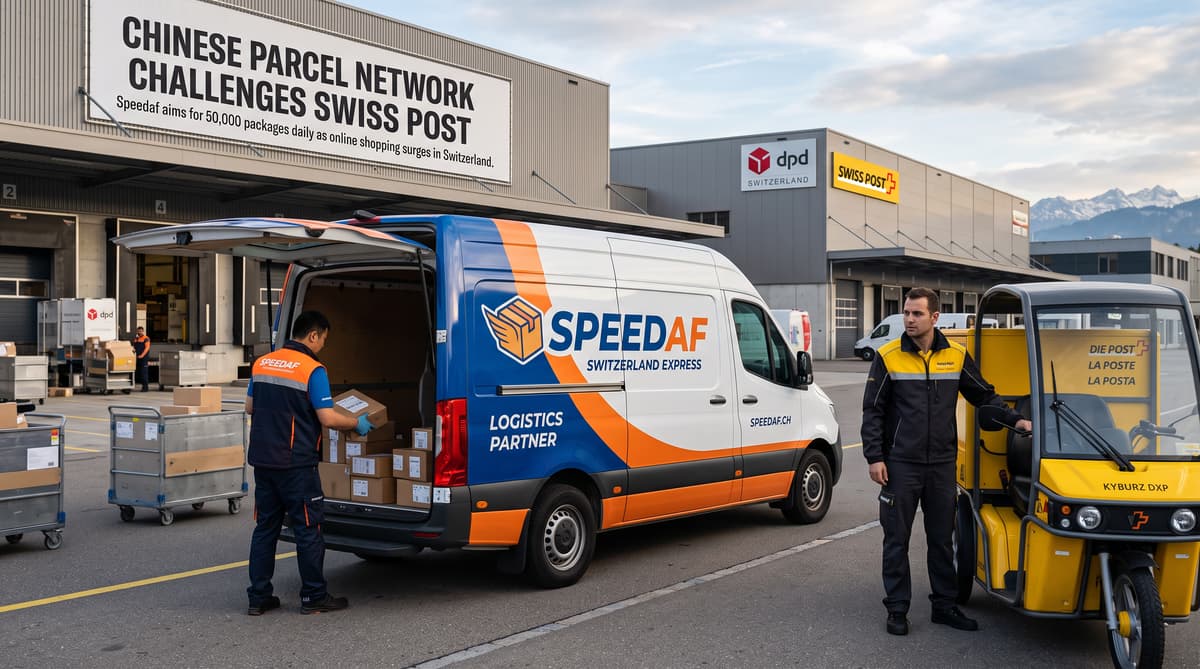
Up to 50,000 parcels a day could soon move through a new Chinese-backed delivery network in Switzerland, placing Speedaf directly in the path of Swiss Post and DPD. The company is building a sorting centre of around 4,000 square metres and regional distribution centres in Zurich, Bern and Lausanne.
Speedaf has operated in Switzerland for only a few months, yet its proposed scale is substantial for a new entrant. The company says its network will focus initially on parcels arriving from China, a fast-growing stream driven by Temu, Shein and AliExpress. At full capacity, the planned operation would handle around 15 million parcels a year.
The timing reflects a sharp shift in Swiss shopping habits. Temu and Shein have used heavy advertising and low prices to win customers and take market share from Swiss online retailers. Their growth has also increased demand for cross-border delivery services that can process large volumes at low cost.
For consumers, Speedaf could bring more delivery options and greater price competition. For established operators, the new network threatens to redirect traffic that has traditionally flowed through Swiss Post and other parcel companies. Its success will depend on whether Speedaf can deliver reliably after the parcel crosses the border.
Switzerland's Size Gives Speedaf an Opening
Zurich, Bern and Lausanne will form the backbone of Speedaf's planned Swiss distribution system. Switzerland's compact geography gives the company a practical advantage: one central sorting operation and a small number of depots can reach much of the country quickly.
Stephan Wagner, a logistics expert at ETH, said the country's size makes it easier for a new operator to establish nationwide coverage than in larger European markets such as France. Speedaf can concentrate its investment, test delivery routes and add capacity without immediately building a dense network of facilities.
The company also plans to use local partners for the last mile. That approach reduces the cost of entering the market because Speedaf does not need to recruit a large delivery workforce or purchase a full fleet at the outset. It also shifts part of the customer experience to contractors whose performance will shape the company's reputation in Switzerland.
The model carries operational risks. A sorting centre can process parcels efficiently, but missed delivery windows, weak tracking information or difficult returns can quickly alienate customers. Swiss consumers are accustomed to broad coverage and established service standards from Swiss Post. Speedaf will need to match those expectations while keeping prices low enough to attract retailers.
Temu and Shein Drive the Parcel Surge
Temu and Shein have turned cross-border shopping into a daily logistics challenge. Their low-priced goods arrive in individual parcels, creating demand for transport systems built around high volume, automated sorting and inexpensive delivery.
Speedaf is positioned to capture that flow from the international journey through to the Swiss doorstep. The company already handles parcels for Temu, Shein and AliExpress in other markets. Its founding shareholders include ZTO Express, one of China's major parcel groups, giving Speedaf access to experience and commercial links across the e-commerce supply chain.
Wagner said Chinese logistics companies are increasingly trying to organise international transport themselves, including the last mile in Europe. That strategy can give online retailers more control over delivery times, data and costs. It can also reduce reliance on postal operators and independent freight companies.
A successful Speedaf network could attract more than Chinese platforms. Wagner said Swiss mail-order companies and smaller businesses could switch providers if deliveries prove stable and reliable. That would turn Speedaf from a specialist importer into a broader competitor. Swiss Post and DPD would then face pressure on pricing, service guarantees and the contracts they offer retailers. Wagner said delivery prices could fall in the medium term, although Speedaf's pricing structure is not yet clear.