Switzerland
Protesters target Syngenta over pesticide pollution
Around 300 demonstrators protested outside Syngenta’s Monthey plant over alleged health and environmental risks linked to pesticides. Similar demonstrations were held in Basel and other countries as part of an international day of action.
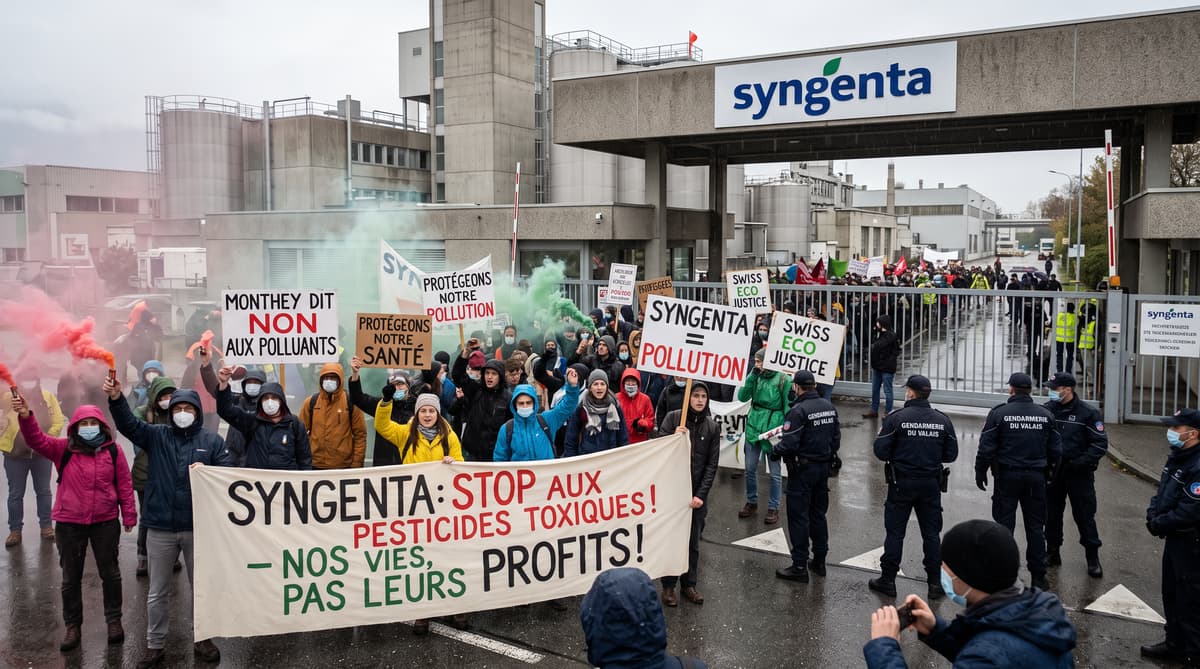
Around 300 people marched through Monthey on Saturday, taking their protest from the railway station to Syngenta's chemical plant in Valais. The demonstration formed part of an international day of action organised under the banner “Stop Pesticides”. Organisers also mobilised protesters in Basel and in several other countries.
The action placed one of Switzerland's largest agrochemical production sites at the centre of a dispute over public health, water protection and corporate accountability. Campaigners said pesticides can cause acute poisoning, chronic illness and cancer, with agricultural workers and rural communities facing the greatest exposure.
A Keystone-ATS journalist counted the crowd at the Monthey protest. The event did not involve a reported confrontation with police or plant staff. Its focus was pressure on Syngenta and on the authorities responsible for environmental oversight in Valais.
The company employs around 900 people at Monthey, making the site a significant industrial employer in the Rhône valley. Syngenta produces crop-protection chemicals there and describes the facility as a centre for manufacturing and industrialising those products. The protest therefore brought environmental demands directly to a workplace that the company considers central to its future.
Campaigners Demand Disclosure and Compensation
The campaigners presented transparency as their first demand. They called on Syngenta to publish a complete list of chemicals and products manufactured at the Monthey facility. The request reflects a wider concern about what residents, municipalities and regulators can know about industrial discharges and chemical handling near populated areas.
The organisers also demanded that Syngenta stop producing substances banned in Switzerland but still manufactured for export. They argued that Swiss companies should not make products for overseas markets when those substances are prohibited domestically. The source material does not identify the products concerned or quantify their production.
A third demand targeted financial responsibility. Protesters called for compensation for environmental damage under the polluter-pays principle, which would place remediation costs on the party responsible for pollution rather than on taxpayers or municipalities.
Campaigners further accused Syngenta of using legal challenges and limits on access to information to obstruct local authorities seeking to protect drinking-water supplies. Syngenta did not accept those allegations in the company response cited by Keystone-ATS. The dispute now turns on the availability of records, the interpretation of environmental obligations and the cost of treating affected water supplies.
Water Protection Drives the Valais Dispute
Drinking water became a central battleground in the Monthey protest. Organisers said Syngenta had hindered local authorities' efforts to protect water supplies through legal challenges and restrictions on information about chemical discharges into waterways. The allegations concern the practical ability of municipalities to identify pollutants, assess risks and plan treatment.
The protesters also called on the Government of Valais to compensate municipalities facing water-treatment costs. That demand shifts part of the dispute from the factory gate to cantonal government offices. Municipalities may carry the immediate expense of monitoring and treating water, while residents depend on decisions made by companies and regulators beyond their own communities.
Campaigners said cantonal authorities had failed in their regulatory duties by not implementing changes to federal legislation concerning triazole. They described the omission as potentially unintentional, but argued that the consequence remained a gap in protection.
The available reports do not provide a figure for treatment costs, a list of affected municipalities or measurements of chemical concentrations. Those missing details matter. They will be needed to establish the scale of any pollution, identify responsibility and determine whether the legal and regulatory claims withstand scrutiny.
Syngenta Defends Monthey Operations
Syngenta defended Monthey as a strategic industrial site and rejected the organisers' approach. The company said it respected the right of organisations to express their views, but regretted that protest leaders had not sought direct talks with management.
Syngenta also highlighted the plant's economic role. The facility employs around 900 people and produces crop-protection chemicals. The company said it continues to invest in Monthey to improve competitiveness, maintain safety and environmental standards, and secure the site's long-term future.
The company described Monthey as a major centre for manufacturing and industrialising crop-protection products. It also argued that pesticides play an important role in protecting global food supplies. That position places the facility within Syngenta's broader defence of crop-protection chemistry as a tool for agricultural production.
The company's response did not address every specific demand reported by the organisers, including publication of a full chemical inventory, production for export of substances banned in Switzerland, or compensation for water-treatment costs. The protest organisers, for their part, did not present direct evidence in the source material quantifying illness, pollution or financial damage. Further exchanges between the company, municipalities and regulators will determine how those claims develop.
Switzerland Faces the Next Regulatory Test
The Monthey protest has widened a local dispute into a Swiss debate over industrial disclosure and pesticide regulation. Basel's participation and parallel actions abroad gave the campaign a broader platform, while the Valais demands remain specific: access to discharge information, protection of drinking water, clearer accountability and action on triazole rules.
For Switzerland, the next stage will depend on evidence and institutional responses. Authorities would need to clarify what chemicals are produced at the plant, what enters nearby waterways, how existing controls operate and whether municipalities have incurred additional treatment costs. The reports available for this article do not answer those questions.
The dispute also places economic interests alongside environmental oversight. Monthey supports around 900 jobs, and Syngenta says continued investment is necessary to keep the site competitive and safe. Residents and campaigners are seeking assurances that industrial employment does not limit public access to information or reduce the protection given to water supplies.
The protest has made clear what campaigners want from the company and the canton. Whether those demands lead to new disclosures, negotiations or legal proceedings will depend on the records released and the decisions taken by Syngenta, Valais authorities and affected municipalities.