Switzerland
Nestlé reports stronger sales and removes Russian unit from accounts
Nestlé reported organic growth of 4% in the third quarter and said it will remove its Russian business from its consolidated accounts after Russian authorities took over its operations. The company expects the change to have a limited impact on its adjusted operating result for 2026.
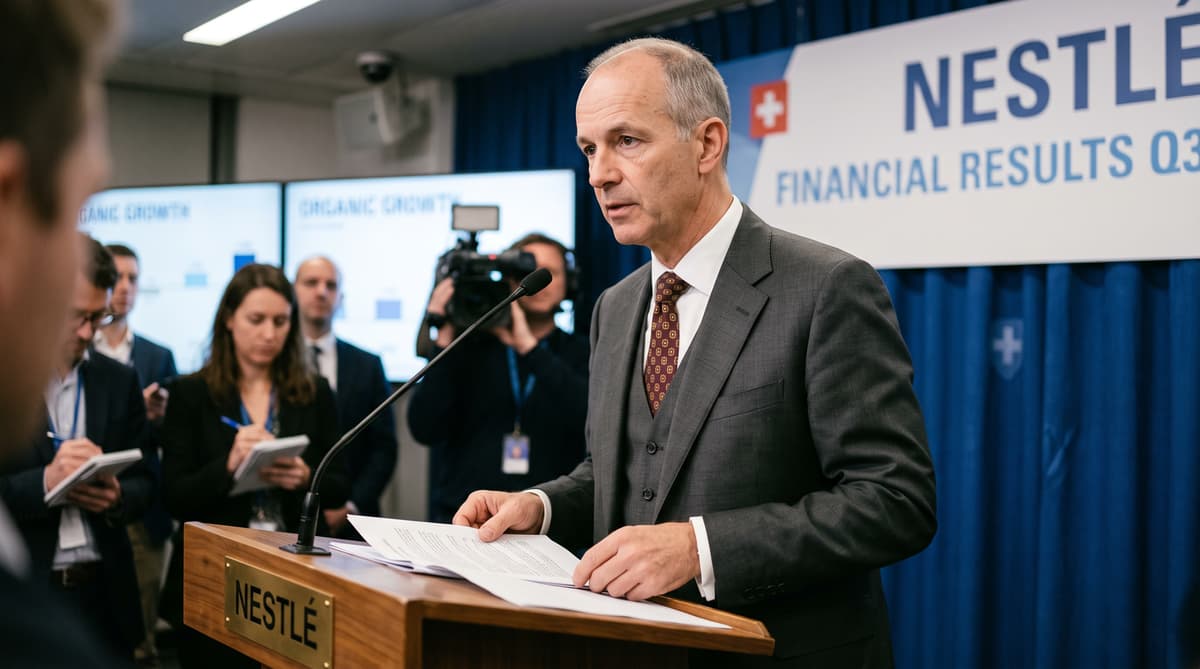
Nestlé’s growth accelerated as the food group prepared to remove its Russian business from its accounts. The Vevey-based company reported 4% organic growth in the third quarter, up from 3.7% in the previous quarter and ahead of the 3.5% analysts surveyed by AWP had expected. It will deconsolidate its Russian operations from the end of September, following a takeover by Russian authorities.
The accounting change reflects Nestlé’s loss of control over the business. It will remove about CHF 1.6 billion in assets from the group’s balance sheet. Nestlé expects the effect on its adjusted operating result for 2026 to be limited.
The two developments land as chief executive Philipp Navratil seeks to rebuild sustained growth through higher sales volumes. Nestlé said volumes rose across all regions and globally managed business segments in the quarter. Its results also kept the group within its full-year growth outlook, which management reaffirmed on Thursday.
Volumes Drive the Recovery
Nestlé’s sales volumes rose faster than analysts had forecast, giving the group evidence of a broader operational recovery. Real internal growth, the measure of changes in the volume of products sold, reached 2.8% in the third quarter. Analysts had expected 1.7%. Price increases added another 1.1 percentage points to organic growth.
The volume trend has strengthened over the first three quarters of the year. Real internal growth was 1.2% in the first quarter and 1.8% in the second, before climbing to 2.8% in the third. Nestlé’s total organic growth also improved from 3.7% in the second quarter to 4% in the third.
The company attributed the stronger performance chiefly to a recovery in pet food, robust results in food and snacks, including Maggi seasoning and KitKat, and its water business, which benefited from a hot summer. Volume growth extended across the group’s regions and globally managed business segments. Nestlé makes Nespresso coffee, KitKat chocolate and Purina pet food, among other products.
Russian Unit Leaves the Accounts
Russian authorities’ takeover of Nestlé’s local operations has forced the group to change how it reports the business. Nestlé said it no longer controls the management of its Russian unit and will therefore remove it from the consolidated financial statements at the end of September 2026.
The deconsolidation means roughly CHF 1.6 billion in assets will leave Nestlé’s balance sheet. The company expects a limited effect on its adjusted operating result for 2026. The accounting change follows the authorities’ decision to take over the operations, rather than a reported improvement or decline in the unit’s trading performance.
The move marks a significant shift in Nestlé’s financial presentation of its Russian business. The group had continued to run the business under compulsory administration, according to earlier Swissinfo reporting. Now, with control no longer in Nestlé’s hands, the company will no longer include the unit in its consolidated accounts from the stated date. The expected limited effect on adjusted operating results offers investors a measure of the anticipated near-term financial impact.
Navratil Sets the Growth Target
Chief executive Philipp Navratil has made sustainable volume growth a priority after years when price increases drove much of Nestlé’s growth. In his role for just over a year, he has set out to invest more in successful brands, advertising and innovation. The company also aims to become leaner and more effective, with greater focus on businesses it considers high-growth and high-margin.
Nestlé reaffirmed its 2026 targets: organic growth of 3% to 4% and an improvement in adjusted operating margin from the previous year’s 16.1%. Organic growth for the first nine months stood at 3.7%, putting the group within that annual range before the final quarter.
Revenue for the first nine months reached CHF 65.87 billion, virtually unchanged from a year earlier. The third-quarter volume gain offers a sign of progress against Navratil’s stated priority, while the confirmed targets set the benchmark for the rest of the year. The Russian deconsolidation will also reshape the group’s reported balance sheet, although Nestlé expects only a limited impact on its adjusted operating result for 2026.