Davos
Davos rejects 21 construction projects planned for WEF
Davos has refused 21 temporary construction projects planned for the 2027 World Economic Forum and capped the total at 125. The municipality says the rejected applications failed to meet planning requirements as the number of WEF-related structures continues to grow.
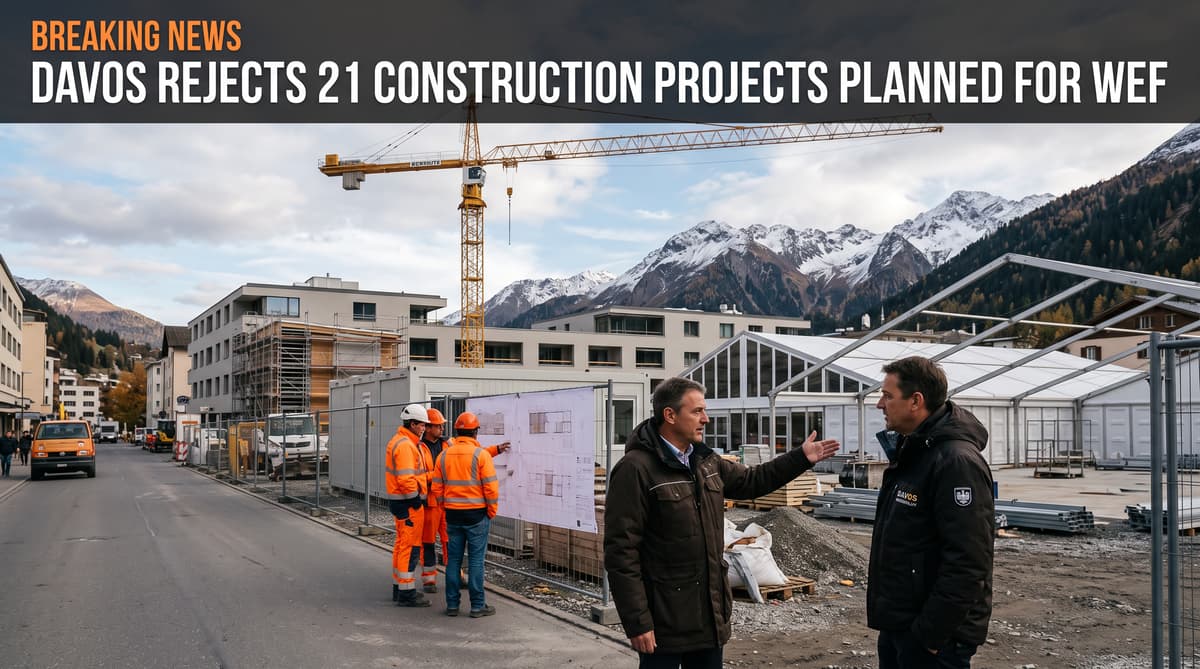
Davos has refused 21 temporary construction projects linked to the 2027 World Economic Forum after receiving 190 planning applications, placing a firm limit on the annual transformation of the Graubünden resort. The municipality’s executive, the Kleine Landrat, reviewed 146 projects that fell within the quota process and granted planning permission, subject to the cap, for 125 of them.
The decision marks the first time Davos has imposed an upper limit on temporary WEF construction. During the annual meeting, companies and organisations erect temporary structures and adapt existing premises for offices, hospitality, security and other event-related uses. The local government says the volume has increased steadily in recent years.
The 21 refused applications did not meet the municipality’s requirements. Davos said those projects would receive no planning permission. The ruling comes as the town prepares for the 2027 meeting and seeks to manage the practical demands created by thousands of visitors, event staff and temporary operations. For residents and local businesses, the cap sets a clearer boundary around how much additional infrastructure the resort can absorb during one of Switzerland’s most prominent international gatherings.
Davos Ranks Projects on Strict Criteria
The 146 projects in the review process were judged through a points-based system. In the first stage, officials assessed whether applications were complete, who would use the structures and when each application was submitted. Projects that had previously been fined for misconduct received penalty points, a factor that could damage their position in the ranking.
When applications tied, Davos moved to a second stage. Officials compared sustainability and innovation, the use of public land and the amount of space required for guests. If a tie remained after that assessment, the municipality used a draw to determine the outcome.
The system gives the municipality a defined method for selecting projects when demand exceeds the new ceiling. It also links access to the limited construction capacity with operational and environmental considerations. Davos has not identified the 21 refused applicants or detailed the individual shortcomings in the applications in the information provided. The municipality’s statement confirms only that the projects failed to meet the applicable requirements and that no planning permission will be granted for them.
Traffic and Housing Push Davos to Act
Davos says temporary WEF projects now place pressure on traffic, accommodation and municipal staff. The local government warned in April that the structures attract additional guests and require employees to operate them. That extra demand adds vehicles to roads in a resort already handling the annual influx of international delegates, business visitors and support staff.
Accommodation is another constraint. Davos described an existing shortage of rooms and said temporary projects intensify the problem by bringing in more people who need somewhere to stay. The municipality also linked the growth in construction to security risks. Systematic checks, including fire-safety inspections, require staff resources, and officials said those resources cannot expand indefinitely during the short preparation period.
The concerns reach beyond the appearance of temporary buildings. Each project can create work for planners, safety officials, police and other public services. The cap therefore gives Davos a way to limit the cumulative load generated by the meeting, even when individual applications may appear manageable. The municipality has presented the measure as an administrative and operational response to the steady rise in WEF-related construction.
The 125-Project Cap Sets the 2027 Boundary
The 125-project ceiling will shape preparations for the 2027 WEF meeting. Applicants whose projects survived the municipal review have planning permission subject to the quota, while the 21 rejected proposals cannot proceed under the decision reported by Keystone-SDA. The ruling gives companies and event organisers a fixed number of temporary projects to work within as they plan the next meeting.
Davos will still host a concentration of international activity. Existing premises can be repurposed, and temporary structures remain part of the meeting’s operating model. The new limit does not remove that infrastructure. It establishes a maximum after the municipality concluded that an unlimited number of applications could not be assessed with sufficient care within the available timeframe.
The policy also creates a precedent for future meetings. Davos will be able to compare the 2027 experience with earlier years, when the number of temporary projects rose steadily without a formal cap. The municipality’s criteria, including sustainability, public land use and guest space, may become increasingly important as organisers compete for limited room. For Graubünden, the decision keeps the WEF in place while putting tighter planning rules around its physical footprint.