Switzerland
Cross-party alliance challenges plan to lift Swiss nuclear ban
A cross-party alliance has submitted more than 131,800 signatures to preserve Switzerland’s ban on building new nuclear power plants. The referendum effort challenges plans to reconsider the country’s nuclear-energy restrictions.
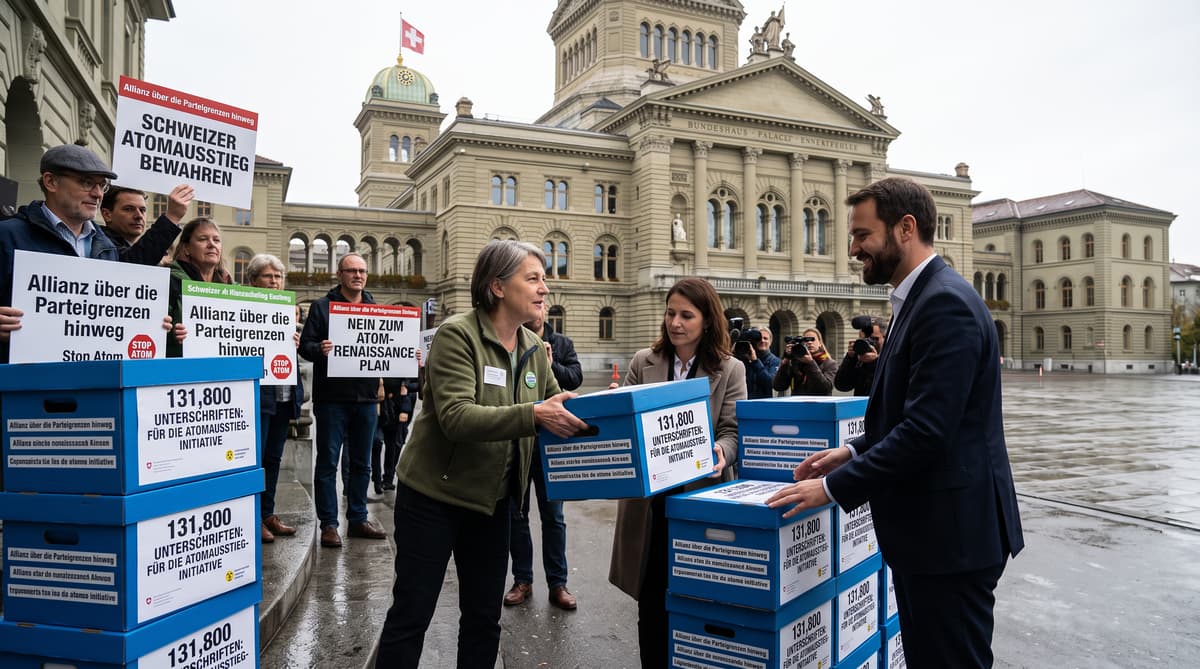
More than 131,800 signatures have put Switzerland’s ban on new nuclear power plants at the centre of a national energy fight. Representatives of the Socialist Party, Greens, Green Liberals and parts of the Centre Party handed the signatures in Bern on Tuesday, seeking to block a legislative change that would allow new plants to be built.
The dispute reaches beyond the future of nuclear power. Switzerland already relies on imports to cover winter demand, and the shortfall was about 6.8 TWh in 2025–26, roughly a fifth of winter consumption. Nuclear plants currently supply just under 30% of domestic electricity generation. Supporters of lifting the ban say the country will need dependable power as existing plants close. The alliance behind the referendum argues that Switzerland should keep the restriction and direct its resources elsewhere. Voters could decide on the proposed change as early as February 28, 2027, if the referendum proceeds.
Unite to Defend the Ban
The alliance brings together parties with different political roots around a shared demand: keep the ban on new nuclear plants. The Socialist Party, Greens and Green Liberals joined parts of the Centre Party in submitting the signatures, making the campaign a cross-party challenge to the proposed change.
Green Party president Lisa Mazzone argues that nuclear power is outdated and too expensive, and leaves future generations with highly radioactive waste. Centre Party National Councillor Priska Wismer-Felder, from Lucerne, says Switzerland should focus its resources on expanding renewable energy. Her case rests partly on investment choices: lifting the ban now, she argues, would spread resources too thinly because each franc can be spent only once.
That position puts the referendum alliance in direct debate with advocates of new nuclear construction. The disagreement concerns how Switzerland should secure reliable electricity, and whether public support and investment should go toward nuclear power or renewable sources.
Confront the Winter Power Gap
Winter supply is the strongest argument for reopening the nuclear debate. Switzerland cannot generate enough electricity to meet demand in winter and relies on imports. The shortfall reached about 6.8 TWh in 2025–26, or roughly one fifth of winter consumption. Vanessa Gassler-Meury, a member of the committee behind the “Stop the Blackout” initiative, says the problem will worsen as existing nuclear plants shut down. She argues that solar output varies while nuclear plants provide steady electricity, making nuclear power especially important in winter.
Renewables are also gaining ground in the cold season. Solar generated more than 2 TWh last winter, an amount equivalent to the additional winter electricity production targeted by planned hydropower expansion by 2040. The figures frame competing approaches to the same seasonal challenge: maintain or add dependable nuclear capacity, or accelerate renewable generation and storage through existing energy policies.
Prepare for the Referendum Vote
The referendum campaign will turn on how Switzerland balances winter reliability with investment in renewables. Supporters of keeping the ban fear that permitting new nuclear plants could slow spending on solar power and other renewable sources. Green Liberal president Jürg Grossen has tabled a parliamentary motion calling for solar-power subsidies to continue. Wismer-Felder also wants Switzerland to concentrate its resources on expanding renewables rather than pursuing new nuclear construction.
The campaign will test those priorities against the concern raised by nuclear advocates: that winter imports and the expected closure of existing plants make a steady domestic supply essential. The alliance has submitted its signatures, and voters could have their say on the proposed legislative change as early as February 28, 2027, if the referendum goes ahead. The coming debate will place the ban, winter electricity needs and public support for renewable investment before the Swiss electorate.