Switzerland
Swiss government backs tougher rules for streaming-service price hikes
The Swiss government has backed a parliamentary push to regulate unilateral price increases by streaming services such as Netflix. The article should explain the proposed consumer protections, compare Switzerland with measures in neighbouring countries and assess whether regulation would affect subscription contracts.
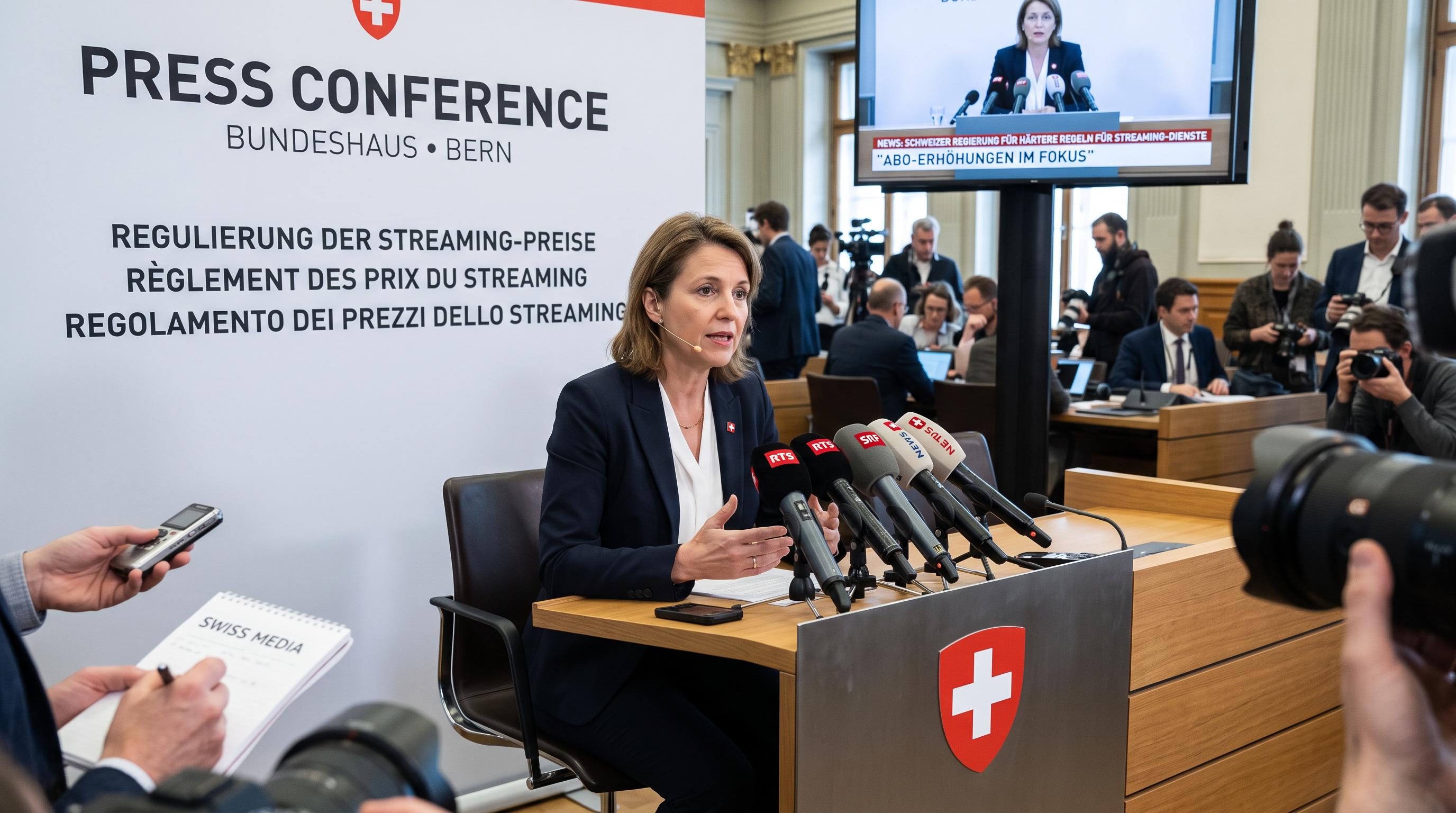
Bern backs tougher rules for streaming price hikes
The Federal Council has backed a new front in Switzerland's consumer-protection debate: the terms attached to a streaming subscription. On Thursday, August 28, 2026, the government accepted, without comment, a motion that would impose tougher limits on unilateral price increases by services such as Netflix.
The proposal comes from parliamentarian Alex Farinelli, who argues that providers of subscription-based digital services have repeatedly raised prices while relying on conditions that give them wide discretion to act alone. Netflix plans in Switzerland currently cost between CHF 14.90 and CHF 29.90 a month, placing recurring entertainment bills firmly inside household budgeting decisions.
Farinelli's motion would require any permitted increase to rest on objective and transparent criteria written into the contract before the customer signs up. Vague or unjustified clauses could be treated as unfair or declared void. The proposal would also force providers to explain a change clearly, identify the reasons behind it and tell customers how they can object.
The government endorsement does not immediately change Netflix bills or existing cancellation procedures. It gives the parliamentary initiative political backing as Switzerland considers whether digital subscriptions need more precise rules than the broad terms and conditions currently used by many platforms.
The motion targets vague contract clauses
Farinelli's motion would make the contract itself the first line of defence for subscribers. Providers could still seek higher prices, but they would need to link the increase to criteria that customers could understand before accepting the service. The wording would have to give consumers a meaningful basis for assessing how and when a fee might change.
That requirement targets clauses that allow a company to increase a price without defining the circumstances sufficiently. Under the proposal, terms that are too vague or lack justification would be considered unfair or void. The change would shift the focus from whether a customer technically accepted a long set of conditions to whether those conditions provide a predictable framework for future charges.
The motion also sets out a communication duty. A provider would have to notify users plainly about the contractual change, explain why the price is moving and describe the available means of objection. That information would matter particularly for customers who pay through automatic renewals and may otherwise discover a higher charge only after it has been processed.
The proposal does not specify a universal percentage cap or freeze. Its approach centres on transparency, advance criteria and the consumer's ability to leave when a substantial price change alters the bargain.
Subscribers could gain a cost-free escape route
A substantial unilateral price change would trigger a free exit under the proposed rules. Farinelli wants subscribers to receive a simple and effective right to terminate the contract without paying a cancellation fee when a provider makes a major price alteration on its own.
That provision could prove more important than the notification requirement. A message explaining a higher fee does not help much if a customer must navigate a complicated cancellation process or accept an additional charge to leave. The motion therefore links information to a practical remedy: users would receive notice, an explanation and a cost-free way to end the subscription.
The proposal leaves two important issues for the legislative process. It does not define in the source material exactly what qualifies as “substantial,” and it does not set out a single notice period for all platforms. Those details would determine how the protection works in daily life. A small adjustment might remain subject to the ordinary contract, while a larger increase could give the subscriber a clear route out.
For existing customers, the endorsement alone changes nothing. Any new rule would have to move through the parliamentary process and establish how it applies to contracts already in force, renewed subscriptions and future agreements.
Bern looks to rules already used by neighbours
Switzerland is moving after Italy and Germany, which have already introduced measures in this area. Farinelli cited both neighbouring countries as examples for a Swiss response to unilateral price increases by subscription-based digital services. The source does not detail the precise Italian or German rules, so the comparison currently establishes direction rather than a full legal match.
That distinction matters because consumer protections can differ in the trigger for cancellation, the wording required in contracts and the remedies available after a disputed increase. Switzerland's proposed model, as described in the motion, would combine three elements: advance disclosure of objective price criteria, a ban on clauses that are insufficiently definable or unjustified, and a simple, effective and free right to terminate after a substantial change.
The government support places Switzerland within a wider European effort to examine how digital businesses manage recurring contracts. Streaming platforms operate across borders, yet subscribers encounter national rules when they sign up, challenge a charge or seek to cancel. A Swiss framework could therefore affect the conditions shown to Swiss customers even when the service is headquartered abroad.
For now, the available evidence supports a cautious conclusion. Switzerland is following a regional policy trend, while the final scope of its own rules remains open to parliamentary debate.
The next test will be Parliament and the contracts
The immediate effect for Swiss households is limited, while the long-term contract model could change significantly. The Federal Council's acceptance of the motion does not cap Netflix's current prices, force an instant refund or give subscribers a new cancellation right today. The next stages will determine whether Parliament turns the proposed principles into binding amendments and how regulators would enforce them.
If adopted, the rules could make future subscriptions easier to compare. Customers would see the conditions for a possible increase before entering the contract, rather than relying on broad language that leaves the provider substantial room to act unilaterally. A clear explanation and an uncomplicated cancellation process would also reduce the practical cost of switching services when a new fee no longer fits a household budget.
Platforms would face a compliance task as well. They might need to revise standard terms, design more explicit notices and ensure that cancellation tools work without fees or unnecessary obstacles. The motion does not say that providers could never raise prices. It sets conditions for doing so and attaches stronger consequences to major changes.
With plans ranging from CHF 14.90 to CHF 29.90 per month, the issue reaches beyond one company. It concerns how Swiss consumers enter, understand and leave the growing number of digital services paid through automatic recurring contracts.