Switzerland
Swiss Parliament Moves EU Deal Toward a Vote as Tuition-Fee Rules Face Scrutiny
Swiss voters could be asked to approve the new package of agreements with the European Union, while lawmakers also debate equal tuition fees for EU students at the country’s two federal institutes of technology.
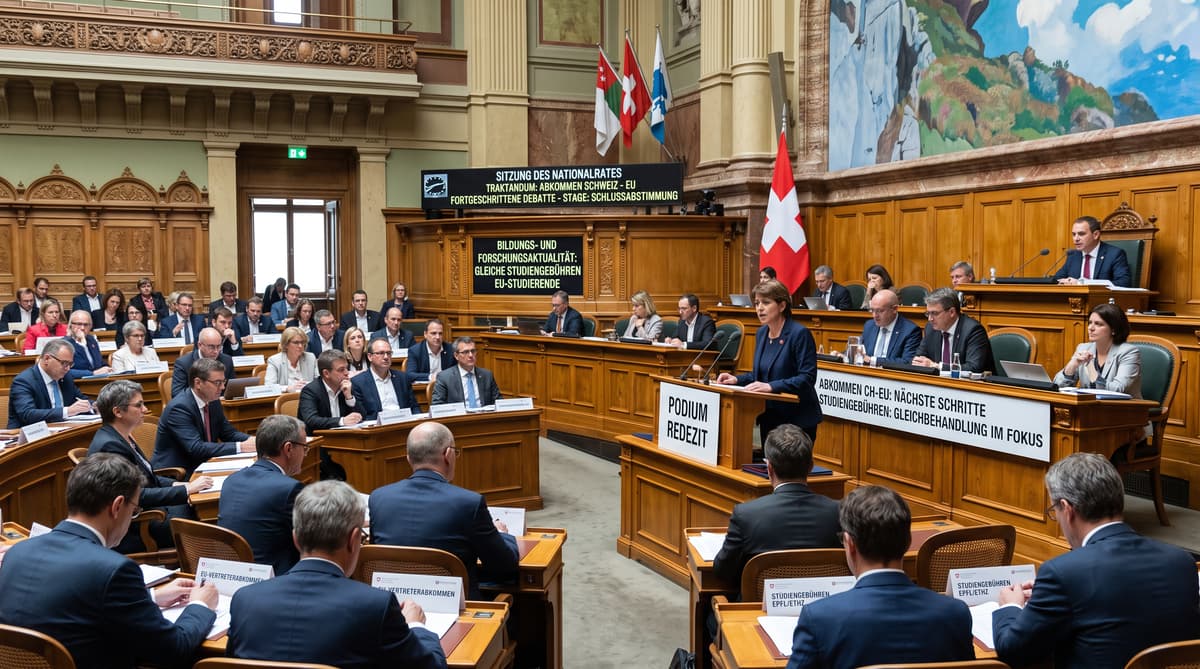
Switzerland’s Senate has moved the EU package closer to a nationwide vote, while attaching a tougher approval route to the agreements. On October 1, 2026, senators rejected the Federal Council’s proposal for an optional referendum by 23 votes to 17, with 3 abstentions. That procedure would have required only a simple majority of voters. The chamber then backed a “sui generis” referendum, a route that would require approval from a majority of the cantons even without a constitutional amendment.
The decision places the package inside Switzerland’s most demanding democratic framework. A treaty can face a mandatory referendum in practice when lawmakers judge that it has a constitutional character, although the constitution does not explicitly require that step for this agreement. The Senate also approved a proposal from its Commission on Political Institutions to seek a double majority through a constitutional amendment.
The vote does not settle the matter. The House of Representatives must now examine the Senate’s proposals and revisit the Federal Council’s simple-majority option. Until that process ends, the exact ballot question and approval threshold remain unsettled.
Put the Cantons at the Centre
A cantonal majority could determine whether the EU agreements survive the ballot box. Under the Senate-backed model, approval would require more than a national tally of voters. A majority of Switzerland’s cantons would also have to support the package, giving smaller cantons a decisive role alongside populous regions such as Zurich, Geneva and Vaud.
Swiss constitutional practice gives the cantons a direct voice on measures tied to the country’s federal structure. The Senate’s “sui generis” approach seeks that double legitimacy without formally changing the constitution. Its supporters argue that the agreements carry constitutional significance. The Federal Council had proposed a simpler route, requiring only a majority of people voting nationwide.
The distinction could shape the entire campaign. A package might win a national majority and still fail if enough cantons reject it. That makes the political geography of Switzerland central to the outcome, from urban centres with strong cross-border economic links to rural and peripheral cantons with different views of European integration. The House of Representatives will decide which of these competing procedures advances.
Bring Tuition Rules Into the Deal
Lawmakers also want EU students at Switzerland’s two federal institutes of technology to face the same tuition fees as Swiss students. The decision covers EPFL in Lausanne and ETH Zurich, two institutions with major international research profiles and large communities of students from across Europe.
The measure emerged during parliamentary deliberations on the new package of agreements with the European Union. Deputies decided that EU students enrolled at the two institutions must receive equal treatment with Swiss students regarding tuition fees. The available source does not specify the current fee levels, the number of affected students or the timetable for implementation.
That limited provision carries practical importance. Tuition rules are a visible expression of how Switzerland translates its relationship with the EU into daily institutional policy. The debate reaches beyond treaty language and into access to higher education, university finances and the conditions offered to European students studying in Switzerland.
The decision is part of the broader parliamentary process and does not, on the information available, establish that the full EU package has been approved. The House of Representatives still has to continue its examination of the agreements and referendum procedure.