Switzerland
Swiss barn owls are changing colour, study finds
Swiss barn owls have become more reddish-brown and spotted over the past 30 years, a University of Lausanne study finds. The researchers link the rapid change to evolution and traits associated with fertility, hunting strategies and food intake.
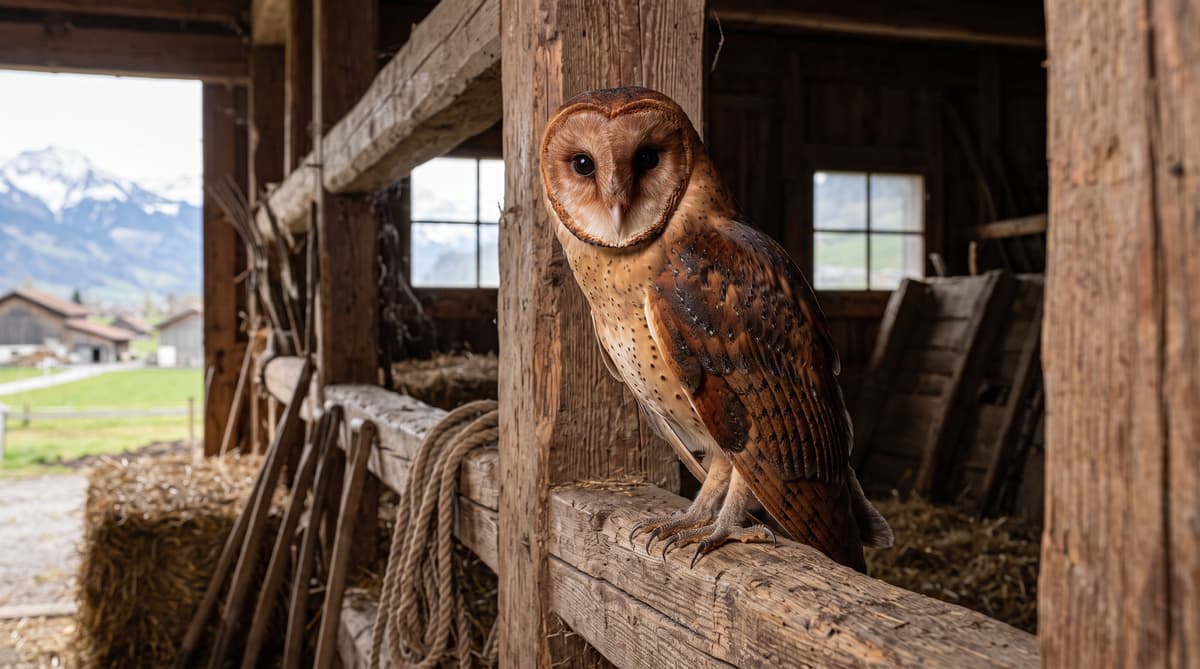
A three-decade shift has made Swiss barn owls redder and more heavily spotted. A long-term study from the University of Lausanne, published in Nature Communications, describes the changing plumage as evidence of evolution unfolding within a few decades. Researchers observed owls ranging from immaculate white to golden-brown and deep red, with reddish and mottled birds becoming more common over time.
The shift matters because the colours appear connected to more than appearance. The study links plumage with fertility, hunting strategies and food intake, placing the changing patterns alongside traits that may affect how owls live and reproduce. Scientists also identified a gene that could connect pigmentation with stress management or aggression.
The researchers present the change as a rapid evolutionary process. Their findings add Swiss barn owls to evidence that evolutionary shifts can take place on a timescale far shorter than millions of years.
Trace the link between colour and biology
The changing palette runs from white through golden-brown to deep red. In the study, researchers found an increasing number of owls with reddish and mottled plumage alongside birds with immaculate white feathers. The colour shift was not described as a cosmetic change: the researchers link it to an evolutionary process and to traits connected with fertility and feeding.
A gene identified by the scientists may help explain how colour and behaviour intersect. It could be associated with pigmentation as well as stress management or aggression. The research therefore points to a biological connection between appearance and other characteristics, while placing colour variation within a broader picture of how the owls function.
The study also associates mottled plumage with immunity and a better ability to cope with difficult conditions, including food shortages and parasite infestations. Those links give the spotted pattern significance beyond its visual difference from plain white feathers.
Follow the owls’ hunting trails
Different-looking owls also follow different hunting patterns. White barn owls use moonlight to hunt, with field mice as their main prey. Red owls, by contrast, feed predominantly on voles. The study links these differences in diet and hunting strategy to the broader pattern of plumage variation.
That connection makes colour a potential marker of how an owl finds food and what it eats. The researchers also associate mottled plumage with immunity and with handling stressful conditions, such as food shortages or parasite infestations. Together, these findings connect feather patterns with both hunting and resilience.
The study does not reduce the colour change to a single cause. Researchers say ecological factors behind the variation remain difficult to determine precisely. Their findings instead outline several connected traits, including pigmentation, prey choice and stress response, that help explain why plumage matters to the lives of Swiss barn owls.
Read the change as evolution in action
The findings show that evolution can be visible within a few decades. The University of Lausanne study describes the shift in Swiss barn owl plumage over 30 years as a rapidly advancing evolutionary process, challenging the idea that meaningful evolutionary change must take millions of years.
Researchers see rapid adaptation as relevant in the context of climate change. The ability of living organisms to adapt quickly could help them respond to environmental change, and the owls’ changing plumage offers a local example of that capacity. The study links the colour patterns to fertility, hunting and food intake, while also associating mottling with immunity and coping with stress.
For Switzerland, the work brings together wildlife observation and questions about how species respond to changing conditions. Its central finding is grounded in a visible shift: more reddish-brown and spotted barn owls than researchers observed three decades earlier. The researchers’ account places that change within an ongoing evolutionary process.