Switzerland
Roche reports positive data for experimental eye-disease treatment
Roche has reported positive 52-week results for vamikibart, an experimental treatment for vision loss linked to uveitis. The drug improved vision and reduced retinal swelling in two Phase III trials, but has not yet been approved.
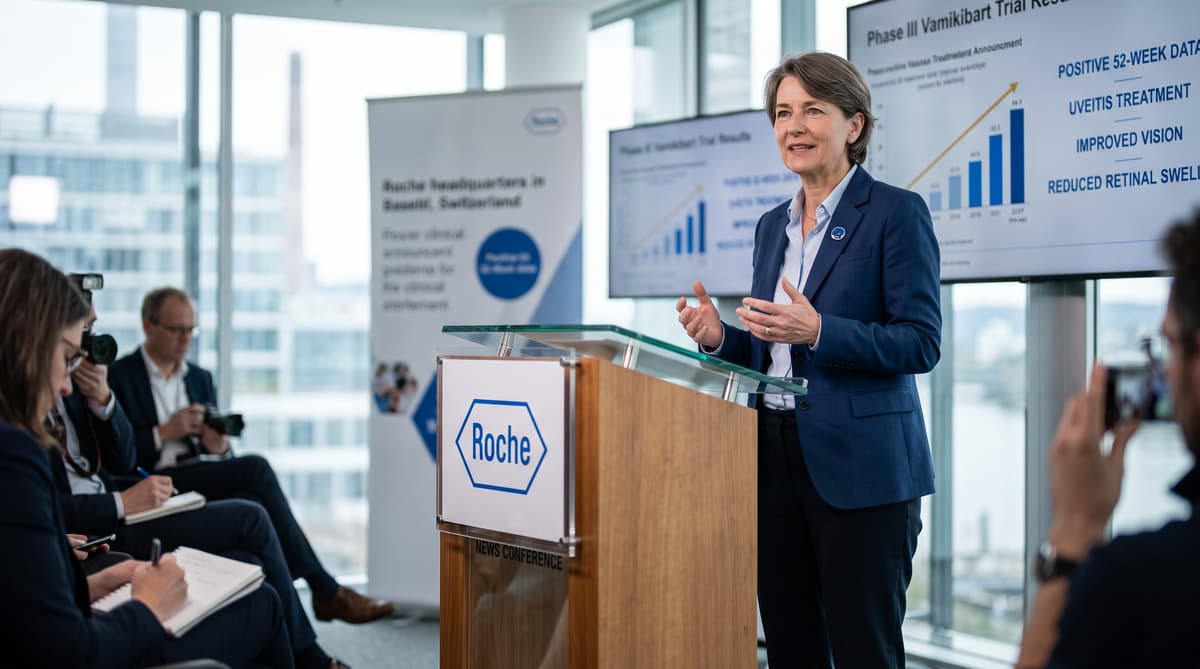
Roche has reported 52-week results that could expand treatment options for people facing vision loss linked to uveitis. The Basel-based pharmaceutical company presented data on vamikibart on Saturday at the annual meeting of the American Academy of Ophthalmology in New Orleans.
The experimental drug targets macular oedema associated with uveitis. In this condition, inflammation causes fluid and swelling in the macula, the central part of the retina responsible for detailed vision. Persistent swelling can make reading, recognising faces and carrying out everyday tasks more difficult.
Roche said patients receiving vamikibart showed sustained improvements in vision and reductions in retinal swelling across the 52-week period. The findings came from two identical Phase III trials, the final stage of testing before a company seeks broad regulatory approval.
The company also reported that a higher proportion of treated patients improved their vision than those in the control groups. Around two-thirds of patients did not require further injections after the initial treatment phase, a result that could matter for people managing a chronic eye condition and the clinics that deliver repeated intravitreal treatments.
The data remain company-reported. Regulators must still assess the full evidence, including efficacy, safety and the balance between benefits and risks.
Read the trial signals
Two Phase III trials supplied the evidence behind Roche’s announcement. The studies were identical in design, according to the company, allowing researchers to compare vamikibart with control treatment across the same clinical framework.
Roche said the treatment produced a higher rate of vision improvement in both studies. It also reported less retinal swelling over the 52-week follow-up period. The source material does not provide the exact vision scores, the size of the treatment effect or the detailed safety results, so those figures cannot yet be independently assessed from the announcement alone.
The reported injection pattern is one of the clearest practical findings. Around two-thirds of patients avoided additional injections after the initial treatment phase. Uveitis-related macular oedema can require repeated visits and procedures, making the duration of benefit important for patients, ophthalmologists and healthcare systems.
That result does not mean every patient would follow the same course. Treatment decisions depend on the underlying inflammation, retinal changes and a patient’s response over time. The trials’ complete data will be important in determining how vamikibart compares with existing therapies and whether its benefits justify wider use.
Roche presented the results at the American Academy of Ophthalmology meeting, a major international forum for eye specialists.
Track the approval path
Vamikibart remains an experimental medicine, despite the positive results. Roche has not received approval to market the treatment in any country named in the announcement.
The US Food and Drug Administration has accepted Roche’s application and is expected to make a decision by July 2027. Roche has also submitted applications in the European Union, China and Japan. Each regulator will review the clinical evidence under its own process before deciding whether the treatment’s benefits outweigh its risks.
Acceptance of an application means that the FDA has agreed to review the submission. It does not constitute an approval or a finding that the drug is safe and effective for routine use. The same distinction applies to the applications filed elsewhere.
For Roche, the regulatory timetable places vamikibart among the company’s later-stage development programmes. For patients and Swiss eye specialists, the next meaningful milestones will include publication of detailed trial results, regulatory assessments and any information on how the drug fits alongside existing treatments.
The company has not provided a launch date, a price or details of potential reimbursement. Those questions would become relevant only if regulators grant approval. In Switzerland, any future access would also depend on national decisions covering authorisation, pricing and reimbursement.
Watch the Swiss access debate
A possible new treatment would have consequences beyond Roche’s Basel headquarters. Uveitis can affect people of working age as well as older adults, and macular oedema can interfere with central vision when inflammation is not adequately controlled. A therapy that maintains vision while limiting the need for repeated injections could influence how ophthalmology services organise follow-up care.
The reported finding that around two-thirds of patients needed no further injections after the initial phase is particularly relevant to treatment burden. Fewer procedures could mean fewer clinic visits for some patients, although the eventual schedule would depend on the approved label and individual medical decisions. The source does not establish how long the benefit lasts beyond the 52-week study period.
Swiss patients would still face several steps before any potential access. Roche would need a regulatory approval, followed by decisions on Swiss availability, pricing and reimbursement. The company’s earlier disputes with Swiss authorities over drug pricing have shown how quickly access questions can become part of a wider healthcare debate.
For now, the evidence gives Roche a strong development update rather than a finished product. The FDA’s expected decision by July 2027, alongside reviews in Europe, China and Japan, will determine whether vamikibart moves from promising trial result to treatment option.