Environment
Greenpeace says ocean protection target is centuries behind schedule
Greenpeace says only 3.5% of the world’s oceans are fully or largely protected, putting the international goal of protecting 30% by 2030 far out of reach at the current pace. The Swiss-based organisation is calling for connected marine protected areas, including across the Atlantic.
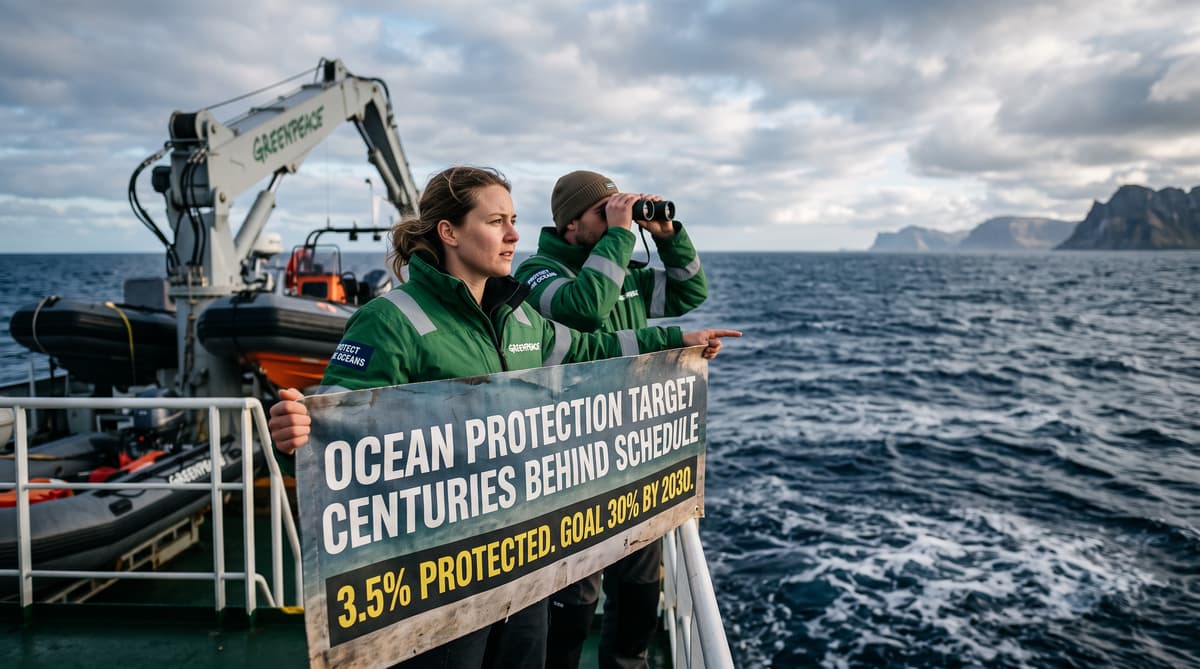
Only 3.5% of the world’s oceans are fully or largely protected, Greenpeace says, leaving the international community far behind its goal of protecting at least 30% by 2030. At the current rate, the target will take another 265 years to reach, according to the Swiss-based environmental organisation.
Greenpeace announced the estimate on Monday, October 19, as the UN Conference on Biological Diversity got underway in Armenia. The timing puts the shortfall in focus while governments gather to discuss biodiversity protection. The international target calls for protection of nearly one-third of the oceans within four years.
The protected share counted by Greenpeace covers areas shielded from destructive human activities such as overfishing and deep-sea mining. Its study, Well Connected, argues that progress must include protections designed around how marine life moves through the ocean. That matters for migratory species whose routes cross large areas of open water and national boundaries.
Greenpeace is urging governments to turn existing commitments into protected areas, including a linked network across the Atlantic. The organisation says the current pace leaves the 2030 goal far out of reach.
Link the Atlantic’s Protected Habitats
Four out of five leatherback turtle habitats facing medium to high bycatch risk sit outside the proposed protected areas, Greenpeace’s study says. The finding highlights a weakness in protection that focuses on designated zones without accounting for where threatened animals travel and feed.
Bycatch occurs when fishing gear unintentionally catches animals other than the intended target. Greenpeace says migratory marine animals are particularly exposed because their habitats extend across wide stretches of ocean. The study, Well Connected, uses the leatherback turtle example to show how risks can remain beyond the boundaries of proposed protected areas.
The organisation’s answer is a network of connected marine protected areas in the Atlantic. It says the proposed system would cover 31% of the Atlantic high seas and link important habitats. Greenpeace estimates that it would include almost 45% of danger zones for humpback whales and reduce the risk of ship collisions.
The proposal treats connectivity as a practical feature of conservation planning: protected sites would form a route across habitats rather than stand alone. For species moving through the ocean, the location and links between protected areas are central to how much of their at-risk range receives coverage.
Turn Treaty Commitments Into Protection
Greenpeace has identified 17 areas for full protection under the Global Ocean Treaty. The organisation says governments need to close the gap between international commitments and action on the water. Its proposed Atlantic network is one part of that call, with linked areas intended to safeguard important habitats and reduce risks to migratory wildlife.
The Global Ocean Treaty provides the framework Greenpeace invokes for protecting areas beyond national jurisdictions. Its recommendations focus on full protection for selected ocean areas, alongside the broader international goal of protecting at least 30% of the world’s oceans by 2030.
Greenpeace’s message is direct: “Governments must urgently close the gap between commitments and action.” The call comes as the biodiversity conference opens in Armenia, placing ocean protection among the issues facing governments discussing global conservation.
The scale of the challenge is visible in the figures Greenpeace cites. Existing fully or largely protected areas account for 3.5% of the oceans, while the 2030 goal is at least 30%. The organisation’s estimate of 265 years at the current rate underscores why it is pressing for governments to designate and connect protected areas rather than rely on the target alone.
Move Switzerland Toward Ratification
Switzerland has signed the Global Ocean Treaty but has not ratified it. The next step identified in the Swiss process is the proposed High Seas Protection Act, intended to form the basis for ratification. Consultation on that legislation ended in early October.
That places Switzerland’s own policy work alongside the international push for marine protection. Greenpeace is calling for governments to implement commitments through protected areas, including a connected network in the Atlantic. For Switzerland, ratification would bring the country into the treaty’s framework for protecting the high seas.
The timing is notable: the consultation closed shortly before the UN Conference on Biological Diversity began in Armenia on October 19. The international target remains protection of at least 30% of the oceans by 2030, while Greenpeace says only 3.5% are currently fully or largely protected.
The proposed High Seas Protection Act is therefore a key part of the Swiss route to ratification. Greenpeace’s findings give the broader debate a concrete measure of the distance between the target and present coverage, while its Atlantic proposal points to the kind of connected protection the organisation wants governments to pursue.