UNHCR
UNHCR chief warns funding shortfall is making aid work impossible
UNHCR chief Barham Saleh says the agency’s work has become “impossible” as funding covers only 35% of its $8. 5 billion appeal for the year. Aid for 50,000 Sudan conflict survivors is at risk, while refugee registration has been suspended in Ethiopia.
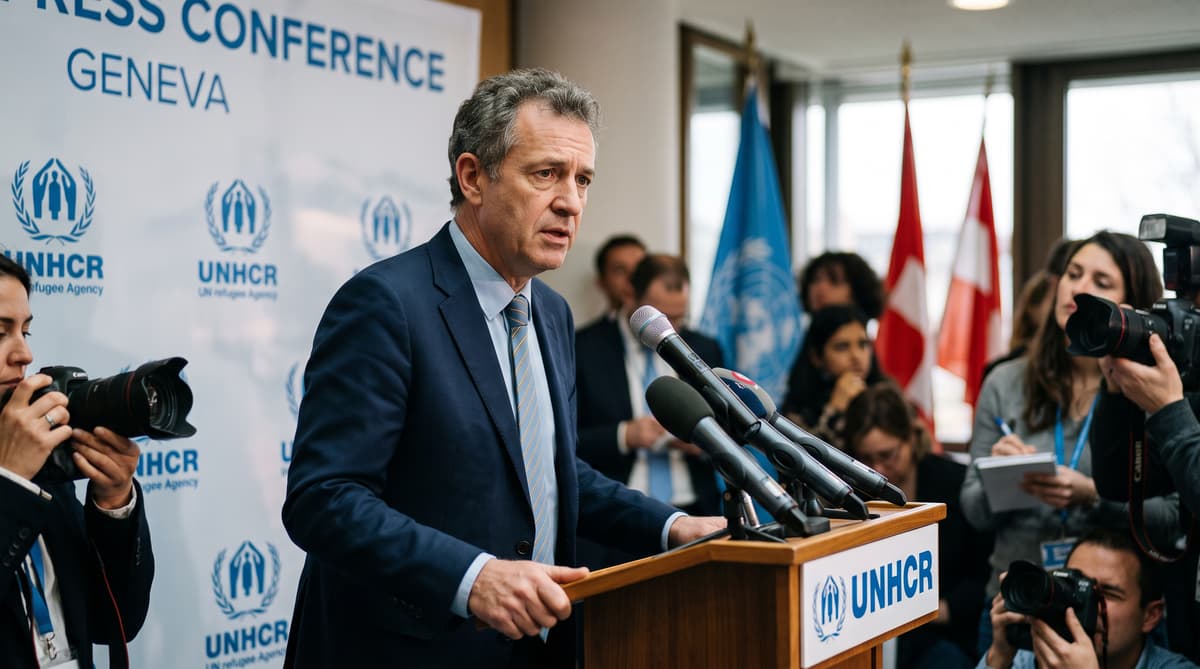
Only 35% of UNHCR’s $8.5 billion appeal had been funded by October 9, 2026. In Geneva, High Commissioner Barham Saleh said the shortfall had pushed the agency towards an “impossible” task as it tries to protect refugees and displaced people across multiple crises.
Saleh spoke on October 13 at the opening of the UN refugee agency’s executive committee meeting. He acknowledged that member states face financial pressure, while warning that internal savings cannot compensate indefinitely for missing contributions. “Efficiency has its limits,” he said. “There comes a point where greater efficiency cannot make up for a shortage of resources.”
The consequences are already visible in field operations. Aid for 50,000 survivors of the Sudan conflict faces cuts, while UNHCR has suspended the registration of tens of thousands of refugees in Ethiopia. Registration provides documentation and helps people access protection and services. A pause can leave displaced people without a formal link to the system intended to assist them.
The funding gap also matters in Geneva, where the agency coordinates a global operation while cutting its own structures. Saleh has called for earlier, more predictable and more flexible funding from donors.
Donors Leave a Widening Funding Gap
The agency has received roughly one dollar for every three dollars requested. UNHCR’s 2026 appeal seeks $8.5 billion, yet contributions recorded by last Friday covered only 35% of that amount. The remaining 65% represents programmes that must be delayed, reduced or abandoned as needs continue to grow.
Saleh’s warning comes after years of pressure on humanitarian budgets. UNHCR is currently forecasting less than $2.7 billion for 2027, although the figure could rise before the end of the year, when donors meet for a funding conference. The agency is asking governments to commit money earlier in the budget cycle, provide more reliable multi-year support and give field teams greater flexibility over how funds are used.
Restricted donations can leave UNHCR unable to redirect money quickly when a crisis changes. Flexible contributions allow the agency to move resources between emergency shelter, registration, protection and cash assistance. Predictability also helps it retain staff and plan procurement.
The figures show why Saleh has rejected the idea that another round of efficiency measures can solve the problem alone. “There is a difference between doing more with less and being asked to do the impossible,” he told the committee.
UNHCR Rebuilds With Fewer Staff
Nearly 8,000 people have left UNHCR since 2024. The agency’s workforce has fallen from nearly 20,000 employees to just under 12,000, according to figures reported by Swissinfo in October 2025. Those reductions have followed funding cuts from the United States and other countries.
Saleh has commissioned an independent assessment of UNHCR operations since taking office in early January. He wants a more agile and sustainable organisation, with closer cooperation across the UN humanitarian system, especially in procurement. The changes will be introduced across 31 sites.
The restructuring will simplify structures, clarify responsibilities and reduce the number of directors reporting directly to political posts from 12 to 6. Saleh also plans to increase the use of artificial intelligence in operations, although technology cannot replace field presence, trained protection staff or reliable access to displaced communities.
UNHCR says its operating model already places most employees and resources close to the people it serves. Eighty-eight percent of staff work outside Geneva, around 70% are local employees, and about 95% of resources go to assistance in countries where the agency operates. Those figures give the reorganisation a clear test: savings at headquarters must translate into sustained capacity in the field.
Field Operations Feel the Cuts First
Sudan and Ethiopia show how a funding shortfall reaches people before it appears in an annual report. In Sudan, assistance for 50,000 survivors of the conflict is at risk. The country has generated one of the world’s largest displacement emergencies, placing heavy demands on protection, shelter and emergency support.
In Ethiopia, UNHCR has suspended the registration of tens of thousands of refugees. Registration is an administrative process, yet it has practical consequences. It helps establish identity, supports protection referrals and gives authorities and aid organisations a clearer picture of who needs help. Delays can make it harder to locate vulnerable people and plan services.
The agency’s decisions reflect a broader operational squeeze. Staff must prioritise the most urgent cases while postponing work that prevents future harm. Local teams often carry much of this responsibility. Around 70% of UNHCR employees are local staff, according to the agency’s figures, giving them direct knowledge of the communities they serve while also exposing them to the pressure of prolonged emergencies.
Saleh’s call for flexible funding is tied to these conditions. Sudden displacement does not follow donor timetables, and field offices need the authority to adjust programmes when conflict, border movements or new arrivals change the situation.
Geneva Watches the Next Donor Test
Geneva remains the coordination centre for an agency whose crisis is unfolding far beyond Switzerland. UNHCR’s executive committee meeting brings governments and officials together to decide how the refugee agency will operate with fewer resources. The choices will affect field offices across Africa, the Middle East and other regions hosting people forced from their homes.
For Switzerland, the funding debate also carries a local dimension. Geneva hosts UNHCR and a wider humanitarian ecosystem that supports international staff, researchers, service providers and diplomatic missions. Earlier funding freezes have already reduced employment and increased competition among Geneva-based organisations, according to Swissinfo reporting.
Saleh’s proposed reforms aim to reduce duplication between headquarters and regional offices while moving the agency closer to the people it assists. His plans include closer procurement cooperation with other UN humanitarian bodies and greater use of artificial intelligence. The outcome will depend on whether donors provide money early enough for those changes to support operations rather than compensate for their loss.
UNHCR now faces a donor conference and a difficult 2027 forecast. Governments will decide whether the agency can plan beyond immediate emergencies, while displaced families in Sudan, Ethiopia and elsewhere wait for services that depend on those decisions.