immigration
Switzerland Ranks in European Immigration Integration Study
New study reveals Switzerland's position among European nations in successfully integrating immigrants
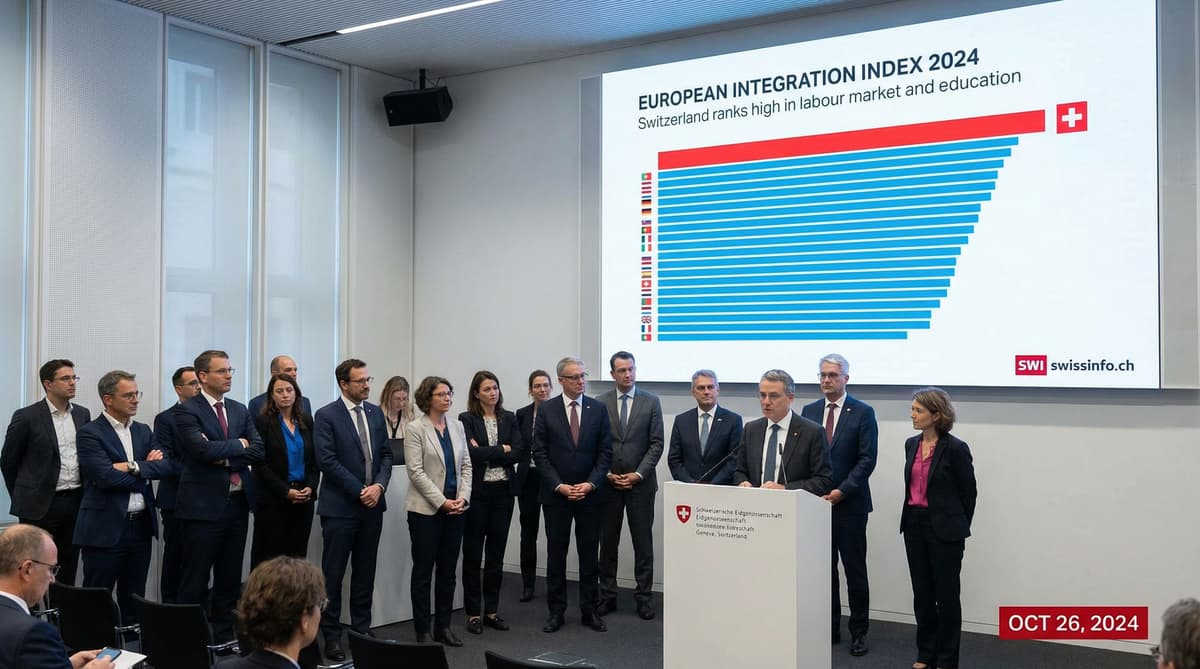
Europe is tightening its grip, yet the data tells a different story. A groundbreaking new study has exposed the widening gap between political rhetoric and on-the-ground reality, ranking European nations on their actual ability to assimilate new arrivals. While headlines across the continent scream of closed borders and stricter quotas, the metrics of success—employment, education, and social cohesion—reveal that legislative walls do not always equal social failures. Switzerland, sitting at the heart of this geopolitical storm, finds itself scrutinized not just for its wealth, but for its willingness to absorb and elevate global talent.
The timing is critical. As the continent grapples with shifting demographics, this study serves as a mirror to national identities. It challenges the comfortable Swiss assumption that economic prosperity automatically equates to successful integration. The findings demand immediate attention: are we merely hosting a workforce, or are we building a cohesive society? The distinction is no longer academic; it is the defining challenge of the decade.
The Policy Paradox
Governments are toughening their stance, yet the most successful integrators are ignoring the noise. The study highlights a staggering contradiction: states with some of the most rigorous entry requirements are often the ones outperforming their peers in settling new arrivals. This 'Policy Paradox' suggests that clarity and structure—rather than mere leniency—may be the keys to integration. For Switzerland, a nation famous for its bureaucratic rigor, this is a validation of the rule of law, but also a warning against complacency.
We are witnessing a shift where 'toughness' is redefined. It is no longer just about border control; it is about the rigorous application of rights education and civic duty. The data suggests that when expectations are high and clearly communicated, immigrants are more likely to thrive. However, the line between rigorous structure and exclusionary hostility is thin. Switzerland must navigate this razor's edge carefully, ensuring that our high standards for entry do not become insurmountable barriers to belonging for those already here.
The German Contrast
While Switzerland calibrates its approach, our northern neighbor offers a stark, tangible example of proactive integration. In Munich's 'Bayernkaserne', migrants are not just processed; they are educated. Visuals from the study depict refugees actively engaged in rights education lessons—a formalized attempt to bridge the cultural divide immediately upon arrival. This hands-on, classroom-style approach contrasts sharply with the more laissez-faire 'sink or swim' economic integration often seen in Swiss cantons.
Germany's model confronts the issue head-on. By institutionalizing the understanding of rights and duties, they are attempting to fast-track the cultural alignment that often takes generations. Switzerland must ask itself: is our reliance on the labor market as the primary engine of integration enough? The German data suggests that explicit civic education might be the missing accelerator needed to turn residents into citizens, and workers into community members.