Swiss politics
Swiss referendum campaign challenges federal priority over minimum wages
Swiss voters are expected to decide whether collective labour agreements should be allowed to override cantonal and municipal minimum wages. Unions and political parties have submitted more than 100,000 signatures, setting up a nationwide referendum with major consequences for low-paid workers.
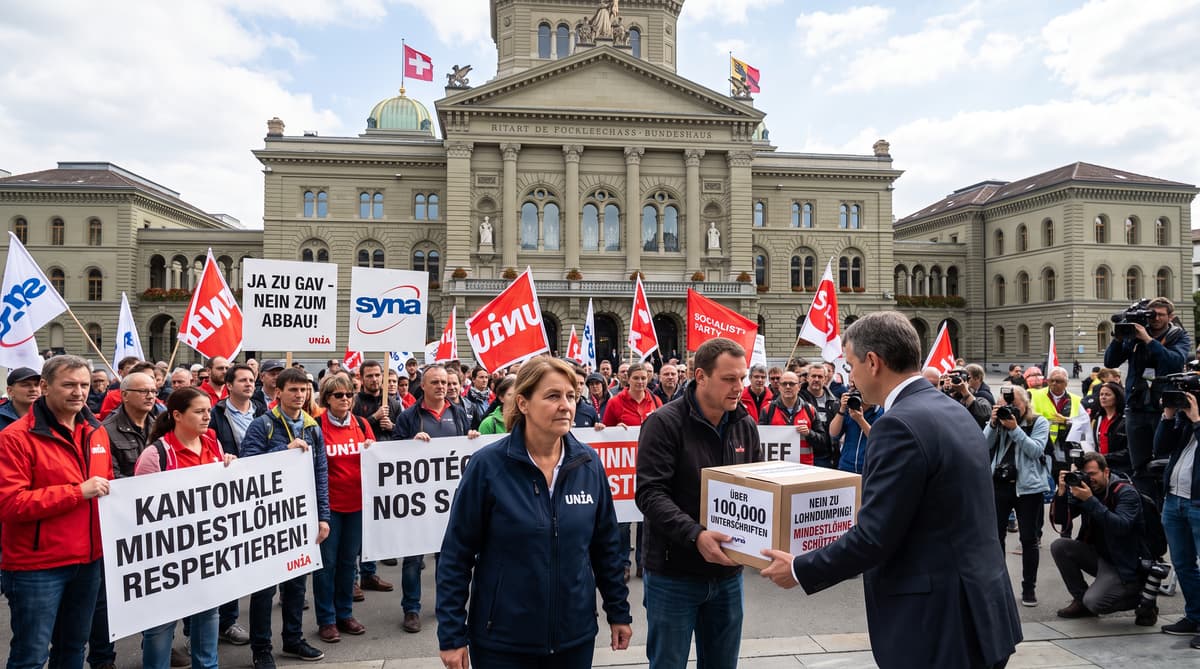
More than 100,000 signatures have pushed Switzerland towards a nationwide vote on who should set the floor for wages. Trade unions and political parties submitted the signatures on 7 October 2026, challenging legislation passed by Parliament that would give certain collective labour agreements priority over cantonal and municipal minimum wages.
The Federal Chancellery will now verify the signatures. With the total already above the threshold required for a referendum, the review is expected to be largely procedural. If the challenge is confirmed, voters could go to the polls in February or June 2027.
The dispute reaches into a core feature of Swiss federalism. Cantons and municipalities have used popular votes and local legislation to establish wage floors, while Parliament has backed a framework that could give negotiated, sector-wide agreements greater legal force. The result would affect workers, employers and the authorities responsible for enforcing local wage rules.
The campaign has already acquired a clear political label. Opponents describe the legislation as an “attack on low-paid workers”, arguing that it could block minimum wage protections approved at cantonal or municipal level before those protections take effect.
Parliament Sets Two Wage Systems Against Each Other
Generally binding collective labour agreements sit at the centre of the proposed change. These agreements set employment conditions across an entire sector once the authorities declare them binding, including for companies that did not sign the original agreement. Parliament’s legislation would allow such agreements to override statutory minimum wages established by cantons or municipalities.
That legal hierarchy matters wherever negotiated sectoral pay falls below a local wage floor. Under the proposal, workers covered by the binding agreement could lose the benefit of a higher statutory minimum. The source report says tens of thousands of workers would not benefit from minimum wages that have already been approved but have not yet come into force.
Unions and their political allies argue that the change would weaken decisions made by voters and local authorities. Supporters of the legislation, whose position will be tested during the referendum campaign, have backed the role of collective bargaining in setting conditions across industries.
The eventual ballot will therefore test two approaches to wage policy: local statutory protection and sector-wide negotiation. Swiss voters will decide how those systems should interact when they point to different pay levels.
Cantons and Cities Face Different Outcomes
Five cantons currently have minimum wages, although the new law would not affect all of them in the same way. Geneva and Neuchâtel are among the jurisdictions directly relevant to the dispute. Basel City, Jura and Ticino already have provisions allowing generally binding collective labour agreements to take precedence, so the bill would not change their existing arrangements.
The disagreement also reaches beyond cantonal borders. Zurich, Winterthur and Lucerne have introduced local minimum wages, giving municipal authorities a direct stake in the outcome. In towns and cities where a wage floor has been approved but remains pending, the legislation could determine whether the protection reaches workers once it takes effect.
This patchwork reflects Switzerland’s political structure. Wage rules can vary by canton and municipality, while collective agreements operate across sectors and regions. A restaurant, cleaning company or other low-paid employer may therefore face different obligations depending on the local rule and the agreement covering its workforce.
The referendum campaign will have to explain those distinctions to voters. The list of affected jurisdictions is limited, but the precedent could shape how future local wage initiatives interact with national labour law.