technology
Swiss Youth Embrace AI Tools in Education
New JAMES study reveals one-third of Swiss youth regularly use AI tools like ChatGPT, sparking debate about digital literacy and education adaptation.
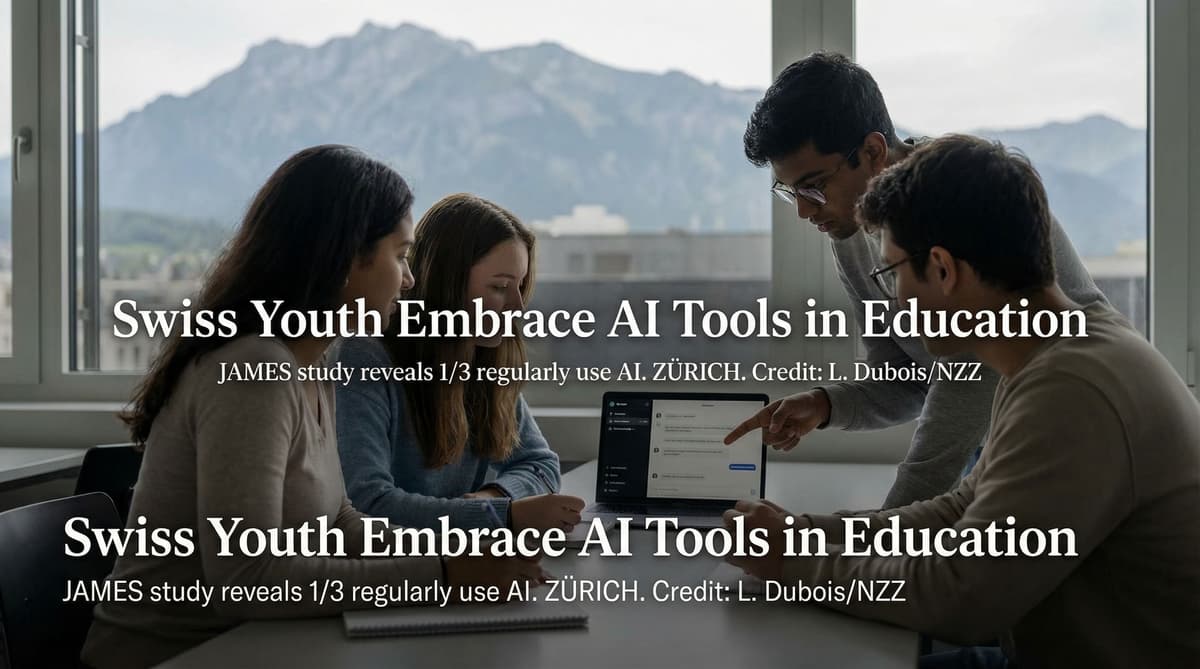
A staggering one-third of Swiss youth are now utilizing Artificial Intelligence tools like ChatGPT on a weekly basis, marking a seismic shift in the educational landscape. The latest JAMES 2024 study, a rigorous analysis conducted by the Zurich University of Applied Sciences (ZHAW) and commissioned by Swisscom, reveals that digital natives are not just experimenting with these tools—they are integrating them into their daily routines at an unprecedented rate. Surveying nearly 1,200 individuals aged 12 to 19, the data paints a picture of a generation that is sprinting toward the future.
This is not a gradual uptake; it is a digital revolution. "Artificial intelligence is arriving in our world at breakneck speed," asserts Noemi Knobel, a digital education expert. The inevitability of this transition is palpable. While previous years focused on social media consumption, 2024 stands out as the year AI became a fundamental utility for Swiss teenagers. The rapid normalization of these powerful algorithms suggests that the traditional Swiss classroom is being disrupted from the inside out, forcing educators and policymakers to confront a reality that has arrived faster than legislation can adapt.
The Convenience Trap: Efficiency vs. Accuracy
For today's youth, AI has usurped the search engine. The allure is undeniable: ask a question, get a clear, concise answer immediately. It is efficiency incarnate. However, this convenience comes with a dangerous caveat—reliability. While Google forces users to sift through sources, AI delivers a singular, authoritative-sounding narrative that may be completely fabricated. The JAMES study highlights this critical tension: AI is powerful, but it is not infallible.
The risk of misinformation is higher than ever. When a tool presents information with absolute grammatical confidence, the user is lulled into a false sense of security. "Even if these tools are powerful, it is not impossible for them to be wrong," experts warn. The challenge for Swiss youth is no longer finding information; it is verifying it. We are witnessing a shift from an information-scarcity model to a verification-necessity model. Without the skills to cross-reference and fact-check, a third of the country's youth risks building their knowledge base on digital hallucinations rather than verified facts.
The Erosion of Critical Thinking
The most alarming implication of the JAMES study isn't the usage statistics—it's the potential atrophy of the human mind. Noemi Knobel raises a critical red flag regarding the outsourcing of cognition. "What worries me is discernment and critical thinking," she states bluntly. "When I ask ChatGPT a question, am I not going to think any more?" This is the existential question facing the Swiss education system.
If the struggle to formulate an answer is removed, does the capacity to reason wither? Knobel fears a future where young people, deprived of the tool, may lack the mental muscle to process complex problems independently. "The day when young people don’t have access to the tool... will they develop this critical thinking?" she asks. This isn't just about cheating on homework; it's about the fundamental development of the Swiss intellect. We risk raising a generation of editors rather than creators, capable of prompting a machine but incapable of original thought.