politics
Swiss voters question political readiness for global crises
A new survey finds that fewer than one-third of Swiss voters think politicians can respond effectively to global crises, while large majorities favour closer cooperation with democratic partners.
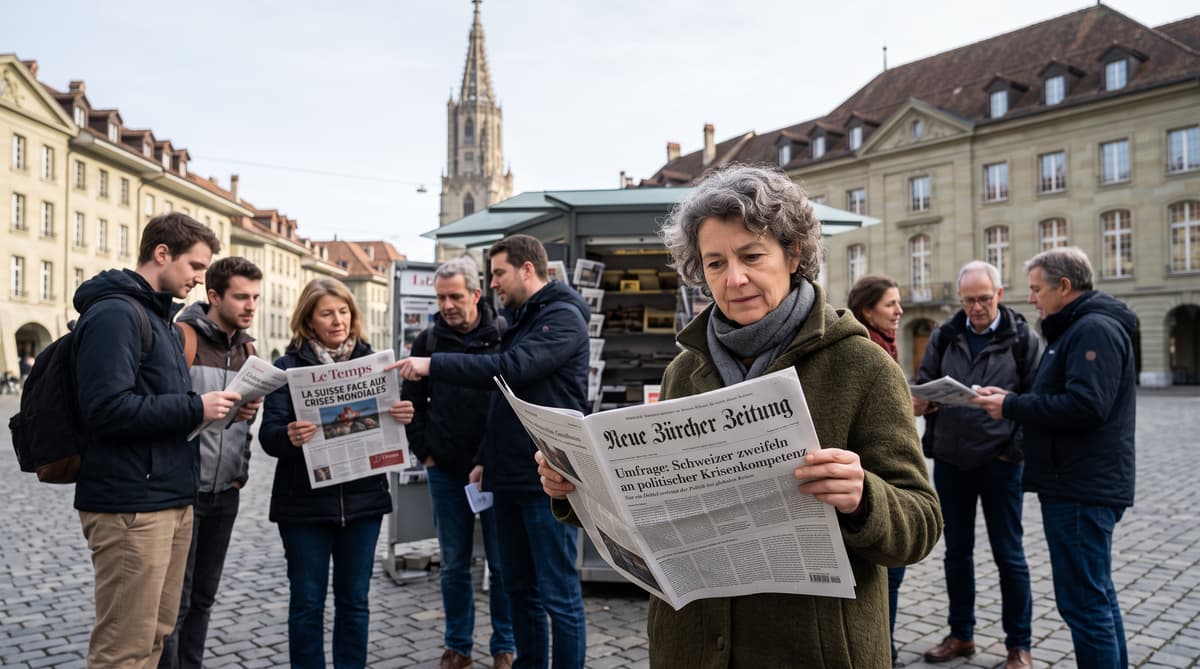
Fewer than one in three Swiss voters trusts politicians to react quickly enough to a global crisis. That finding places institutional readiness at the centre of Switzerland’s political debate as the country faces a security environment shaped by geopolitical tension, economic uncertainty and rapid technological change.
The representative survey was commissioned by the Swiss Society for Social Welfare, known as SGG, and carried out by its think tank Pro Futuris together with the University of Bern. SGG announced the results on Wednesday, with the findings published on September 10, 2026.
A relative majority of respondents also judged Switzerland poorly prepared for geopolitical and security challenges. The result reflects concern about the speed and capacity of the political system, rather than support for any single party or constitutional reform. The survey material does not provide a breakdown by canton, age group or party preference.
SGG launched the survey alongside “Mission Suisse”, a non-partisan, cross-sector initiative intended to strengthen Swiss democracy’s ability to act. Its organisers have placed public confidence in decision-making alongside the country’s policy response to international crises. The results give that effort a clear starting point: voters see a gap between the demands of the current environment and the state’s ability to respond.
Public Backs Democratic Cooperation
Three-quarters of respondents favour closer cooperation with other democracies. The figure signals broad public support for practical partnerships at a time when Switzerland is reassessing how it protects its security and economic interests.
Around 60% of those surveyed prefer security cooperation with partners such as the European Union or NATO to extensive autonomy. That preference does not settle the separate question of Switzerland’s future relationship with the EU. The survey found mixed views on closer EU ties, showing that support for cooperation can coexist with uncertainty about institutional integration.
For Switzerland, the distinction matters. The country is militarily non-aligned and maintains a tradition of neutrality, while its economy, research sector and supply chains are closely linked to European partners. Voters appear to be weighing that interdependence against a desire to preserve national control over major decisions.
The findings also place international cooperation within a wider public debate about development policy and security. A separate Swissinfo report published in June 2026 said most people supported maintaining or increasing funding for development cooperation, even as politicians moved to cut budgets. The latest survey points in the same direction on cooperation, while leaving the preferred political framework unsettled.