Switzerland
Swiss pools seek ban on camera-equipped smart glasses
Swiss swimming-pool and sauna associations are urging municipalities to ban camera-equipped smart glasses across their premises. They say the devices are difficult to distinguish from ordinary glasses and create serious privacy risks in pools and changing rooms.
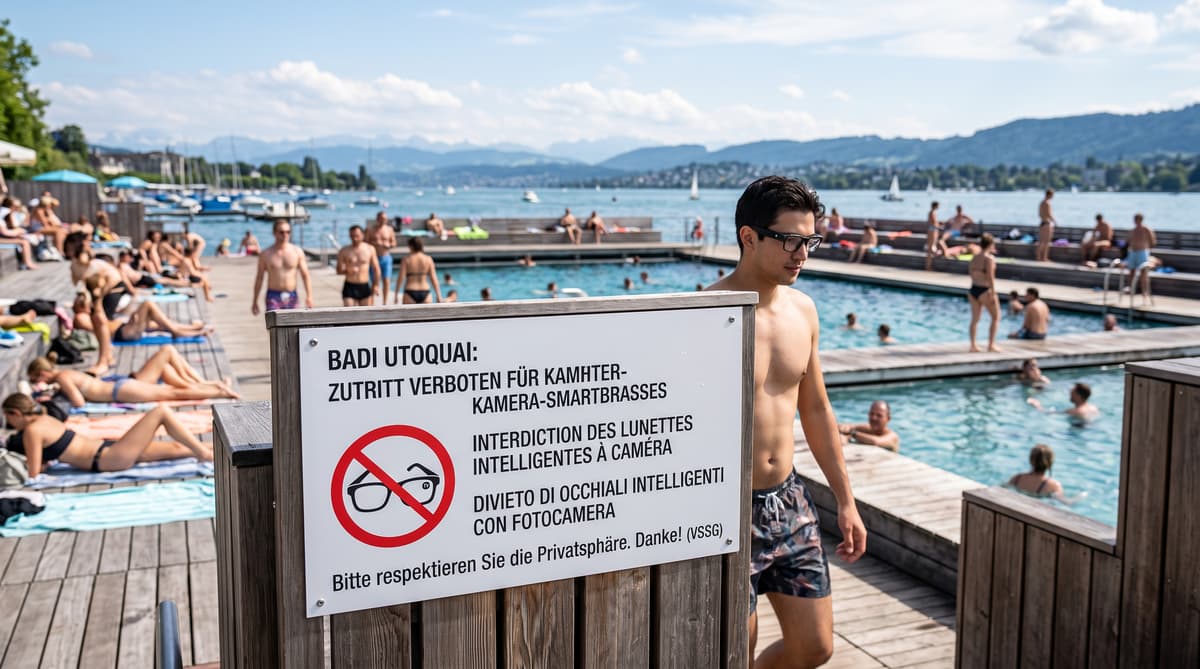
Pool operators are asking municipalities to act before camera-equipped eyewear becomes routine. On October 12, 2026, the Swiss association of swimming instructors, the association of swimming pools and the Swiss sauna federation issued a joint warning in German-speaking Switzerland. They called for local rules banning glasses fitted with cameras from swimming-pool premises, including changing areas where privacy is especially difficult to protect.
The concern is practical as much as technological. A person wearing ordinary-looking glasses may be able to record photographs or video without the knowledge of people nearby. In a pool, sauna or changing room, staff may have no reliable visual way to tell whether a device is recording.
The associations are advising towns and local authorities to amend their regulations. Their proposed approach would prohibit optical devices with a recording function throughout pool premises. The call does not create a nationwide Swiss law. Municipalities and operators would need to adopt and apply the rule through their own regulations.
To support enforcement, the organisations have prepared guidance for staff and an information poster for bathers. The campaign reflects a growing effort to define acceptable technology in places where people expect to undress, swim and use communal facilities without being recorded.
Make Hidden Cameras Visible
The main enforcement problem is recognition, not simply the existence of cameras. Traditional cameras and mobile phones can often be identified by their shape and use. Smart glasses collapse that distinction. Their lenses and frames can look like ordinary prescription eyewear, leaving pool employees to decide whether a device has a recording function without specialist equipment or a clear indication from the wearer.
That uncertainty matters in environments where people are often in swimwear or changing clothes. The associations specifically warned against photographs and video recordings made without the knowledge of those being filmed. Their position places consent and the ability to identify recording devices at the centre of the proposed rules.
A broad ban would also give staff a straightforward instruction. Rather than judging whether a wearer is actively filming, operators could prohibit camera-equipped glasses from the premises. The guide and poster prepared by the associations are intended to help staff communicate that rule consistently and explain it to bathers.
The available source does not report a specific incident, number of complaints or confirmed recording case behind the warning. It describes a growing use of smart glasses and a general privacy risk. That distinction will matter as municipalities consider how far their regulations should go and how staff should handle disputes at entrances.
Push Councils to Set Rules
Bern and Zurich are already seeing political pressure for restrictions. Motions have been tabled in both cities, as well as in other Swiss municipalities, calling for bans on smart glasses in public swimming pools and sports facilities. The movement gives local authorities a policy question that reaches beyond pool management: how should public places regulate consumer devices that can record discreetly?
Municipal rules are likely to determine how the issue develops in practice. Councils and pool operators must decide where a ban applies, how it is communicated, whether exceptions are possible for medical or accessibility reasons, and what staff can do when a visitor refuses to remove the glasses. The associations are pushing for a clear prohibition covering all pool premises, supported by signage and staff training.
The Swiss setting makes local implementation particularly important. Public pools are operated under municipal or local arrangements, and rules can differ from one facility to another. A decision in Bern or Zurich would not automatically bind every pool in the country, although it could influence other councils.
The campaign therefore places pressure on municipalities to move from general privacy principles to visible, enforceable entrance rules. Bathers are likely to encounter different policies until local authorities decide whether to coordinate their response.
Track the Regional Divide
The response is split across Switzerland's language regions. The associations representing swimming instructors, pools and saunas in German-speaking Switzerland have issued the warning and are recommending regulatory changes. In French-speaking Switzerland and Ticino, the association APRT told Keystone-SDA that it was taking no measures for the time being.
APRT said it had not received specific reports connected with the relatively new phenomenon of smart eyewear. It has, however, made staff aware of the issue and trained them to respond. That approach keeps the matter under observation while avoiding an immediate sector-wide recommendation.
The difference does not represent a legal divide between regions. It reflects different assessments of reported cases and local conditions. Facilities can still decide to address camera-equipped glasses through their own house rules, even if a regional association has not called for a general ban.
For visitors, the result may be a patchwork of policies. A pair of glasses permitted at one pool could be refused at another, depending on the operator's rules and whether the device includes a recording function. Clear signs at entrances will be important, particularly for tourists and residents crossing cantonal or language boundaries. The associations' poster and staff guide are designed to reduce that uncertainty.
Prepare for a Patchwork of Rules
Municipalities now face a choice between voluntary vigilance and an explicit ban. The Swiss associations have supplied a ready-made framework: prohibit camera-equipped glasses, train staff, and explain the rule with visible information for bathers. The recommendation gives local authorities a way to address privacy concerns without waiting for a national technology law.
The next steps will depend on municipal councils and individual pool operators. They will need to define the scope of any restriction and ensure that enforcement is proportionate and understandable. A rule based on the presence of a recording function may be easier to communicate than one based on whether staff suspect someone is filming, although identifying that function remains difficult when the device resembles ordinary eyewear.
The source report records no national timetable and no single federal standard. It also does not establish how many people in Switzerland currently use camera-equipped glasses. Those gaps leave local authorities with the immediate task of setting policy while the technology develops.
For Swiss bathers, the practical message is simple: check the house rules before visiting a pool or sauna, and expect operators to treat camera-equipped eyewear differently from ordinary glasses. The debate will continue through municipal decisions, facility policies and any future reports of misuse.