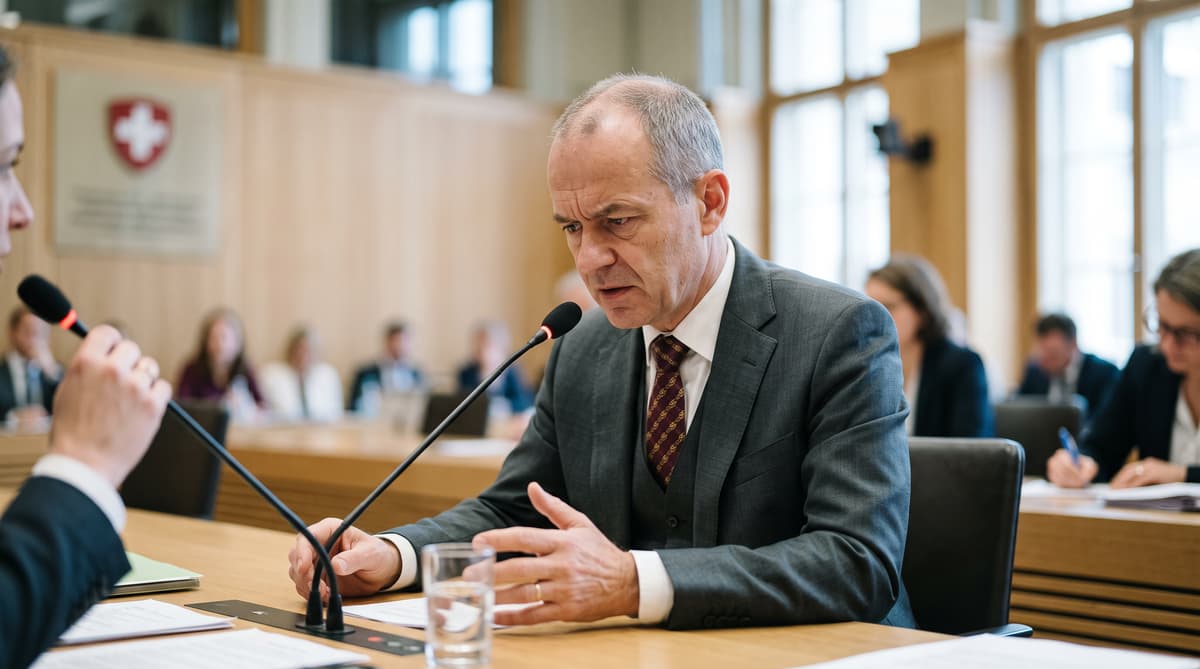
Nineteen parliamentary questions put Defence Minister Martin Pfister under sustained pressure on September 21, two weeks after auditors exposed major weaknesses in Switzerland's negotiations for F-35 fighter jets. Lawmakers demanded to know who allowed the procurement process to proceed without a fixed price and whether anyone could face criminal consequences.
Pfister repeatedly declined to give a definitive answer. “The Federal Council will set out its position in due course,” he said, referring to the government's planned response in December. His appearance left Parliament waiting for an official account of how the negotiation process was managed and why earlier assurances proved inaccurate.
The dispute reaches beyond the technical details of a fighter aircraft contract. Switzerland's government had previously indicated that the purchase was secured on a fixed-price basis. The September 8 report challenged that account, finding no such agreement with the United States. Former Defence Minister Viola Amherd and armasuisse, the federal procurement agency, had made the earlier statements.
That gap between public assurances and the auditors' findings has made the F-35 deal a test of government accountability. Parliament now expects the Federal Council to identify failures, clarify responsibility and explain what safeguards will govern the remaining contract.
The Fixed-Price Gap Drives Costs
The missing fixed price sits at the centre of the controversy. Switzerland entered the F-35 procurement process expecting clear financial certainty for a major defence commitment. The auditors' report found that negotiations with Washington did not produce the fixed-price agreement previously described by officials.
The consequences have already reached the size of the order. The government originally planned to buy 36 aircraft, but it has since reduced the purchase to 30 after the United States demanded higher prices. The cut does not remove the underlying obligation to explain how the contract reached this point, particularly after Switzerland had publicly presented the arrangement as more financially settled.
The government is seeking CHF 394 million to cover additional costs. By the end of June, Switzerland had already paid nearly $2 billion for the jets. The overall budget set aside for the programme stands at CHF 6.4 billion.
Pfister told lawmakers that operating costs remain “on track” to meet the budget. That assurance addresses the future running of the fleet, while Parliament's immediate concern is the procurement record. Lawmakers are examining the price negotiations, the information provided to the public and the decisions that led to a smaller fleet at a higher cost.
Lawmakers Probe the Consultancy Role
The role of outside advisers has opened a second line of attack. Armasuisse commissioned the law firm and consultancy Homburger to assist with contract negotiations. The auditors' report highlighted a conflict of interest connected to the process for deciding the fixed price, prompting lawmakers to question whether the arrangement was legally sound.
Pfister defended the use of external expertise as routine. “Enlisting the help of an external consultancy is standard practice,” he said. He also pointed to the report's legal conclusion, saying it found “no unlawful conduct or financial loss within the meaning of liability law.”
That defence has not closed the issue in Parliament. The questions focus on whether advisers had interests that could affect the procurement process, whether those interests were adequately disclosed and who inside the federal administration approved the arrangement. The distinction between a practice being common and a specific mandate being properly managed will be central to the government's December response.
The Homburger issue also places armasuisse under scrutiny. The agency was involved in the negotiations and had previously stated that a fixed price had been agreed. Parliament is now seeking a clearer chain of responsibility between the procurement unit, outside consultants and the political leadership that reported the deal's terms.
December Response Will Shape the Deal
The next decision point comes in December, when the Federal Council is due to publish its position on the auditors' report. Until then, the government has signalled no immediate change to the procurement arrangement, even as Parliament presses for answers about the price, the consultancy mandate and the accuracy of past official statements.
The reduced order has already altered Switzerland's defence planning. The country will receive 30 F-35 aircraft, rather than the 36 originally planned, while the government seeks hundreds of millions of francs for additional costs. Pfister says the jets' operating expenses remain within budget, but Parliament must still assess whether the purchase can be managed under the revised financial framework.
For Swiss taxpayers, the debate will turn on more than the aircraft count. The programme combines a CHF 6.4 billion budget, nearly $2 billion already paid and a request for CHF 394 million in extra funding. Those figures make the government's explanation of the procurement process consequential for future defence spending.
The December response will show whether the Federal Council accepts institutional shortcomings, assigns responsibility or limits its conclusions to legal liability. Parliament's questioning has ensured that the F-35 contract will remain a live issue in Swiss politics while the government completes the purchase.