employment
Tradespeople and technicians lead Switzerland’s modest jobs recovery
Demand for construction workers, electricians and multi-skilled mechanics is helping Switzerland’s labour market recover modestly. A new index rose 0. 8 points year-on-year, while only a small share of these jobs is currently considered highly vulnerable to AI-driven automation.
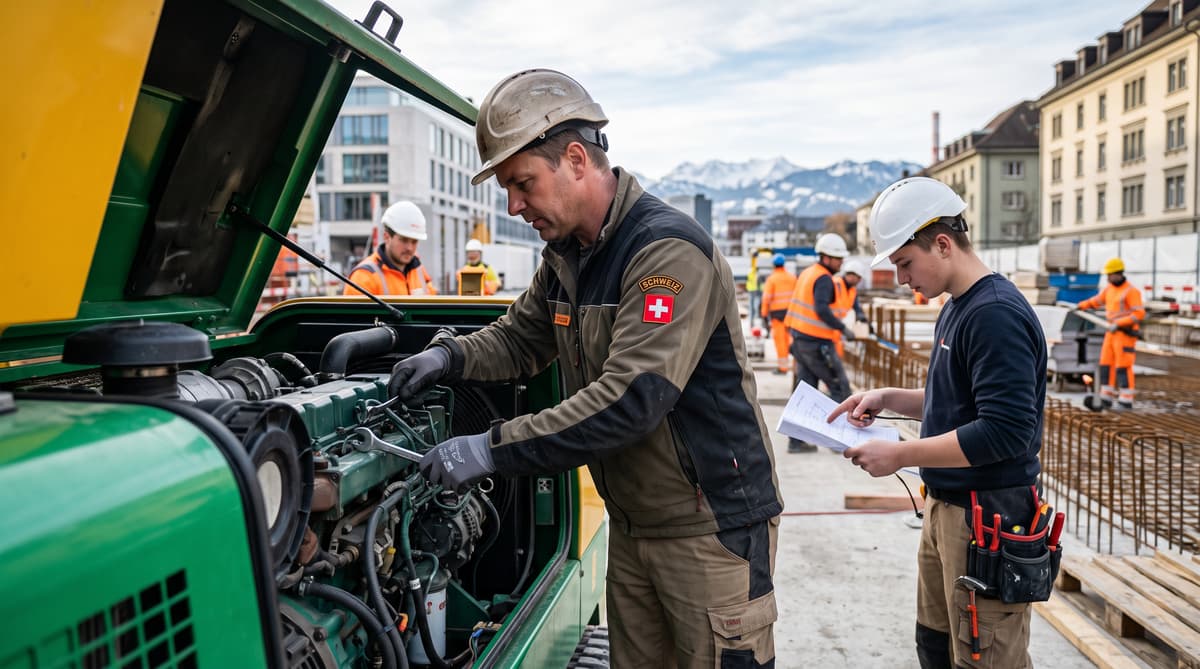
The Swiss Job Market Index climbed to 131.5 points in the third quarter, marking a modest improvement in hiring conditions across the country. Adecco and the University of Zurich recorded a gain of 0.8 points from the previous quarter and the same increase compared with a year earlier.
The recovery remains limited in scale, but its composition gives the latest reading a clear direction. Manual and technical occupations are supplying much of the momentum, with construction workers leading the demand ranking. Electricians and multi-skilled mechanics follow.
That pattern matters in a country where construction, infrastructure maintenance, industrial production and technical services rely on workers with practical training. The index does not indicate a broad-based surge across every occupation. It shows that employers are continuing to seek people who can install, repair, build and operate equipment in settings where physical work and technical judgment remain central.
Adecco and the University of Zurich published the findings on October 15, 2026. The figures offer a measured signal for workers and employers: Switzerland’s labour market is improving, although the pace remains restrained.
Trades and technicians drive demand
Construction workers occupy the top position in the latest demand ranking, ahead of electricians and multi-skilled mechanics. The result points to continued recruitment needs in occupations that combine hands-on work with specialised technical knowledge.
Construction sites depend on several layers of expertise, from workers who build and finish structures to electricians who connect systems and mechanics who maintain machinery. The source report does not provide vacancy totals or a breakdown by canton, so the index cannot show which regions are hiring most aggressively. It does, however, identify the occupational groups pulling the national trend upward.
Multi-skilled mechanics are especially relevant to employers managing complex equipment. Their work can span diagnostics, repair and maintenance, allowing companies to cover several technical needs with a single role. Electricians likewise operate across construction, building services and industrial settings.
For jobseekers, the figures reinforce the value of vocational and technical pathways that lead to recognised practical skills. For employers, they underline the pressure to find workers who can contribute on site and adapt to changing equipment, regulations and operating systems.
AI risk remains limited for skilled trades
Only 2% of the occupations highlighted in the report are considered highly exposed to AI-driven automation. The authors place about one quarter at moderate risk, giving the latest jobs recovery an important technological dimension.
The assessment suggests that artificial intelligence is more likely to reshape parts of these jobs than eliminate them wholesale. Software may assist with planning, fault detection, documentation or routine analysis. Construction workers, electricians and mechanics still need to work with materials, tools, machines and physical environments that vary from one site to the next.
The figures should be read as an occupational risk assessment, not a forecast of individual job losses. A role classified as moderately exposed can change as employers introduce new systems, while workers can gain new responsibilities through training and experience. The source does not specify the methods behind each occupation’s risk rating or identify which tasks face the greatest pressure.
Switzerland’s debate over AI and employment therefore includes a large practical workforce. Digital adoption will affect workshops, construction sites and maintenance teams, alongside offices and laboratories.
Watch the next quarter
The index’s two 0.8-point increases show recovery, but not a rapid acceleration. Employers added demand for key practical occupations between the second and third quarters, yet the overall movement remains measured.
The next readings will show whether construction, electrical work and mechanical maintenance can sustain the improvement. The current release does not offer forecasts, wage figures, unemployment data or regional comparisons. It also does not quantify how many vacancies employers have struggled to fill. Those limits make the index a directional indicator rather than a complete account of Switzerland’s labour market.
For workers, the strongest signal lies in the type of skills employers are seeking. Practical competence, technical training and the ability to handle several systems remain visible priorities. Companies facing tighter recruitment conditions may also need to invest in apprenticeships, reskilling and workplace technology so that experienced tradespeople can pass knowledge to new entrants.
Switzerland enters the next quarter with a labour market that has edged forward and a trades sector carrying much of that movement. The figures offer cautious encouragement, while leaving the scale and durability of the recovery to future data.