immigration
Swiss Court Orders Refugee Families Back to Greece
Federal Administrative Court rules refugee families must return to Greece despite challenging conditions, marking shift in asylum policy
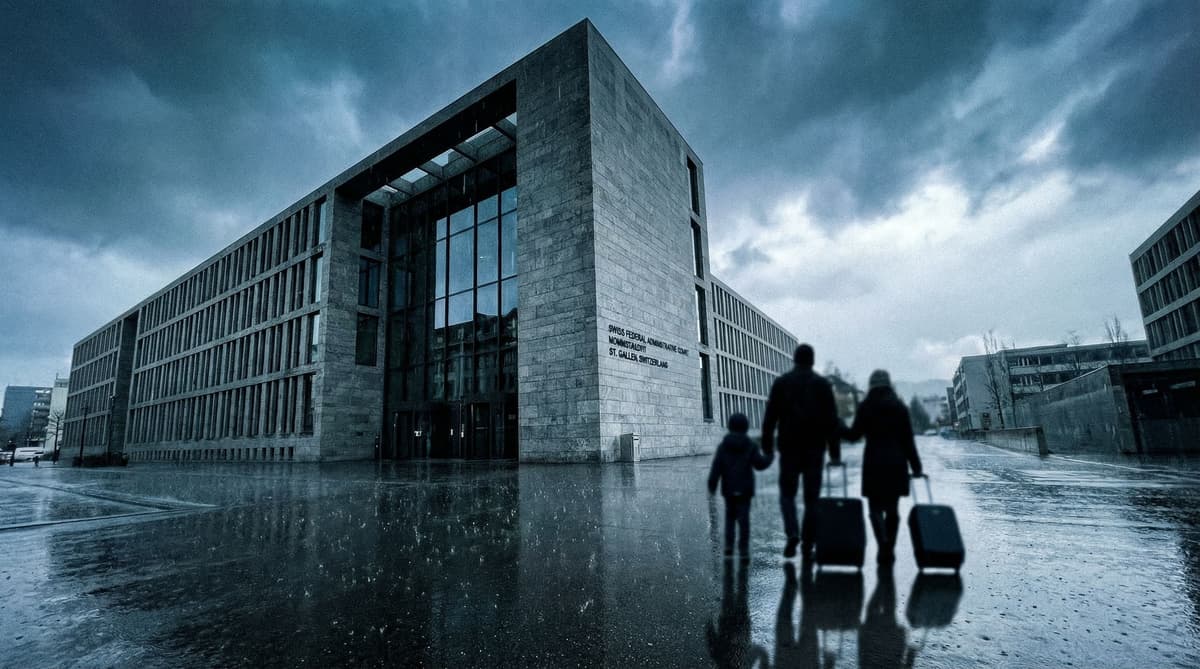
The Federal Administrative Court has shattered the status quo, issuing a decisive ruling that refugee families must return to Greece. This judgment marks a dramatic pivot in Swiss asylum policy, effectively ending the humanitarian pause that had previously shielded families from expulsion due to precarious conditions in the Mediterranean nation. Switzerland had temporarily halted these transfers, acknowledging the severe instability facing refugees in Greece. However, the court has now declared that the situation, while challenging, is no longer a valid barrier to return.
This is not merely a procedural update; it is a hardline stance that redefines the threshold of "reasonableness" for asylum seekers. The court explicitly found that families who have already received asylum status in Greece can—and must—return there. The era of automatic protection based on general regional hardship is over. By ruling that returns are "reasonable," the Swiss judiciary is sending an unequivocal message: possession of refugee status in a first country of asylum takes precedence over the difficulties of daily life there. The implications are immediate, signaling a tougher, more rigid enforcement of the Dublin Regulation principles.
Burden of Proof Shifts to Families
Hardship is no longer a shield against expulsion. In a striking clarification of legal standards, the court has ruled that simply pointing to difficult living conditions is insufficient to prevent deportation. The burden of proof has shifted squarely onto the shoulders of the refugees themselves. Those affected must now demonstrate, with concrete evidence, that they have made exhaustive efforts to build a decent existence in Greece and failed despite those attempts. Passive suffering is no longer a legal defense.
This precedent was cemented through the specific case of an Afghan family with two minor children. Despite their vulnerability, the court ordered their return, stripping away the assumption that the presence of minors guarantees a stay in Switzerland. The ruling dictates that families are expected to actively solicit support from state institutions, social authorities, and non-governmental organizations in Greece before seeking relief in Switzerland. The message is stark: the Swiss system will not serve as a backup for those who cannot prove they have exhausted every conceivable resource in their country of first asylum. This demands a level of documentation and proactive engagement that many traumatized families may struggle to provide.
Digital Solutions Over Language Barriers
In a move that prioritizes personal responsibility over systemic hurdles, the court has dismissed language barriers as a justification for staying in Switzerland. The Federal Administrative Court explicitly rejected the argument that a lack of knowledge of Greek or English prevents a reasonable life in Greece. Instead, the judiciary pointed to modern technology as the solution, stating that communication is possible through translation apps, interpreters, or compatriots.
This ruling effectively mandates digital literacy as a component of refugee resilience. The court’s stance is that if you have a smartphone, you have a voice. By suggesting that families rely on "compatriots with longer stays" or digital tools, the Swiss legal system is asserting that integration hurdles are surmountable obstacles, not valid legal defenses. This perspective places a significant expectation on refugees to navigate complex foreign bureaucracies using automated tools. It reflects a pragmatic, perhaps cold, calculation: if technology exists to bridge the gap, the state is not obligated to provide sanctuary based on a linguistic divide. The expectation is clear—adapt, use the tools available, and navigate the Greek system independently.