Business
Securitas accused of thousands of labour-law breaches
Swiss security company Securitas is accused of recording about 20,000 labour-law breaches between 2023 and 2025, including excessively long shifts and inadequate rest periods. Internal-data analysis by SRF says around 900 employees working in prisons, hospitals and asylum centres may have been affected.
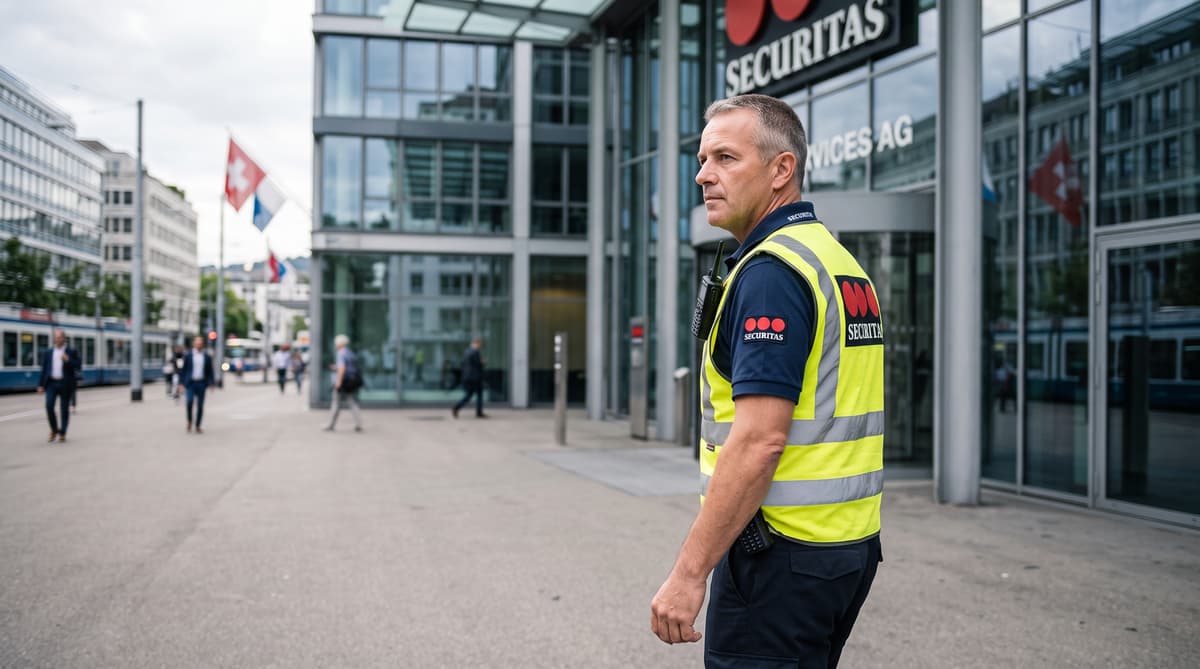
Around 20,000 alleged breaches of Switzerland’s Labour Act were recorded in Securitas’s internal data between 2023 and 2025, according to an investigation by SRF Investigativ. The reported incidents involve working-time rules, particularly shifts that ran too long and rest periods that fell below legal requirements.
The figures place scrutiny on a company whose guards operate in settings that depend on continuous cover. Securitas staff work in prisons, hospitals and asylum seeker centres, where replacing an absent employee can require rapid scheduling decisions and additional shifts. SRF reported that around 900 employees may have been affected.
The allegations concern conduct over several years, rather than a single workplace or isolated incident. Labour-law specialists told SRF that the scale and distribution of the cases point to a broader organisational problem. The report does not establish a final legal finding against Securitas. Any enforcement action would depend on examination by the competent authorities and the underlying records.
Securitas has acknowledged that some practices failed to meet labour-law principles and the company’s own values. It says measures introduced in recent years have reduced problematic cases and rejects the reported total of 20,000 breaches.
Trace the alleged scheduling failures
Long shifts and inadequate rest periods form the centre of the allegations. Swiss working-time protections are designed to limit fatigue and ensure employees receive sufficient recovery between duties. The reported internal records indicate that these safeguards may have been breached repeatedly across the three-year period examined by SRF.
For guards, the practical consequences can extend beyond a missed break. Security work requires sustained attention, controlled responses and reliable handovers. In a prison, hospital or asylum seeker centre, staffing gaps can affect the operation of the entire site. The source report does not quantify the duration of individual shifts or identify every location involved, so it does not support conclusions about conditions at each Securitas contract.
The reported cases nevertheless raise questions about scheduling systems, staffing levels and management oversight. A recurring breach can emerge when employers rely on last-minute substitutions, understaffed rosters or pressure to keep posts continuously occupied. Those factors remain matters for investigation rather than established findings in this case.
Securitas said recent measures had reduced the number of problematic cases. The company did not accept SRF’s overall calculation, leaving the scale of any continuing problem disputed.
Test the evidence against the law
Two labour-law experts told SRF that the reported data could indicate more than administrative mistakes. Denis G. Humbert, a lawyer specialising in labour law, called the findings a sign of “systematic practice” and said authorities should intervene. He described the alleged treatment of staff as impermissible and unacceptable.
Kurt Pärli, a professor of law at the University of Basel, reached a similar assessment. He said the reported information could not be explained as a simple planning error and that the issue went beyond an isolated operational failure. Their comments do not amount to a court ruling, but they underline the legal importance of repeated working-time violations.
The distinction matters under Swiss labour oversight. Authorities would need to establish which rules applied, whether the records are complete, who was responsible for the scheduling decisions and whether employees were placed under pressure to accept unlawful arrangements. They would also need to assess the company’s corrective steps.
The source report does not name a specific canton-led investigation or announce sanctions. It says the experts called for official intervention. That leaves the next stage dependent on labour authorities, documentary evidence and any complaints from affected employees.