Nestlé
Nestlé sued in Texas over alleged heavy metals in baby food
Texas has sued Nestlé and its Gerber subsidiary, alleging that baby-food products contained dangerous levels of arsenic, lead and cadmium and that parents were misled about their safety. Nestlé disputes the allegations, which concern products sold in the United States.
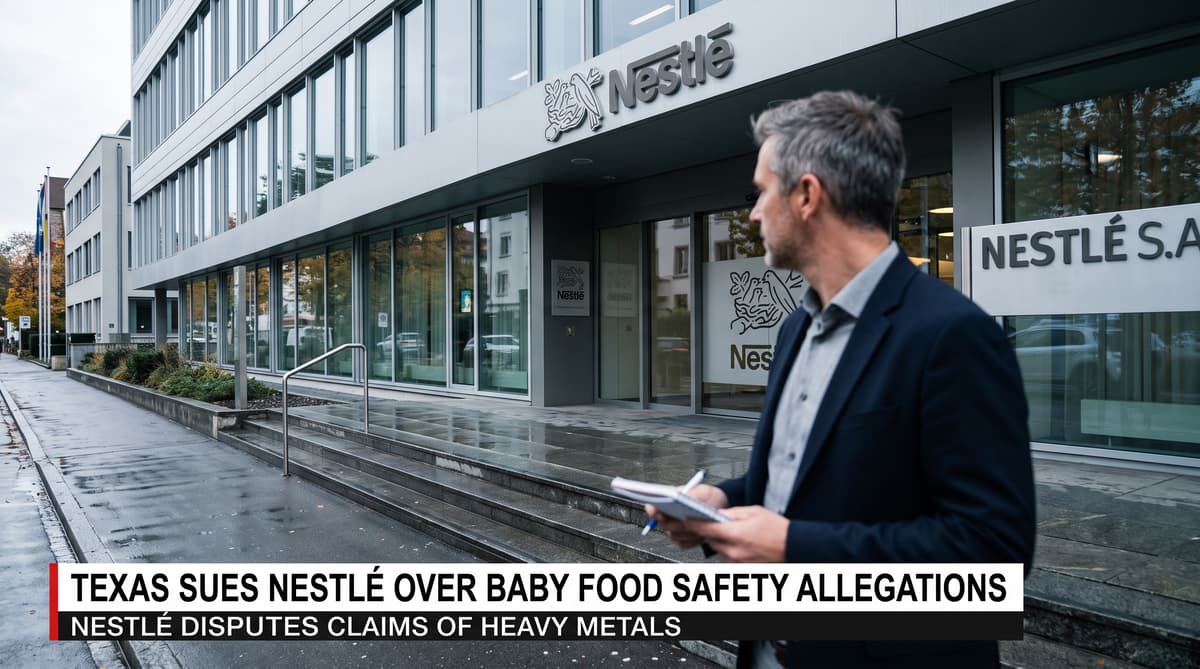
Texas has put Gerber’s safety assurances before a court. Attorney General Ken Paxton has brought proceedings against Nestlé and its US subsidiary, Gerber Products, alleging that parents were misled about toxic heavy metals in baby food. The case concerns products sold in the United States and claims involving arsenic, lead, cadmium and mercury.
Paxton says Gerber marketed its products as safe, rigorously tested and recommended by paediatricians while internal testing identified dangerous concentrations in some ingredients. The allegations cover 67 batches of rice flour used between 2017 and 2019, with arsenic levels exceeding nine times the concentration permitted by the US federal government in bottled water.
The complaint also cites carrots with cadmium levels as high as 17 times the bottled-water limit and sweet potatoes with lead levels approaching 10 times that limit. Those comparisons do not establish the amount consumed by a child or prove that a particular product caused harm. They do show the measurements underpinning the state’s consumer-protection case.
Nestlé disputes the allegations. The legal action proceeds under the Texas Deceptive Trade Practices Act, known as the DTPA, which allows the state to challenge allegedly misleading commercial conduct.
Measure the metals behind the allegations
The figures cited by Texas vary sharply by metal and ingredient. Paxton’s statement says rice flour used in Gerber products contained more than nine times the permitted arsenic concentration for bottled water. Carrots reached up to 17 times the permitted cadmium level, while sweet potatoes contained nearly 10 times the permitted lead level.
The state’s comparison uses bottled-water standards as a reference point. It does not mean that baby food and bottled water are regulated identically, and the source does not provide serving sizes, exposure calculations or a complete list of affected finished products. Those details will matter as the allegations are tested in court.
Paxton describes arsenic, lead and mercury as neurotoxins. He also says federal health agencies rank arsenic, lead and mercury among the three substances considered most potentially harmful to human health. In medical toxicology, he argues, no established safe threshold exists for lead or inorganic arsenic in infants below which exposure can be considered entirely harmless.
Gerber has since placed test results behind a QR code on its labels. Paxton alleges that the heavy-metal content and the safety claims on the front of the packaging remained unchanged. Nestlé has rejected the allegations, according to the reader-facing case summary, while the source report said the company was not immediately available for comment when contacted by AWP.
Scrutinise the testing trail
Testing finished food, not only ingredients, is central to the dispute. Paxton says Gerber rarely tested for mercury and that, for most of the period described, the company tested certain ingredients rather than the finished baby food. That distinction is important because processing, blending and serving size can affect the concentration a child receives in a prepared product.
The Texas attorney general’s statement does not provide a full testing schedule or explain how many finished products were examined. It does identify a separate warning sign from Alaska. In 2021, the Alaska State Laboratory detected arsenic levels above the federal limit in two samples of Gerber rice cereal.
Paxton says Gerber issued no recalls or warnings after those findings and continued selling the products. He also notes that the company had recalled products for plastic contamination and choking hazards, but never for heavy metals. The allegations raise questions about how a manufacturer decides when test results require a label change, public notice or withdrawal from sale.
A QR code now directs consumers to test results, according to the statement. The lawsuit will determine whether that disclosure addressed the concerns and whether earlier packaging crossed the line into deceptive marketing under Texas law. It will also put the company’s testing records and safety claims under scrutiny.
Place the case in Nestlé’s wider safety record
The lawsuit arrives after a separate Nestlé infant formula recall that reached dozens of countries. Earlier in 2026, the company recalled formula contaminated with the toxin cereulide. The initial recall covered 31 countries and represented less than 0.5% of Nestlé’s turnover, according to the report. Since then, the recall has affected around 60 countries.
The report says cases involving ill babies increased particularly in Belgium and the United Kingdom. French authorities were investigating three suspected infant deaths involving babies who had consumed the recalled milk. Those events concern infant formula and cereulide, not the heavy-metal allegations in the Texas case. They form part of the wider regulatory context surrounding Nestlé’s baby-food business.
For Nestlé, headquartered in Vevey, the US proceedings add a consumer-safety dispute in one market to a recall managed across multiple jurisdictions. Swiss consumers should not assume that the Texas allegations apply to products sold in Switzerland. The source specifically concerns products sold in the United States, and food formulations, suppliers and rules can differ by market.
Parents and caregivers seeking product-specific information should check national food-safety notices and the manufacturer’s local guidance. The Texas case will develop through the US legal process, while any consequences for products outside the United States would require separate evidence and regulatory action.
Follow the evidence through court
The next stage will test what Gerber promised, what it knew and what parents were told. Paxton’s case under the Texas DTPA targets the alleged gap between front-of-pack safety claims and the company’s testing information. The source material does not state the damages sought, the timetable for hearings or whether a court has ruled on the allegations.
That distinction matters. A lawsuit records one side’s claims, not established findings. Nestlé disputes the allegations, and the company will have the opportunity to contest the evidence, challenge the state’s interpretation of the test results and explain its product controls. The court may examine internal analyses, laboratory methods, ingredient suppliers, finished-product testing and the meaning of the safety statements used on packaging.
The dispute also has a Swiss corporate angle. Nestlé’s headquarters in Vevey places the case in the public view of a country where food manufacturing, product traceability and consumer protection carry significant commercial weight. Yet the legal standards in this proceeding are those of Texas, and the products identified are US-market goods.
For now, the clearest record is numerical: 67 rice-flour batches, arsenic readings above the cited bottled-water limit, a 2021 Alaska laboratory finding and a state allegation that consumers were misled. Further conclusions depend on the court and the evidence presented.