crime
Heist at Le Locle: Thieves Steal Valuables from Swiss Watch Museum
Four hooded individuals executed a swift robbery at the Watch Museum in Le Locle, canton Neuchâtel, early Monday morning. The criminals forced entry, smashed display cases, and escaped with fewer than ten items, mostly watches, in an operation lasting under five minutes. A cross-border search is underway as the thieves are believed to have fled towards France.
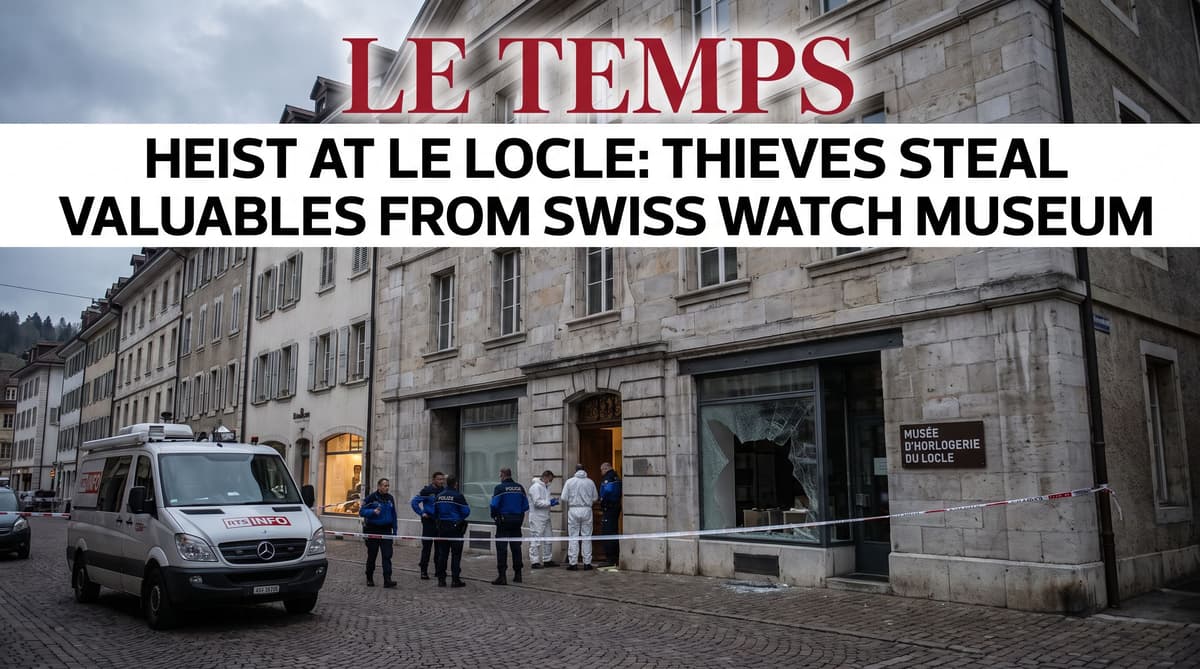
Switzerland’s horological heart skipped a beat this Monday as a surgical criminal operation targeted the prestigious Watch Museum in Le Locle. At exactly 6:15 am, the silence of the UNESCO World Heritage region was shattered. This was not a random act of vandalism, but a calculated assault on Swiss cultural heritage. The Château des Monts, which houses centuries of mechanical mastery, became the staging ground for a heist that underscores the growing vulnerability of high-value collections. While the museum stands as a monument to timelessness, the thieves proved that every second counts, executing their plan with a chilling efficiency that mirrors the very movements they came to steal. The audacity of the strike in broad daylight—just as the town was waking—confronts the industry with a harsh reality: no vault is truly untouchable.
Five Minutes of Chaos at Château des Monts
Three hundred seconds was all it took for four hooded individuals to strip the museum of its treasures. According to the Neuchâtel cantonal police, the criminals forced the north entrance with brutal force, bypassing security measures to reach two specific exhibition rooms. Once inside, they smashed through reinforced glass display cases, ignoring the alarms to snatch fewer than ten high-value items. This was a 'smash-and-grab' elevated to a professional art form. The speed of the operation—under five minutes—suggests the perpetrators had intimate knowledge of the layout and the specific locations of the most portable, high-value assets. While the total financial loss is still being calculated, the damage to the museum’s integrity and the psychological blow to the community are immeasurable. The facility has been shuttered to allow investigators to comb for forensic evidence amidst the shards of broken history.
Cross-Border Manhunt Ignites as Thieves Flee
A high-performance saloon car is currently the subject of an intense international search as Swiss and French authorities coordinate a massive dragnet. The suspects vanished into the morning fog, heading west toward the French border immediately after the heist. The Federal Office of Customs and Border Security has been placed on high alert, working in tandem with French police to intercept the vehicle. This escape route is a classic tactic for gangs operating in the Jura region, utilizing the proximity of the border to vanish into a different jurisdiction within minutes. The Neuchâtel police are currently reviewing CCTV footage from the surrounding area, looking for any lead on the 'high-performance' vehicle used in the getaway. The investigation now hinges on whether the thieves can be caught before the stolen watches enter the shadowy 'grey market' of international collectors, where stolen Swiss artifacts often disappear for decades.