Environment
Graubünden relocated 5,000 fish as drought dried up watercourses
Graubünden says it relocated about 5,000 fish from small watercourses during this summer’s severe drought, but several hundred died despite rescue efforts. The canton reported historically low water levels across most river basins and significant effects on agriculture and the alpine economy.
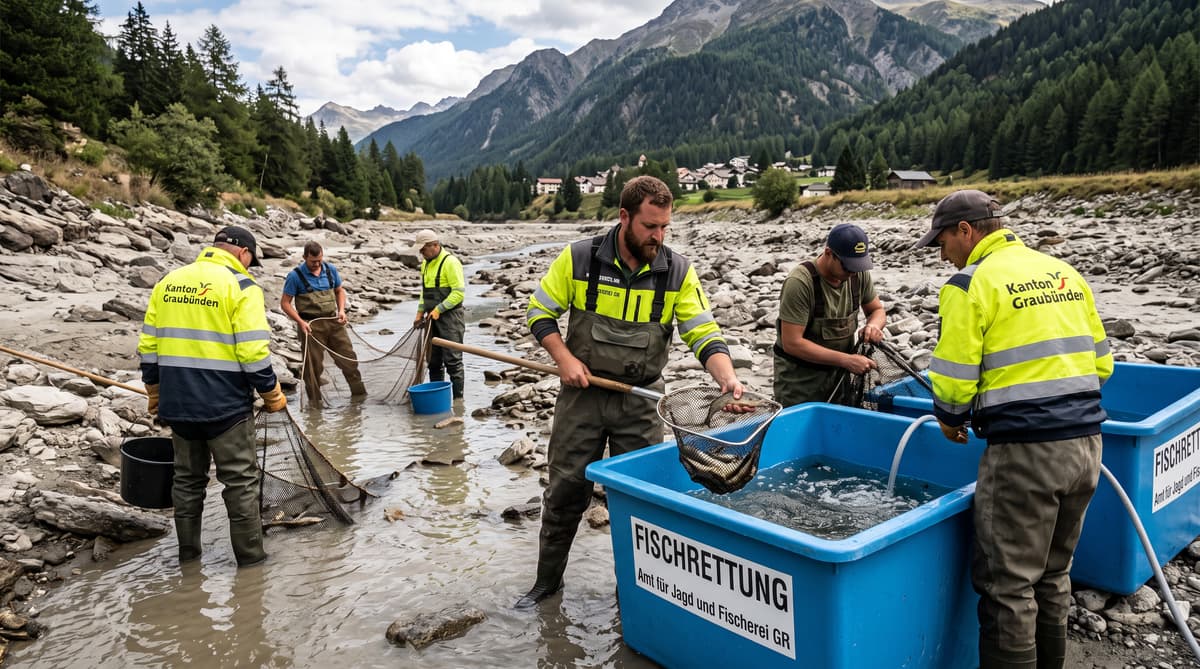
Around 5,000 fish were moved to safer waters as drought drained small watercourses across Graubünden this summer. The canton carried out nearly two dozen emergency operations to rescue fish from minor streams, the cantonal government said in a response to a parliamentary question from Grand Council member Martin Kreiliger, published on Monday, November 2.
The effort could not save every fish. Several hundred died despite the rescue work. The operations came as water levels fell across much of the canton, leaving fish in small watercourses exposed to shrinking habitat. Graubünden’s government said levels in watercourses and aquifers reached historic lows in most river basins. The Upper Engadine was the exception.
The figures capture two sides of the drought: a large-scale effort to move fish out of vulnerable stretches, and losses that continued despite intervention. The government described the summer as severely dry and said the effects extended well beyond aquatic life, reaching agriculture and the alpine economy.
Track the water crisis across the valleys
Most Graubünden river basins recorded historic low water levels, while the Upper Engadine stood apart. The canton’s government said the drought lowered levels in both watercourses and aquifers, affecting rivers and underground water stores across much of the region.
Fish rescue teams targeted minor watercourses, where the canton said nearly two dozen emergency operations were needed. Around 5,000 fish were relocated, but several hundred died. The government also said it had recorded no fish deaths caused by excessively high water temperatures. Its account links the losses to the drought and depleted watercourses, rather than heat-related mortality.
The regional variation matters to the wider picture. The government described conditions in Graubünden as less critical than in other cantons, while stressing that the situation remained tense. Water levels and rainfall over the coming months could shape the pressure on water supplies, agriculture and protective forests. For now, the Upper Engadine was the stated exception to the historic lows reported across most river basins.
Measure the losses on farms and pastures
Forage yields fell by 10% to more than 30%, adding pressure to farms already coping with dry conditions. Graubünden’s government said the drought had a severe impact on agriculture and the alpine economy, though effects varied considerably from one region to another.
More than 30 mountain pastures brought livestock down to the valley early, ending their summer grazing periods ahead of schedule. A roughly equivalent number of pastures asked to extend grazing, seeking to offset at least part of the production losses in the lowlands. The two responses show how the drought affected farming in different ways: some herds had to leave alpine pasture early, while other operators sought more time on the mountain.
The canton’s account describes a chain of effects across the farming season, from reduced fodder production to changes in the timing of livestock movements. Those losses formed part of the broader strain on the alpine economy, alongside the low water levels reported across most of Graubünden’s river basins.
Watch rainfall and protect farm livelihoods
Swiss authorities eased farm support measures as drought effects spread through agriculture. The federal government and cantons relaxed conditions for direct payments, reduced duties on fodder and increased funds allocated to loans for farms.
Graubünden’s government said the canton’s situation was less critical than in other cantons, but warned that it remained tense. Future rainfall could determine whether conditions worsen in agriculture, protective forests and water supply. The government said the situation could deteriorate considerably depending on rainfall patterns over the coming months.
That outlook leaves the canton watching several connected pressures: water availability, farm production and the health of protective forests. The summer’s fish rescues showed how quickly small watercourses became a concern during the drought, while reduced forage yields and early mountain pasture evacuations brought the impact into the alpine economy. The government’s warning is focused on the months ahead, when rainfall will influence how those pressures develop.