Politics
Geneva Ramps Up Security for 'Most Dangerous Scenarios' Ahead of G7 Summit
As the G7 summit approaches in neighboring Evian, France, Geneva's public prosecutor is planning a large-scale security operation, preparing to double or triple personnel to handle potential mass arrests related to terrorism or vandalism.
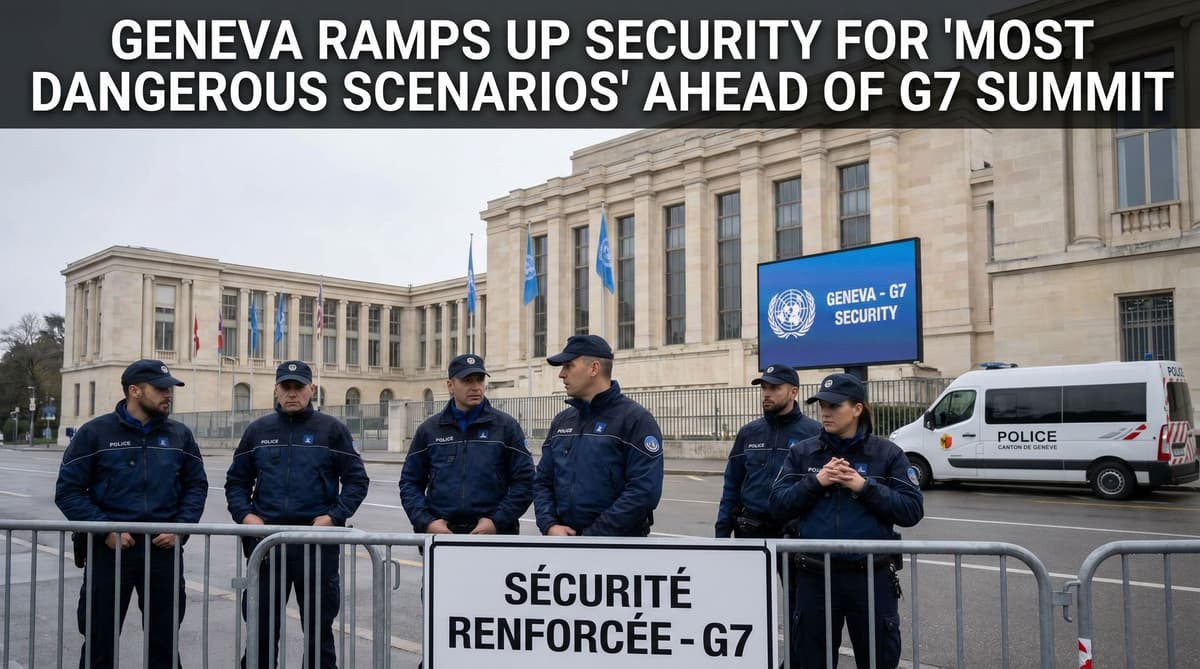
Geneva is transforming into a high-security citadel as the G7 summit looms just across the water in Evian, France. Public prosecutor Olivier Jornot has officially activated a 'most dangerous scenario' protocol, signaling that the city is preparing for the absolute worst. This is not mere posturing; it is a calculated response to the looming threat of terrorism and mass vandalism that historically shadows these high-stakes gatherings. While heads of state meet in luxury, Geneva’s streets will be under the microscope of an unprecedented security apparatus. The city is grappling with a dual-threat landscape: the federal government handles the specter of international terrorism, while local authorities confront the immediate danger of violent protests and property destruction. This high-alert status reflects a grim reality—Geneva is no longer just a diplomatic hub; it is a primary target for those looking to disrupt the global order.
Triple the Force: Prosecutors Prepare for Legal Chaos
A staggering 300% increase in prosecutorial manpower is being deployed to ensure the rule of law does not buckle under pressure. Olivier Jornot has confirmed plans to double or even triple regular personnel resources during the June 15-17 summit window. Up to six prosecutors will remain on standby every single day, backed by a full support staff ready to process arrests in real-time. To maintain this surge capacity, the justice system is taking the drastic step of slashing regular hearings for existing detainees. This pivot to a 'war footing' within the judiciary is designed to prevent the legal bottleneck that often follows mass demonstrations. By clearing the docket, Geneva ensures that anyone caught in acts of vandalism or violence faces immediate legal consequences. The message is clear: the city’s legal machinery is oiled, fueled, and ready to strike back against any disruption.
Border Lockdown: A 20% Access Reality
Only 20% of Geneva’s border crossings will remain functional as the city executes a total security stranglehold. From June 12-18, a massive 28 out of 35 border crossings will be slammed shut, forcing all transit through seven heavily fortified checkpoints. This tactical bottleneck is a direct effort to filter out potential agitators and monitor the flow of people entering the canton from France. The inconvenience to daily commuters is significant, yet authorities view it as a non-negotiable necessity. These measures represent a dramatic departure from the usual seamless flow of the Schengen area, highlighting the gravity of the G7 threat. By funneling all traffic through a handful of points, Swiss border guards can exercise 'unprecedented' scrutiny over every vehicle. This lockdown is a physical manifestation of Geneva’s defensive posture, turning the canton into a controlled zone where every entry is a calculated risk.