health
Switzerland prepares for winter flu and respiratory-virus season
Switzerland’s respiratory-virus season is beginning, with Covid-19 increasing in some regions while the Federal Office of Public Health expects the main flu wave only in December.
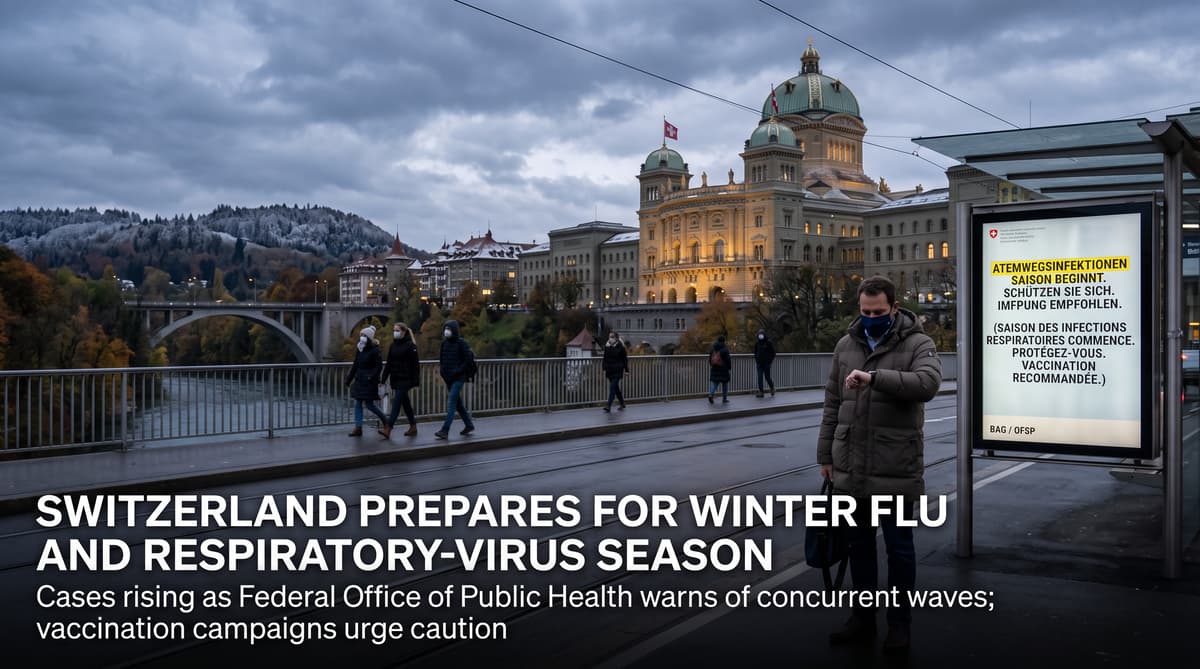
Switzerland’s respiratory-virus season is already under way, but the main flu surge remains weeks away. Autumn has brought a clear increase in Covid-19 in some regions, while influenza and respiratory syncytial virus, or RSV, are still circulating at low levels, according to the Federal Office of Public Health. The agency expects the country’s main flu wave around mid-December 2026.
That forecast gives health services, schools, care homes and households time to prepare, though the eventual scale remains uncertain. The FOPH says three factors will shape the season: how much immunity people retain, which virus variants circulate and the weather conditions during the colder months.
RSV deserves particular attention because it can cause serious infections in young children. Covid-19 and influenza can also place pressure on hospitals and vulnerable people, especially when several viruses spread at once. The current data does not point to an exceptional season. It does show the familiar autumn sequence returning, with Covid-19 generally rising before flu and RSV reach their winter peaks.
The FOPH’s Sentinella surveillance system is tracking the shift. Flu and RSV remain at very low levels for now, while Covid-19 is gaining ground across the reporting network.
Track the Early Covid Rise
Recent Covid-19 reports have climbed to around 120 cases a week in Switzerland and Liechtenstein. During most summer weeks, authorities recorded between 10 and 20 cases. The increase is visible, but the current level remains below the same point last year, when more than 500 cases were reported in the first week of October 2025.
The figures fit a pattern the FOPH has observed in recent years. Covid-19 often reaches its autumn peak before influenza and RSV become more widespread during winter. That timing can help explain why hospitals and medical practices may see different respiratory viruses arrive in separate waves rather than all at once.
The figures cover reported Covid-19 cases collected through official surveillance. They do not represent every infection in the population, since testing and reporting practices affect the totals. Other viruses also circulate beyond the system’s routine view. Rhinoviruses, which commonly cause colds, are spreading in autumn but are not monitored through the FOPH reporting system.
Regional differences matter as the season develops. Covid-19 is increasing in some parts of Switzerland, while the national picture remains lower than last year’s early-October level. The FOPH will continue to use surveillance data to assess whether the rise is sustained and how it overlaps with the expected flu wave.
Prepare Vaccination Plans
Flu and RSV remain at very low levels, giving vaccination providers time to organise deliveries. Some manufacturers have reported delays in supplying flu vaccines to doctors’ surgeries, hospitals, care homes and pharmacies. The Federal Office of Public Health says the disruption is a delay rather than a shortage.
Simon Ming, an FOPH spokesperson, said people at risk still have plenty of time to get vaccinated if they wish. The advice is especially relevant for older people and others who face a higher risk from influenza, though the source does not set out a new eligibility rule or a revised vaccination schedule.
The delivery issue may still create practical problems. Medical practices and pharmacies must coordinate stock, appointments and staffing before demand rises. Care homes and hospitals also need to plan vaccination campaigns while monitoring Covid-19 and RSV activity among residents and patients.
Switzerland’s expected mid-December flu wave leaves several weeks for those arrangements. Vaccine availability can differ between providers, so people seeking a jab should check with their doctor, pharmacy or care facility. The FOPH’s message is measured: current delays should not be treated as evidence that national supplies have run out, and the seasonal timetable has not yet reached its main flu phase.