apprenticeships
Swiss apprenticeships remain strong as skilled-labour demand grows
Around 76,000 apprenticeship contracts have been signed for 2026, keeping vocational education at the centre of Switzerland’s transition from school to work. Explain why the model remains resilient, which sectors are recruiting and whether the figures address Switzerland’s skilled-labour shortages.
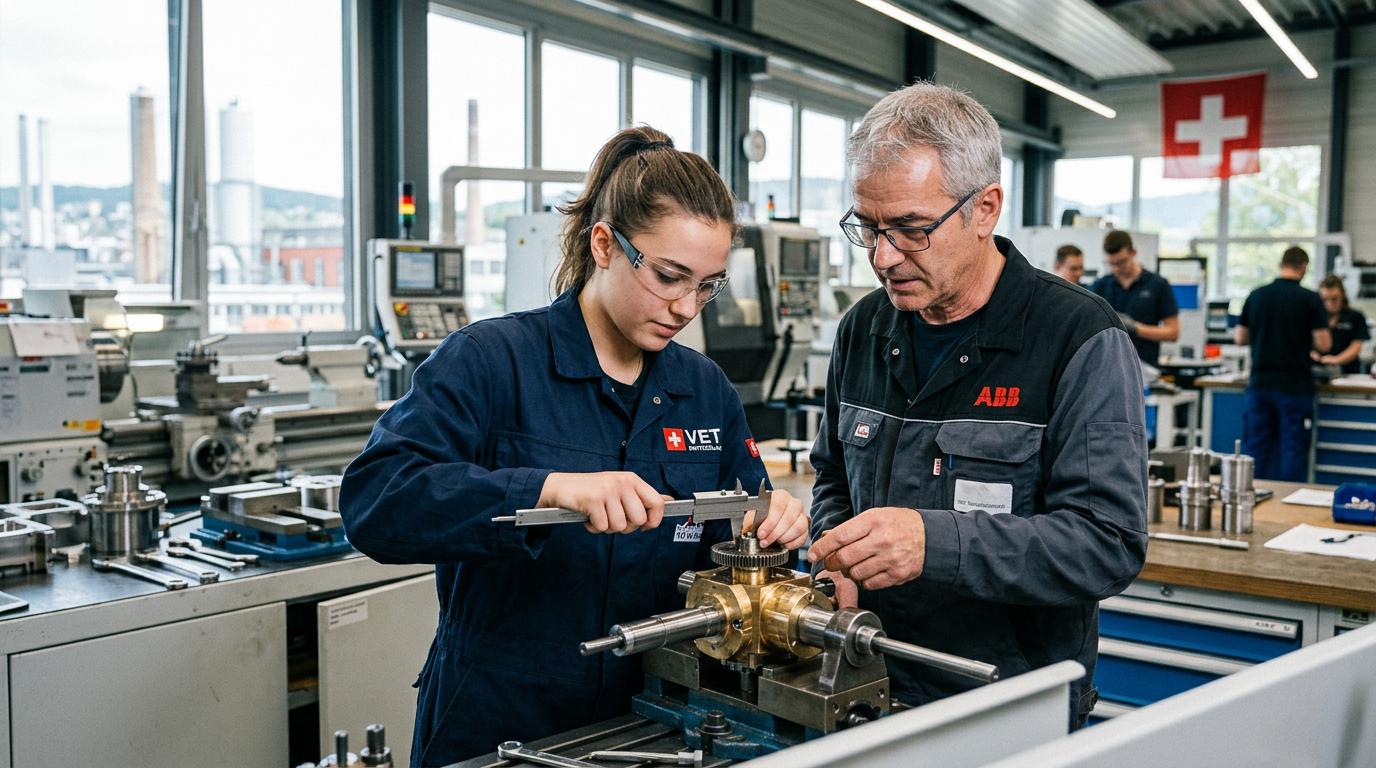
Keep the pipeline moving
Around 76,000 contracts signed by August 2026 have kept Switzerland's apprenticeship market on a stable footing, according to the State Secretariat for Education, Research and Innovation, SERI. The total is broadly in line with previous years and confirms that vocational education remains the country's main bridge from compulsory school to employment.
The timing matters for employers facing persistent demand for trained workers. Each apprenticeship contract commits a company to developing a young employee through a mix of workplace training and classroom instruction. That commitment gives businesses a direct role in building the skills they will need, while giving school leavers a recognised route into the labour market.
Switzerland's dual vocational system also spreads responsibility across employers, vocational schools and the public authorities. Its resilience rests on that practical connection to work. Young people gain experience, qualifications and a clearer view of possible careers. Companies gain a pipeline that they can shape themselves.
The 2026 figures do not suggest a sudden expansion. They show continuity, which is significant in a labour market where recruitment needs are growing and education choices are under close scrutiny.
Follow the choices of young people
63% of around 98,000 young people surveyed in June said they were considering basic vocational training, according to SERI's Transition Barometer. The result places apprenticeships firmly at the centre of decisions made after compulsory schooling.
Academic routes remain important. 43% of respondents expressed interest in the Matura qualification or a specialist secondary school. The figures describe a range of ambitions rather than a single national preference, and young people can consider more than one path at the same time. Bridging programmes and gap years attracted less interest in the survey.
The appeal of vocational training comes from its close link to employment. Apprentices spend part of their education in a company, where they learn routines, standards and responsibilities that cannot be fully reproduced in a classroom. They also receive a qualification that can support further professional training or later study.
That flexibility helps explain why the model remains resilient. An apprenticeship does not close the door to higher education. It gives students an early foothold in a profession while preserving options for advanced qualifications. For families and employers, the system offers a structured transition at a moment when the labour market is demanding practical skills.
Match training to the jobs Switzerland needs
Commercial training and health and social care are among the fields drawing particularly strong interest from young people. The pattern reflects the breadth of Switzerland's apprenticeship system, which feeds both office-based occupations and services that depend on sustained contact with the public.
Basic commercial training remains a familiar entry point for young people seeking skills in administration, customer service and business operations. Health and social careers carry a different weight. Hospitals, care institutions and social services require trained staff to support an ageing population and maintain essential services, making recruitment and retention a continuing concern.
The source material does not provide a full sector-by-sector breakdown of the 76,000 contracts, so the national total cannot be assigned to individual industries. It does show where young people's interest is concentrated and where apprenticeship pathways connect directly to employers' staffing needs.
That connection is one of the model's strengths. Companies can train future employees in the methods and standards used in their workplaces. Young people can test a profession before committing to a longer career. The result is a labour market entry route that links education to real vacancies, while allowing demand to influence the mix of training places over time.
Measure what happens after signing
Stable recruitment is evidence of capacity, not proof that the skills gap has closed. The approximately 76,000 contracts show that Swiss companies continue to invest in the next generation, even as employers seek qualified workers. That investment gives Switzerland a stronger base for responding to shortages than a system that leaves young people disconnected from the workplace.
The limits of the figure are equally important. The available data do not compare the number of contracts with the total number of unfilled positions, nor do they show completion rates, regional differences or how many apprentices remain with their training company after qualification. They also do not reveal whether every sector has enough places or whether demand is strongest in the regions facing the sharpest shortages.
Switzerland will therefore need to watch the pipeline beyond the signing date. Employers must provide high-quality training places, schools must maintain the classroom side of the system and policymakers must ensure that qualifications remain adaptable as technology changes work.
For 2026, the message is clear: vocational education remains a functioning national mechanism for moving young people into skilled employment. Its next test will be whether the contracts signed today produce enough qualified workers for tomorrow's vacancies.