European Union
Why Switzerland is still outside the EU — and what could change
Switzerland’s long-standing model of staying outside the European Union is entering another period of uncertainty as Bern and Brussels seek to update their relationship. Explain the political logic behind non-membership, what the new agreement could change and why parliamentary and popular approval remain uncertain.
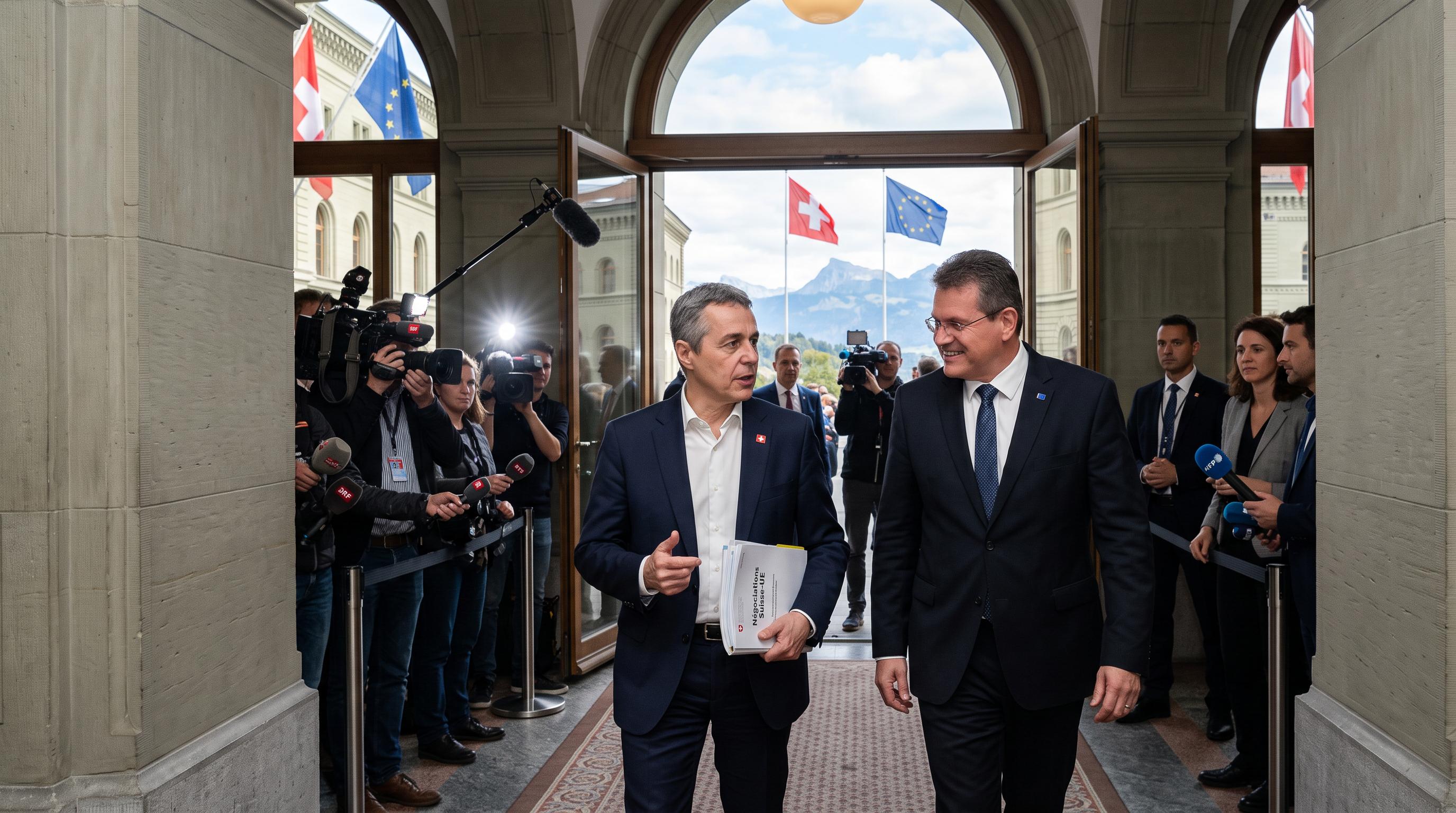
Bern’s new deal faces a political test
More than 10 years of negotiations have brought Bern and Brussels to a new agreement, but the deal has not yet settled Switzerland’s European direction. The Swiss government and the European Commission have reached an understanding after a long effort to update the rules governing their relationship. Parliament must now examine it, and voters will probably have the final say.
The stakes extend beyond technical market access. Switzerland sits at the centre of Europe’s economy and political geography, while remaining outside the European Union’s institutions. Its system depends on agreements that allow close cooperation in selected areas without full membership. That arrangement has delivered access and flexibility, yet it also requires regular updates as EU rules and priorities change.
The latest agreement arrives after a difficult history. In 2021, Bern ended an earlier negotiating process unilaterally when repeated talks failed to produce a result. The new deal therefore carries both practical and political weight. Supporters will present it as a way to protect Switzerland’s links with its largest surrounding bloc. Critics are likely to focus on regulatory alignment, sovereignty and the influence of Brussels. The parliamentary debate will test whether the bilateral model still commands the broad support it once enjoyed.
The 1992 vote created the bilateral model
Swiss voters rejected the European Economic Area in 1992, and that narrow decision pushed the country towards the bilateral path it still follows today. The EEA would have brought Switzerland closer to the European single market and represented a major step towards EU membership. The vote turned the issue into a highly charged domestic question.
Stefanie Walter, a professor of international relations and political economy at the University of Zurich, describes the result as a decisive moment. After the EEA defeat, the Swiss government had little room to pursue a straightforward integration strategy. When it later promoted EU membership, voters rejected that option clearly.
Bern responded by negotiating sector specific agreements with Brussels. The first package began taking shape in 1994. A second package, known as Bilateral Agreements II, followed roughly 10 years later. It brought Switzerland into the Schengen and Dublin systems and aligned it more closely with EU migration and asylum policy.
This model gave Switzerland a way to cooperate without entering the Union’s political structures. It also turned European policy into a permanent domestic balancing exercise. The government had to preserve access to neighbouring markets while reassuring voters that national decision making remained intact. That balance explains why Switzerland can be deeply connected to the EU and still resist membership.
Bilateral deals made membership less attractive
Only 5% to 10% of Swiss people support EU membership, according to University of Zurich professor Stefanie Walter. That figure helps explain why the bilateral agreements remain the centre of gravity in Swiss European policy. Many voters see cooperation with Brussels as useful, while full membership appears unnecessary or too costly in political terms.
The arrangement lets Switzerland participate in selected European systems without taking a seat inside the EU’s decision making institutions. Bilateral Agreements II brought the country into Schengen and Dublin, linking Swiss policy to European cooperation on borders, migration and asylum. Other agreements have connected Swiss economic activity to the single market.
The political logic is straightforward. Switzerland gains structured access where it sees a clear national benefit and keeps its formal independence outside the Union. This also allows the government to present each agreement as a specific choice rather than as an irreversible step towards membership.
Walter says the success of the bilateral approach reduced the incentive to join. As ties became closer, membership became less attractive to many Swiss voters. The country could obtain many practical benefits of cooperation while preserving the symbolic and institutional distance that voters had demanded. That calculation has shaped Swiss politics for more than three decades.
The 2021 breakdown still shadows the new deal
The bilateral system now needs an update, and the previous attempt collapsed in 2021. Switzerland and the EU negotiated for more than 10 years before Bern broke off the earlier process after repeated talks failed to produce a result. That decision exposed the weakness of relying on a network of agreements that must keep pace with changing European rules.
The new agreement could reset the relationship by providing an updated framework for cooperation. The source material does not specify every provision, but it makes clear that the purpose is to renew the arrangements between Bern and Brussels. The European Commission and the Swiss government have now reached agreement, moving the dispute from international negotiation into Swiss domestic politics.
That shift changes the pressure points. EU officials want a relationship that can be managed consistently as the Union develops its rules. Swiss authorities must defend national interests while maintaining access to European cooperation. Businesses, universities, workers and border regions all have a stake in stable arrangements, although the political debate will focus heavily on sovereignty and oversight.
The 2021 breakdown also gives opponents a recent example of failed diplomacy. Supporters will argue that a negotiated update is preferable to uncertainty. Opponents can contend that the price of closer alignment is too high. Parliament will have to decide whether the new framework offers enough practical value to justify that price.
Switzerland must decide how much Europe it wants
Parliamentary and popular approval remain the decisive hurdles for the agreement. The Swiss government cannot treat the conclusion of negotiations with the European Commission as the end of the process. Members of the Federal Assembly will scrutinise the text, and the agreement will probably face voters. Its fate will depend on whether supporters can explain its practical consequences clearly enough to overcome concerns about sovereignty.
The political environment is difficult. EU membership itself attracts support from only 5% to 10% of the population, while the bilateral agreements have become widely accepted as the preferred way to manage relations with Europe. Any proposal that appears to move Switzerland closer to EU rules could therefore face resistance, even if it preserves formal non-membership.
The debate will also test the limits of Switzerland’s autonomy. The country has maintained influence through diplomacy, economic strength and selective cooperation. Great power politics has highlighted the limits of that influence, according to the source, adding urgency to the question of how closely Bern should coordinate with its European neighbours.
Switzerland is unlikely to abandon its non-member status in this process. The immediate choice concerns whether to reinforce the bilateral architecture or leave it exposed to further disputes. The coming parliamentary debate, followed by a possible national vote, will show how much room voters still grant the government to manage Europe through negotiated exceptions.