Switzerland
Switzerland unlocks CHF70 million to address drought damage
The Federal Council has approved CHF70 million in emergency support for farms and forests affected by Switzerland’s exceptional drought. This article should explain where the money will go and why the government considers the 2026 dry spell unprecedented.
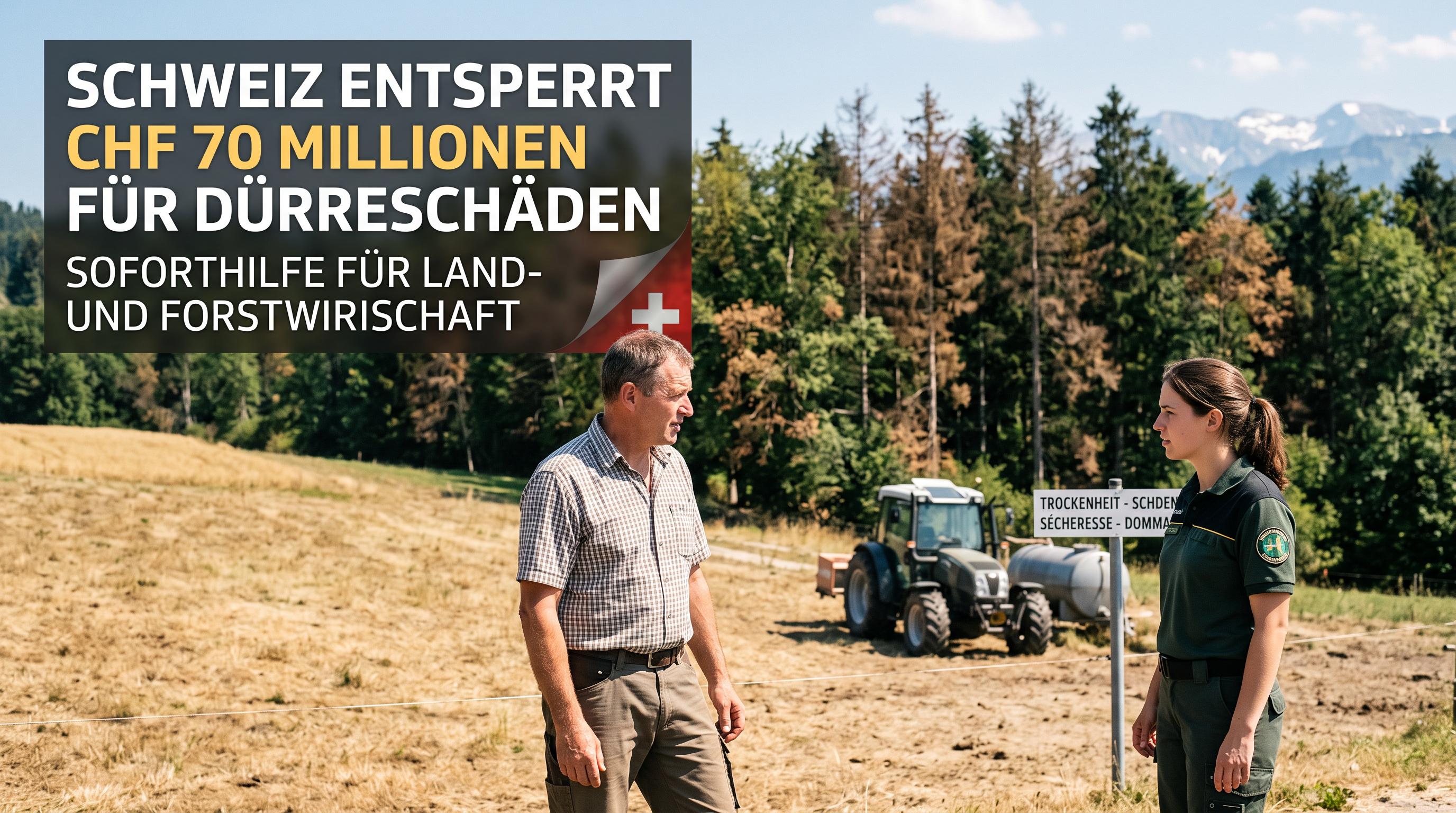
Switzerland Mobilises Drought Support
Switzerland has recorded its lowest rainfall by mid-August ever measured, according to Environment Minister Albert Rösti. The Federal Council is responding with a package worth more than CHF70 million for farms and forests facing crop losses, feed shortages and rising climate risks.
The announced allocations total CHF71.5 million. Farmers will receive CHF54 million in additional interest-free loans this year. The money is designed to help businesses absorb lost income, higher feed bills and extra labour caused by the dry spell. Forest owners are set to receive CHF17.5 million for climate adaptation measures in 2027, subject to Parliament approving the increase. A similar amount could follow annually from 2028.
Rösti said the prolonged drought was affecting vulnerable people, livestock, waterways, ecosystems, forests, agriculture, electricity production and river transport. The government has chosen to work through existing federal, cantonal and municipal structures. It has rejected calls to declare a national emergency, arguing that the current legal framework gives authorities sufficient tools.
The immediate pressure is concentrated in rural communities, where a poor harvest can damage cash flow long before the full economic impact appears in food prices or farm closures.
Interest-Free Loans Target Farm Liquidity
Farmers will receive CHF54 million in interest-free loans, not direct grants. The measure is intended to protect liquidity while producers cope with lower yields and sharply higher operating costs.
Christian Hofer, head of the Federal Office for Agriculture, said drought had increased feed expenses and field work while cutting production. Potato and sugar beet output is down by an estimated 20% to 25%. Milk production is also falling. Some farms have slaughtered additional animals because they cannot secure enough feed, with supplies limited both in Switzerland and on international markets.
Slaughterings doubled in July, adding pressure to meat prices as more animals entered the market. The sequence is damaging for farmers: feed becomes more expensive, production falls, and livestock sold under pressure can produce lower returns.
The loans will give the hardest-hit businesses time to manage immediate bills. They will also add debt. Rösti acknowledged that the support cannot guarantee every farm’s survival. Swiss holdings are often small by European standards because of mountainous terrain, fragmented land ownership and the country’s agricultural structure. Machinery, buildings and labour costs therefore fall on relatively few hectares or animals. Existing subsidies help sustain farms in difficult regions, but many remain exposed when weather cuts production.
Forests Get Long-Term Adaptation Funds
Forests will receive CHF17.5 million for climate adaptation in 2027, with a possible repeat from 2028. The proposed funding recognises that drought damage can continue long after rainfall returns.
Dry soils and heat weaken trees, reduce their ability to resist pests and increase the risk of forest decline. Swiss forests also provide services beyond timber production. They protect settlements and transport routes from rockfall and avalanches, support biodiversity, store carbon and help regulate local water systems. A stressed forest can become a public safety concern as well as an environmental one.
The Federal Council wants Parliament to increase adaptation funding next year. From 2028, a comparable annual amount could be made available. The plan places forest management inside a longer-term climate policy, rather than treating the current drought as a single-season loss.
The government’s wider review will examine heat maps, public health, animal welfare and further agricultural measures. Rösti has said cantons and municipalities should handle many responsibilities because they manage local conditions and infrastructure. Federal funding can still help pay for protective improvements, including measures that reduce extreme heat around buildings and vulnerable communities.
Political Pressure Builds in Bern
Rösti says the dry spell is placing pressure on nearly every major part of Switzerland’s natural and economic system. Low water levels affect waterways and river transport, while heat raises concerns for people, animals and electricity generation.
The minister’s description reflects Switzerland’s close dependence on water. Hydropower remains central to the electricity system, farms need reliable supplies for crops and livestock, and rivers connect ecological habitats with industrial and transport infrastructure. When rainfall fails for an extended period, these pressures arrive together rather than in isolation.
The Federal Council has defended the measures already introduced and says federal departments are coordinating effectively. Rösti has rejected proposals from the Greens for a new state secretariat for climate protection and calls to remove the environment portfolio from his department. He said political criticism was part of public office, particularly with elections a year away.
Parliament is expected to hold an extraordinary debate during its autumn session. The Socialist, Green and Green Liberal parties have backed a dedicated discussion on the heatwave and drought. That debate will test whether emergency loans and planned forest funding are enough, or whether lawmakers want stronger national coordination and additional investment.
October Review Will Shape Next Steps
The federal government will decide by October 2026 whether Switzerland needs further drought and heat measures. The review will cover public health, animal welfare, nationwide heat maps and possible additional agricultural support.
That timetable leaves cantons, municipalities and affected businesses preparing for the next stage while this summer’s losses are still being counted. The government’s position is that local authorities should lead on many practical responses, from protecting residents during heat events to managing water use and adapting buildings. Bern could contribute through targeted subsidies and national coordination.
For farmers, the immediate issue is repayment. Interest-free loans can prevent a temporary cash crisis from becoming an immediate closure, yet they do not restore lost harvests or solve structural problems in a sector with narrow margins. For forest owners, adaptation funding may take years to show results because trees and landscapes respond slowly.
The 2026 drought has forced Switzerland to link short-term relief with a longer policy debate about climate resilience. Parliament’s autumn session and the October review will determine whether the current package remains a one-off response or becomes the foundation for recurring support to agriculture, forestry and communities facing hotter, drier conditions.