parental leave
Parental-leave initiative clears signature hurdle in Switzerland
A Green Liberal initiative has gathered more than 112,000 signatures for a nationwide parental-leave proposal, subject to official verification.
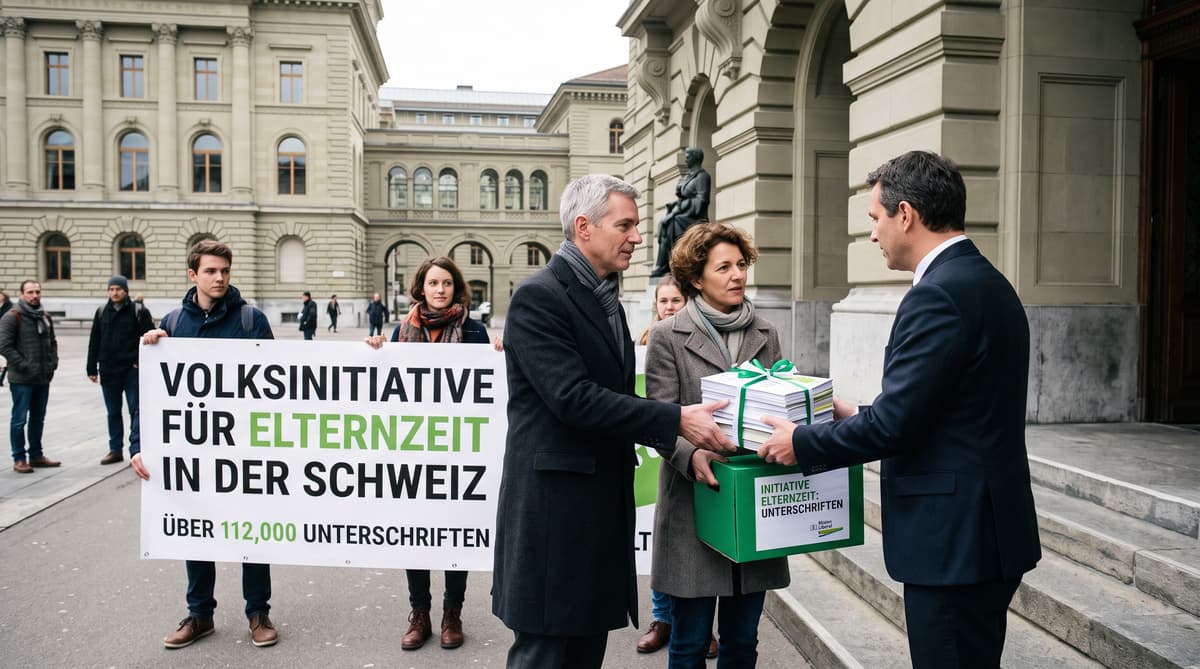
112,517 signatures have put a Swiss parental-leave proposal on the path towards a national vote. The Green Liberals submitted the signatures to the Federal Chancellery, which must now check their validity. The total is comfortably above the 100,000 signatures required to launch a popular initiative.
The proposal would reshape how Swiss families divide time away from work after the birth or adoption of a child. Each parent would receive 18 weeks of leave, and neither parent could transfer their entitlement to the other. The leave would generally be taken consecutively rather than at the same time.
The campaign arrives as Switzerland records a birth rate of 1.3 children per woman, a historic low cited by supporters as evidence that family policy needs strengthening. The initiative’s backers include the Green Party, Alliance F, the trade union federation Travail.Suisse and the women’s wing of the Centre Party.
Supporters also see the proposal as a way to increase fathers’ involvement in early childcare. The political argument now moves into the verification and parliamentary stages. If the signatures are confirmed, the Federal Council and Parliament will examine the text before voters and the cantons decide whether it becomes constitutional law.
The Proposal Gives Leave to Individuals
Each parent would receive 18 weeks under the initiative, creating a total potential entitlement of 36 weeks for a family. The benefit would be calculated and financed through the same system used to compensate people performing military or civilian service.
The leave would belong to individuals rather than to the household as a pool. Parents could not transfer unused weeks to one another. Campaigners argue that this design is essential if Switzerland wants fathers to take a meaningful share of childcare. Alliance F has said individual entitlements are needed to challenge traditional gender roles.
That rule also gives opponents a clear point of attack. Families do not all have the same incomes, working patterns or care arrangements. A parent with a higher salary might return to work sooner, while the other parent takes more leave. Under the initiative, couples would have less freedom to make that calculation themselves.
The Swiss Employers’ Association opposed the proposal in April 2025. It accepted the goal of expanding leave, but criticised what it called a rigid model, along with additional costs and organisational difficulties for companies. The debate will therefore involve both equality inside households and flexibility in the workplace.
Switzerland Measures Itself Against Europe
Switzerland has no general parental-leave entitlement shared between parents. Its current statutory framework provides 14 weeks of maternity leave and two weeks of leave for the other parent. The initiative would add a much larger, individually reserved period for both parents.
That would bring Switzerland closer to the family-policy model found in several northern European countries, including Norway, Sweden and Iceland, where parental leave has been developed as a broader system rather than as separate maternity and second-parent provisions. The comparison is politically important, although the countries differ in eligibility rules, payment levels and how parents may divide their leave.
Evidence on fertility remains unsettled. A study of Norway, Sweden and Iceland found that fathers’ use of leave was associated with more second births, but fewer third births in Norway and Sweden. A separate OECD cross-country analysis found no measurable effect of fathers’ leave entitlements on fertility.
Those findings weaken any simple claim that longer leave will reverse Switzerland’s demographic decline. The stronger case for reform rests on employment, caregiving and gender equality. A 2024 Swiss survey found 76% of 2,500 respondents supported a system that couples could divide between themselves, highlighting support for leave alongside disagreement over its design.